History, politics, people of Oly WA

Category: washington history (Page 3 of 4)

The Ku Klux Klan in Olympia and what we should remember

Where do you think the largest Klan rally in Olympia was held?

How big was the largest Klan rally in Olympia?

If you think a few hundred people on the Capitol Campus, you’d be wrong.

On September 10, 1927, 2,000 Klan members rallied with burning crosses just behind Lincoln School at the old Stevens Field. For present-day Olympians, this might seem shocking, especially since the higher-profile Capitol Campus is so close by. And given Lincoln’s progressive reputation today, it’s hard to imagine the Klan ever feeling comfortable in its vicinity.

At the time, Stevens Field was a major community facility. It was a large, box-like Pacific Northwest athletic stadium, home to Olympia’s school and community sports teams, including the high school football team and a minor league baseball team. While visitors today might assume that the Capitol Campus is the center of Olympia’s civic life, locations like Stevens Field, and the sites that have since replaced it, were actually where our community gathered.

I’ve been thinking a lot about the 1920s, the rise of the Klan in the Pacific Northwest, and the legislative legacy it left in Washington State and the nation. There are important lessons in the legacy of the Klan and how we stood by and watched. This is a piece of Olympia and Washington’s  racist history that I left out of my longer essay a few weeks ago.

More than 2,000 knights of the Ku Klux Klan marched from the Capitol Campus into the heart of Olympia, Stevens Field. And 10,000 Olympians lined the streets to watch.

They had met at Legion Hall downtown and then marched from the Capitol Grounds to the stadium. For weeks leading up to the event, fiery crosses burned throughout Thurston County in preparation for the convention.

Dr. H.W. Evans, the Imperial Wizard of the nationwide Klan, was the main speaker. Charles I. Singer, Olympia’s city engineer, was the event’s “master of ceremonies.” Throughout his life, Singer worked for the state Department of Transportation, was a city inspector, and later became the city engineer. His wife was a regular in the Olympian’s social columns and was a champion women’s golfer. They lived in Northeast Olympia, just a few blocks from Roosevelt School. Singer was also the director of the Thurston County Radio Club. I can’t find any other references linking him to the Klan, but membership was often secret. Either someone with Singer’s profile was an active Klansman, or the Klan was so accepted in Olympia that the city engineer would step forward to emcee their event on an ad hoc basis. Neither scenario is comforting.

Ten thousand Olympians watched over 60 Klan chapters march. If Olympia had wanted to stop them, they could have.

A contemporary newspaper account described the march:

Led by their regal officers mounted on two white horses and a fiery cross in advance, the klansmen made up a parade more than a half-mile long, one of the largest ever seen in the city. Klans from all over the state were in the line of the march, Grays Harbor, Tacoma, Olympia, Elma, Chehalis, and Centralia being noted among them.

The Olympian devoted twice as much space to covering the Klan’s purpose in 1927 as it did to covering the rally itself. The paper observed: “Today, though, it was asserted, a great many people in Olympia, one typical American community, had just about forgotten that there was a Klan until announcement of the state meet was made.”

By 1927, interest in the Klan in Washington State had begun to wane after peaking in 1924. Even combining the size of the marchers and spectators (about 12,000 people) the event was much smaller than the Klan mega-rallies of just a few years earlier. The Olympia rally may in fact have been the Klan’s last major rally in Washington State.

Many historians link the Klan’s decline to the defeat of Initiative 49, a proposed law that would have required children to attend public schools, effectively targeting Catholic education. Its failure at the polls marked a turning point in the Klan’s influence in Washington politics.

The Klan also declined due to national scandals and corruption within its leadership. Nationwide, its membership plummeted from two million to just a few hundred thousand within a year.

However, this decline came after the Klan had already achieved its biggest legislative victory: a sweeping overhaul of U.S. immigration laws.

Support for Initiative 49 was strongest in two regions: Southwest Washington, from Grays Harbor to Cowlitz County, and Central Washington. It was no coincidence that the chief architect of the Klan-backed 1924 immigration law was a eugenicist congressman from Aberdeen, Rep. Albert Johnson.

In an interview with The Olympian after our 1927 rally,  the national Klan leader openly took credit: “Dr. Evans stated that the Klan was largely instrumental in securing legislation to curb immigration…”

Rep. Johnson and the Klan had a mutually supportive, though not necessarily formal, relationship. Johnson, a staunch eugenicist and anti-immigration politician, independently championed restrictive immigration laws, culminating in the 1924 Immigration Act. While his xenophobic views predated the Klan’s rise in the 1920s, the organization strongly endorsed him, seeing his policies as aligned with their nativist agenda. Nationally, the Klan prioritized his reelection, and contemporary reports acknowledged its backing of his legislative efforts. Though it remains unclear whether Johnson was a Klan member or direct ally, he undoubtedly benefited from and welcomed its political support.

The 1924 Immigration Act was rooted in racism, eugenics, and nativism. It built on earlier immigration restrictions, such as the 1882 Chinese Exclusion Act and the 1917 Immigration Act, by further limiting immigration from Southern and Eastern Europe and outright banning Asian immigration. The law’s architects, Johnson and Senator David Reed, sought to preserve America’s racial and ethnic “purity” by restricting non-Nordic immigration—a stance championed by eugenicists and nativist groups like the Klan. The act disproportionately targeted Catholics, Jews, and Asians, reflecting widespread fears of economic competition, cultural differences, and radical political ideologies. Though it faced some opposition, particularly from the Japanese government and a few U.S. lawmakers, it passed with overwhelming support, reinforcing white supremacy in U.S. immigration policy for decades.

Our focus today should be on the laws the Klan wanted, the public standing by and watching them work, not just their hoods and fiery crosses. By fixating on the spectacle of the Klan in the Pacific Northwest, we risk ignoring the real, long-term impact they had on communities here.

I really appreciate this passage from Trevor Griffey:

Historians have ignored these 50,000-person events and downplayed the significance of the Washington state Klan because the organization lost probably 90 percent of its members in the year after its 1924 super-rallies. This fact is supposed to attest to the overall liberal nature of the Pacific Northwest, as if the Klan rallies had been mere passing fads. What little has been written about these rallies has been for small regional historical societies or provided material for a chapter in a book called Eccentric Seattle.

By emphasizing the bizarre and the marginal, and by measuring the Klan’s success in political rather than cultural terms, these histories have overlooked what is perhaps the more disturbing aspect of this part of Washington state history. While Klan robes and jargon about Kligrapps and Konventions may have been exotic or even preposterous, and the Klan itself ultimately proved to be unpopular, the massive attendance at Klan rallies also demonstrated the everyday quality of white supremacy and Christian nationalism in the Pacific Northwest. They showed that the politics of intolerance could be made remarkably palatable by simply dressing it up as a form of entertainment.

At Klan rallies, common expressions of American patriotism were saturated with KKK references in an attempt to make the two synonymous, and mass spectacles served as a vehicle through which an otherwise arcane set of secret society initiation rituals and bizarre Klan jargon could be made tolerable. It was a way of hiding the Klan’s distinctive form of intolerance in plain view, making it unremarkable or even normal. The speaker at the Seattle/Renton July 14 rally could call forth ‘an army of Christ’ to ‘demand the continued supremacy of the White Race as the only safeguard of the institutions and civilization of our country,’ yet this language of racist Christian patriotism went unchallenged and unreported in local media and individuals’ memoirs, which focused more on attendance figures and traffic jams.

The Ku Klux Klan did not invent white supremacy or Christian patriotism, or even pioneer their fusion. It failed in its political ambitions, but it also demonstrated how people’s everyday racism, fear of foreigners, and intolerant Christianity could be channeled through mass marketing and popular entertainment into a toxic politics of hate masked as the highest form of patriotism.

By ignoring our historical connection to the Klan and the 1924 Immigration Act, we are acting much like the 10,000 Olympians who watched peacefully as 2,000 Klan members marched by, secure in the knowledge that the organization was on its way out.

The Klan was indeed fading in 1927, but their legacy had already been cemented. The counties that had voted “yes” on a bill specifically targeting Catholic immigrants had also delivered nationwide, race-based immigration reform. By that point, the Klan wasn’t needed as a vanguard anymore—the war had already been won.

If we ignore this history today while debating policies to combat institutional racism, we risk underestimating just how easily these systems can persist. We allowed Klan members to melt back into our communities, separating the rallies from their massive impact on our policies. We’ve forgotten who they were because they stopped burning crosses, but we shouldn’t ignore the laws they passed.

The Washington State flag is deeply and historically bad and we should change it

Earlier this week, Representative Strom Peterson introduced House Bill 1938, which proposes a comprehensive process to redesign our state flag.

This bill closely aligns with the ideas I outlined a few months ago. Both proposals aim to replace our current flag, a design often criticized for its complexity, lack of relevance, and uninspired “seal-on-a-solid-color” format, with something more representative of who we are as a state today.

While the bill and my idea share a common purpose, they differ in execution. The legislative bill favors oversight by the Washington Arts Commission, while my proposal places leadership with the Secretary of State, which currently serves as the custodian of all our state symbols. In balance, it’s probably better for the arts community to lead the charge.

The Relative Privation Fallacy: Why Symbols Matter

As of this writing, I am only one of two people signed up to testify in favor of the bill. The balance is largely on the con (by almost 20).

I expect the strongest argument against this bill is that we have bigger problems and that revisiting our flag wastes the Legislature’s time. This is a classic example of the Relative Privation Fallacy, also known as the “Not as Bad as” fallacy or “Appeal to Worse Problems.”

This happens when someone argues that a problem shouldn’t be addressed because there are bigger or more serious problems elsewhere. It dismisses legitimate concerns by comparing them to other issues, rather than addressing them on their own merits.

For example:

  • “You need to eat the food on your plate; there are starving children in other countries.”
  • “How can you complain about the Seahawks’ running game when there’s visible homelessness?”

While prioritization is important, this argument falsely suggests that working on one issue means ignoring all others. In reality, multiple issues can (and should) be addressed simultaneously. It also rejects the idea that we can have nice things.

We all know that symbols matter. Without much prompting, we can all think of negative controversies about symbols.

If symbols didn’t matter, we wouldn’t worry about racists in Ohio waving Nazi flags on overpasses? No one would fly a Trump flag from their truck while honking annoyingly through downtown Olympia (This happens more often than you’d think) if symbols didn’t matter.

We can also think of positive relationships with flags:

When we went to the moon, we planted a flag.

Our national anthem is a song about a flag.

Establishing a broad-based, open, and public process to create a new flag that represents the entire state does not mean we’re ignoring all the other issues facing us.

Our Flag: Historically Uninspired and Not Our Own

Right now, Washington’s flag is uninspired. It was not the result of a broad public process but rather something we arrived at late, 34 years after statehood.

While state flags existed before the 1890s, it wasn’t until the Chicago World’s Fair that the state flag craze really took off. By the time Washington chose its flag in 1923, only four other states didn’t have one.

But arriving at things late is part of our history. We’re also in the habit of letting national symbols and decisions dominate us. A 1913 effort to establish a state flag commission was nixed because we didn’t want to overshadow the national flag.

Even the current design of the flag, adopted in 1915 and made official in 1923, reflects the fact that we didn’t even really choose our own name.

When the bill to create the new territory reached Congress in 1853, they overruled our local preference. Kentucky Representative Richard H. Stanton proposed an amendment to change the name from “Columbia” to Washington, in honor of George Washington. Stanton argued that naming the territory after a national hero would better reflect the nation’s (not the territory’s) ideals and unity. No one, it seems, suggested to Stanton that if he liked Washington so much, he should volunteer to change Kentucky’s name. Despite the lack of input from the people who actually lived in the region, Congress approved the amendment, and the territory was officially named Washington.

The imposition of “Washington” highlights a recurring theme in the region’s history: the tension between local autonomy and federal authority. While the name honors a national figure, its origins reflect a moment when the voices of the people living in the region were overlooked.

I’m not saying we need to go as far as changing the state’s name (that would be crazy! looks around), but we don’t need to underline it with a state flag.

You could almost say we’re fiercely ambivalent about the name and symbolism of our state. Because they were largely chosen by outsiders, we don’t focus on how our symbols could actually be important to us.

There’s a deep, hidden-in-plain-sight reason for this ambivalence. While Oregon and California became states before the Civil War, Washington maintained a “failure to launch” status for decades.

Washington spent more time as a territory than any other state in the lower 48. This extended period of territorial governance profoundly affected our development and identity. Unlike other territories that quickly transitioned to statehood, Washington’s path was slower and more complicated, shaped by geographic isolation, economic challenges, and political neglect.

Probably our best historian, Robert Ficken, argued that this prolonged territorial status fostered a sense of ambivalence among Washingtonians. Cut off from the rest of the country by the Rocky Mountains and lacking significant infrastructure, the territory was historically dominated by outside economic forces, generally from Chicago or California.

Ficken highlights that the push for statehood only gained serious momentum after the completion of the trans-Cascadian railroad in the 1880s. The railroad connected Washington to itself and the rest of the nation. Before this, the region’s internal isolation made it difficult to grow on our own without outside investment or assert our political voice.

If so many decisions were made outside of Washington State for us, why would we care?

State name? I’m sure there are bigger fish to fry.

Dumb state flag? Why do we need one? If we need one, who cares what it looks like? It makes sense that we’ve internalized not wanting anything nice of our own.

A Flag for the Future

So, the strongest argument for keeping the current flag is that it exists (we don’t need to expend any effort), that it’s old (seemingly historic), and that it accurately features the person our state is named after (Get it, Washington?). But even our state’s name was not our own choice. The flag serves as a reminder of that, but it doesn’t tell us anything about who we are today.

HB 1938 is not just a rejection of our current flag; it is an opportunity.

It gives us the chance to engage the public in a meaningful way and to choose a symbol that truly represents Washingtonians. Our state deserves a flag that is not just something we inherited, but something we can be inspired by.

Let’s seize this moment to create a flag that reflects the beauty, diversity, and spirit of Washington. After all, symbols matter, and so do we.

The Pacific Northwest’s particular racist past exists

This week, there was a discussion about a couple of bills (HB 1710 and HB 1750) that would put more teeth into laws around voting and elections in how they address structural inequities against non-white voters. I’m not going to get into the details of the bills, but there was a phrase that kept on popping up throughout the discussion on the bill that I take great exception to.

“Our region does not struggle with a racist past, not the same way the deep South does.”

I take great great exception to this phrase and too many people who should obviously know better are repeating it.

What follows is a brief survey of our history around race in the Pacific Northwest. This is not an inclusive essay by any means. For example, I’ve skipped over any history regarding tribes, which should be anyone’s first stop on our troubling tour of racism in the Pacific Northwest. I also skipped over the 1920s anti-immigration laws that originated in the Pacific Northwest and our own experience with the Klan.

But, what I have tried to do here is show how we don’t need to be a slave state for the politics and the economy of the 1850s deep South to pervade our region. 

Our region has a troubling history of systemic racism rooted in the idea that the region’s economy should primarily serve white people. This foundational belief, born during the run-up to the Civil War, has shaped the Pacific Northwest’s development and continues to influence its social and economic structures. From early exclusion laws to modern-day housing policies, the region’s history reveals a persistent effort to maintain a largely white society, even as it claims to move “beyond race.”

This blog post explores the direct through-line of our historical and contemporary manifestations of racism, focusing on how economic exclusion has been central to the region’s identity.

The Founding of a White Utopia: Exclusion Laws and Economic Competition

The Pacific Northwest’s racial history begins with its founding during the mid-19th century, a time when the nation was deeply divided over slavery. While Oregon and Washington were never slave states, they were far from being bastions of racial equality. 

Early settlers, many of whom were white Appalachians fleeing the economic dominance of the slave-holding South, brought with them a vision of a free labor white utopia. This vision was codified in Oregon’s Black exclusion laws, which prohibited African Americans from living in the territory. As historian Alan Johnson notes in “Founding the Far West,” these laws were not motivated by a belief in racial equality but by a desire to protect white laborers from economic competition.

A territorial judge in Oregon encapsulated this sentiment in a ruling on a fugitive slave case, stating that slavery was incompatible with the “nature of the Oregon community.” He argued that allowing slavery would deter the influx of “free white labor,” which he described as a “fertilizing flood” essential to the region’s prosperity. In other words, the exclusion of Black people was not about moral opposition to slavery but about preserving economic opportunities for white settlers.

This early framing of the Pacific Northwest as a region for white economic advancement set the stage for a pattern of racial exclusion that would persist for generations. The region’s founding principle, that its economy should serve white people, became a cornerstone of its identity.

The Chinese Exclusion Era: Labor, Unions, Racial Scapegoating and Progressive Politics

The economic underpinnings of racism in the Pacific Northwest became even more apparent with the arrival of Chinese immigrants in the mid-19th century. Chinese laborers played a crucial role in building the region’s infrastructure, including railroads and mines, but they were met with intense hostility from white workers who viewed them as economic threats. As early as during the Civil War in 1864, the Washington Territorial Legislature enacted a discriminatory “Chinese Police Tax,” explicitly designed to discourage Chinese immigration and protect white laborers.

The anti-Chinese sentiment reached its peak in the 1880s, culminating in violent expulsions of Chinese communities from cities like Tacoma and Seattle. The Chinese Exclusion Act of 1882, the first federal law to bar an ethnic group from immigration, further institutionalized this discrimination. White labor unions, including the Knights of Labor, played a significant role in these exclusionary efforts, framing Chinese workers as a threat to white economic stability.

This era highlights a recurring theme in the Pacific Northwest’s history: the use of racial exclusion to protect white economic interests. Even as progressive labor movements emerged, they often coexisted with deep-seated racial prejudices, creating a paradoxical legacy of economic justice for some and systemic discrimination for others.

The infection spread into the 1890s when the country was shaken by an economic depression and Progressive politicians took control in the region. Sylvester Pennoyer, governor of Oregon from 1887 to 1895, built his political career on anti-Chinese sentiment, positioning himself as a leader of exclusionary policies in the Pacific Northwest. He campaigned on the claim that Chinese immigrants undercut white laborers, a common grievance among white workers at the time, and openly supported the Chinese Exclusion Act. His rhetoric and policies reflected a broader trend in the region, where progressive labor movements advocating for economic justice often coexisted with deep-seated racial prejudices, particularly against Chinese communities. This paradox, championing workers’ rights while simultaneously restricting them along racial lines, was a defining contradiction of Pacific Northwest progressivism.

John R. Rogers, Washington’s governor from 1897 to 1901, similarly embodied this contradiction. Though best known for his contributions to public education through the “Barefoot Schoolboy” law, Rogers also espoused anti-Semitic views, blaming economic instability on Jewish financiers in his 1892 book The Irrepressible Conflict or the American System of Money. Like Pennoyer, Rogers demonstrates how many early progressives in the region fused economic reform with exclusionary and discriminatory beliefs. Their legacies reflect both the advances and the moral failings of a movement that sought justice for some while denying it to others.

Segregation and Housing: From Restrictive Covenants to Down-zoning

The legacy of racial exclusion extended into the 20th century through housing policies designed to maintain segregated communities. Racial restrictive covenants, which prohibited property sales to non-white buyers, were widely used in cities like Seattle, Tacoma, and Spokane. These covenants, reinforced by federal redlining policies, ensured that Black, Asian, and Indigenous residents were confined to marginalized neighborhoods.

In 1964, a proposed open housing law in Seattle failed after significant resistance from local real estate interests and white homeowners. The law aimed to prevent discrimination in housing, particularly against Black residents. However, opposition was intense, with many fearing a loss of property values and an increase in racial integration. Despite strong advocacy from civil rights groups, the law was defeated in a referendum.

By 1968, a shift occurred in the political and social landscape, driven by heightened awareness of racial inequality and the Civil Rights Movement. The assassination of Dr. Martin Luther King Jr. earlier that year amplified the urgency for reforms. This led to the successful passage of a stronger open housing ordinance in Seattle. The new law prohibited housing discrimination based on race, religion, color, or national origin, marking a significant victory for civil rights activists. The 1968 law was part of a broader national movement toward racial justice, culminating in the federal Fair Housing Act later that year. The flip in Seattle’s stance between 1964 and 1968 reflected broader societal changes and the increased pressure for civil rights legislation.

Even after the Fair Housing Act of 1968 outlawed housing discrimination, Pacific Northwest cities found new ways to enforce racial exclusion. Down-zoning, reducing the density of housing in certain neighborhoods, became a tool for maintaining racial homogeneity. In Seattle, for example, neighborhoods like Queen Anne Hill were down-zoned in the 1970s, effectively limiting the construction of affordable housing and preserving the area’s white majority. Similar patterns emerged in Olympia and other cities, where down-zoning was used to prevent racial integration.

The impact of these policies is still felt today. Seattle’s historically Black Central District, once home to over 90% of the city’s Black population, has seen its Black residents displaced by rising housing costs and gentrification. The region’s history of housing discrimination underscores how economic exclusion has been central to maintaining a largely white society.

The Myth of Moving “Beyond Race”: Initiative 200 and Colorblindness, Bussing and the White Utopia Redux

In the late 20th century, the Pacific Northwest’s racial dynamics took on a new form with the rise of colorblind rhetoric. Initiative 200 (I-200), passed in Washington State in 1998, banned affirmative action in state employment, contracting, and higher education. Supporters of I-200 argued that the region should move “beyond race,” claiming that race-conscious policies were divisive and unnecessary in a supposedly post-racial society.

This rhetoric ignored the ongoing structural inequalities faced by people of color, framing racial disparities as a thing of the past. By eliminating affirmative action, I-200 effectively erased efforts to address systemic racism, reinforcing the region’s historical commitment to serving white economic interests.

The desire to move “beyond race” reflects a broader trend in the Pacific Northwest: the belief that the region’s racial problems have been solved. Yet, as the history of housing discrimination, labor exclusion, and educational inequality demonstrates, the region’s racial dynamics are far from resolved.

The issue of racial segregation in the Pacific Northwest extends beyond housing and into the realm of education. The 2007 Supreme Court case Parents Involved in Community Schools v. Seattle School District No. 1 highlighted the ongoing struggle for racial integration in schools. The case challenged Seattle’s use of race-based tiebreakers in student assignments, which aimed to maintain diversity and avoid racial isolation. The Court ruled that such practices were unconstitutional unless they were narrowly tailored to address a history of de jure segregation.

This decision reflected a broader national trend of retreating from race-conscious policies in education, even as racial disparities in schools persisted. In Seattle, the ruling effectively ended efforts to use race as a factor in school assignments, further entrenching patterns of segregation. The case underscores the tension between the region’s progressive ideals and its resistance to policies that address racial inequality.

Selling Seattle by James Lyons explores the nature of racism and white identity in the Pacific Northwest, set against the backdrop of Seattle’s cultural and historical development.

In the 1980s and 1990s, Seattle was often marketed as an urban area that “worked,” a city that avoided the strife and dysfunction seen in East Coast or California cities.

The book examines how Seattle, and the broader Pacific Northwest, has been shaped (despite marketing efforts to the contrary) by racial and ethnic tensions.

In terms of white identity, the book delves into how the Pacific Northwest has often been seen as a progressive region, but one where whiteness and white privilege have been maintained and even normalized in certain ways. It challenges the notion that the Pacific Northwest is a “colorblind” or racially neutral space, highlighting how the dominance of white identity has persisted in both subtle and overt forms throughout the region’s development.

Lyons acknowledges that, despite the region’s progressive image, the Pacific Northwest has a complex history of exclusion, segregation, and inequality, particularly toward Indigenous peoples and communities of color. He emphasizes that while Seattle may appear multicultural, the region’s structural and social systems often favor white residents, perpetuating the legacy of racism.

The book also highlights that the struggle for racial justice in Seattle and the broader Pacific Northwest involves both historical and contemporary issues, including ongoing battles around gentrification, immigration, and representation in local media and politics. Lyons argues that the region’s cultural identity—often associated with “liberal” values—can sometimes obscure these deeper racial challenges.

In the 1980s and 1990s, the Pacific Northwest became a destination for white Californians seeking a “functional urban environment.” This influx of white residents further reinforced the region’s racial homogeneity, as many of these newcomers were drawn to the area’s reputation as a progressive, largely white society. The promise of the original settlers—that the region would be a haven for white economic advancement, was largely fulfilled, creating a self-perpetuating cycle of racial exclusion.

This era also saw the rise of the “post-racial” narrative, which framed the Pacific Northwest as a region that had moved beyond race. This narrative ignored the ongoing structural inequalities faced by communities of color, reinforcing the idea that the region’s racial problems had been solved. The reality, however, was far more complex, as the region continued to grapple with issues of housing discrimination, educational inequality, and economic exclusion.

The Pacific Northwest’s history of racism is rooted in the idea that its economy should primarily serve white people. There is a straight line black exclusion laws and Chinese expulsion of the 19th century to the down-zoning policies of the 20th century, the region has consistently prioritized white economic interests at the expense of communities of color. This legacy continues to shape the region’s social and economic landscape, even as it claims to move “beyond race.”

We’ve already seen how this idea of “moving beyond race” was central to the debate around Initiative 200 in 1998 and into the decision to challenge school desegregation system.

The Pacific Northwest’s promise of a “white utopia” has come at a steep cost. It’s time to reckon with that cost and build a region that lives up to its progressive ideals. This requires not only recognizing the past but also taking concrete steps to address the structural inequalities that continue to shape the lives of people of color in the region. By doing so, we can begin to create a Pacific Northwest that truly serves everyone, regardless of race.

The Pacific Northwest’s history of racism is deeply intertwined with its economic priorities, from the exclusion laws of the 19th century to the down-zoning policies of the 20th century. This legacy continues to shape the region’s social and economic landscape, even as it claims to move “beyond race.”

This history continues to shape our communities today, and a deeper understanding of our past equips us to better address the challenges we face now. While the Pacific Northwest is not the post-slavery South, it has its own legacy of racism, one that is as significant and damaging as Jim Crow, yet distinct in its origins and manifestations. 

Comparing chattel slavery to exclusionary practices is not the right starting point. Instead, we must confront our own history directly, on its own terms, and grapple with the unique ways racism has been woven into the fabric of our region. Only by doing so can we begin to dismantle its enduring effects and move toward a more just and equitable future.

We should be able to dispose of any statue we want. We missed on Rogers so far, let’s not miss on Whitman

When the legislature decided to swap out the statues of Marcus Whitman for Billy Frank Jr. in Washington D.C. and Olympia almost four years ago, they were pretty clear about what they wanted done with the D.C. statue: ask the Whitman County commissioners what they wanted done with it.

But the legislature was silent about the massive stone and bronze piece in the north entrance of the state capitol. So now, the various committees that manage the state capitol campus are months into figuring out not only how exactly to remove the statue but also where to put it.

First, spoiler alert: they shouldn’t be worried about saving it or moving it somewhere else on the campus. They should just get rid of it.

But first, we need to rewind a bit. This isn’t the first statue that should be removed from the capitol campus.

Not Our First Statue

Consider the case of the John Rogers statue in Sylvester Park. Governor Rogers is best known for his support of the “Barefoot Schoolboy” bill, which expanded education in Washington. However, his legacy is tainted by his explicit anti-Semitic writings, in which he blamed “Jewish Money Lords” for economic woes in the U.S. His statue was erected shortly after his death, during a period of heightened emotion, without the critical distance necessary to evaluate his full legacy.

The Rogers statue remains a reminder of a troubling era in Washington’s history. Rogers’ broader political philosophy was tied to the populist movement of the late 19th century, which included efforts to remove Chinese residents and contained threads of racial and economic animus. This context forces us to confront the problematic aspects of his legacy and question whether honoring him with a statue is appropriate.

The lesson here is clear: statues are not just about honoring achievements—they also preserve the broader, often darker legacies of the people they depict.

Statue Process

When I first wrote about the Rogers statue in 2021, the response I received was that the Department of Enterprise Services did not have a formal process to remove statues. And that seems to be the procedural problem they’re forced to grapple with now regarding the Whitman statue.

In 2022, Senator Sam Hunt sponsored SB 5570, which would have established a process for the removal or relocation statues on capitol campus. The bill would have authorized the Department of Enterprise Services (DES) to remove or relocate statues, monuments, and other significant works under specific conditions, such as legislative approval, construction needs, or a determination that the work was offensive or outdated.

It also outlined procedures for periodic reviews of major works and for convening a work group to evaluate removal proposals. The work group, composed of state officials and representatives from cultural commissions, would provide detailed recommendations to the State Capitol Committee, including costs and funding sources for removal or relocation. Despite its comprehensive framework, the bill did not pass, leaving the state without a codified process for addressing controversial or outdated monuments.

But DES and the state campus committees seem to be working on a similar process now. Boiling it down, once the legislature tells them to remove a statue, they’ll work with a broad set of historic and public art stakeholders, mix in some public comment, and make a decision.

Has the last four years been the Seattle Process for statues? With all the love in my heart for my other government-employed neighbors, yes, it is.

Marcus Whitman Should Not Be Saved

Bottom line: the last thing we should do is leave the Marcus Whitman statue right where it is. The current proposal seems to be to either leave it where it is or put it under the southern covered entrance.

But the Marcus Whitman statue should be removed from the campus entirely. We know what symbols mean, and we know that preserving the statue on the campus as it is preserves its original legacy as a historic lie meant to cement white supremacy in our state.

We knew what we were doing. The official program for the installation of the Whitman statue in Olympia casts our history in such starkly racist terms, we should be running away fast:

What the Whitman statue symbolizes now isn’t the false myth of Whitman. That is already in our historic dustbin. It doesn’t even represent some sort of minor figure deserving of honor. There are dozens of historical actors remembered without needing larger-than-life bronze representations.

What the statue symbolizes and celebrates now is the decades-long propaganda campaign that framed American Pacific Northwest history and society in a factually wrong, racist, and religiously sectarian context. We know the people behind the Whitman myth lied. We know why they lied. The physical representation of their lies should not stand.

It is absolutely okay for us to not only move the statue somewhere else but to dispose of it entirely.

We should bury it, give it away to an artist to adapt to a modern frame, or hand out metal files or hacksaws to people who donate $5 for a crack at it. Anything other than being a fully formed Marcus Whitman statue on the state campus.

Exile Ourselves

Earlier this year, a county commissioner in Mason County suggested a plan to banish certain residents from the county. Under the proposal, individuals convicted of specific misdemeanor offenses would be required to leave the county for up to a year if they failed to pay fines, complete community service, or seek treatment at their own expense.

In Seattle, a much more serious proposal would restrict people from entering a stretch of a busy road through the northern end of the city. While scaled down in recent proposals, the system would ban people who are part of the sex trade from entering the area.

The idea that we can just send the homeless “somewhere” is something you’ve heard before if you live around here. Pick your favorite not liked place or institution, and someone has argued that we should send the homeless there. Hippy college in that hippy government town? Send the homeless to Evergreen State College. Old island prison that the state closed down because old island prisons are expensive to run? Send those homeless to McNeil Island. 

This idea of homeless exile ignores that the homeless came from somewhere already. And, knowing what we know about how homelessness has become endemic in our region, the somewhere is right here. We know homelessness is a housing issue. We made housing in short supply, and since there aren’t enough housing or even shelter beds for everyone, someone in our community is literally left on the street.

And more broadly, we’ve been dealing with this idea for as long as we’ve founded our first colonies on the doorsteps of the indigenous people. The idea that we can keep people from coming to a place, that the place will be better if we just keep some people out, is something that pervades American history in the Pacific Northwest. 

Exile is different from prison because in the examples of exile I pointed to above, those exiled are still otherwise citizens or residents. We haven’t taken away their civil rights, taken away their right to vote while in prison. They aren’t wards of the state in the way that would mean where they sleep, when they eat or what they wear is controlled by the Department of Corrections. We expect them to maintain their own home, food supply and clothing. But also, there are places they cannot go that otherwise, but the rest of us can.

Washington State is like a lot of places in that we’ve used laws to exclude people of certain races. For example, we didn’t invent racially restrictive covenants in Washington State, but we seem to be stuck in a constant cycle of surprise and denial that they ever existed or that they still have an impact. We have to keep front and center that the era in which they were enforced, either legally or tacitly, was also the era when your ability to own a home became equal to your ability to maintain wealth and transfer it to your children.

Washington State also didn’t invent using single family zoning after racial housing discrimination became illegal in the 1960s to prevent neighborhoods from integrating. But many cities in Washington State downzoned in order to preserve “neighborhood character” and ensure the wrong kind of people, people that could only afford to live in houses smaller than detached, single family homes, would ever move in.

Where our exile comes from

The American colonialists’ first taste of exclusion in the Pacific Northwest came in the 1840s, as soon as the first permanent white, American settlement touched down west of the Cascades. 

Unsurprisingly, early settlers to the Oregon Territory (then included what is now Washington State) brought with them the politics of slavery.

Overland settlers to Oregon were most likely to be non-slave holding farmers from Appalachian border areas around Kentucky, Ohio and Missouri. These settlers were not pro-slavery. They were also not New England human rights activists or abolitionists. They didn’t like slavery because they saw it as unfair competition in the form of cheap labor.

Appalachians came to the Willamette Valley to establish a territory of “free soil, free labor,” where smaller farmers would pay for their labor. The black exclusion laws passed in the Oregon Territory before the Civil War were technically also “anti-slavery” laws, as the Free Soil activists that settled the region would have seen them.

They were fine with slavery existing somewhere, just as we’re totally okay with criminals, poor people, people of color and homelessness existing. They didn’t want to solve slavery, just in the same way we’re agnostic to homelessness and crime. As long as it exists outside my own neighborhood, on the Evergreen State College campus, not in Mason County or not along one particular street in Seattle, we’re not concerned.

An Oregon territorial judge, in a case regarding a fugitive slave, put to words what would seem to become the regional perception of slavery. It was incompatible with what he described as the nature of the Oregon community. “Establish slavery here, and (y)ou will turn aside that tide of free white labor which has poured itself like a fertilizing flood across the great States of Ohio, Indiana and Illinois.”

When Oregon was putting together its constitution, one of the points that all could agree were “…in absolute agreement about (was) the need to preserve homogeneous populations, and that was race.”

So, when Black people (or at least, non-white people) came across the mountains, they were not welcome in Oregon and told to leave. George Washington Bush was raised a Quaker in Pennsylvania, the son of an African from Indian and an Irish-American. He had already reached the Pacific Coast once in his young adulthood as a fur trapper. He set out again in his 40s from Missouri, putting a successful life as a cattle rancher behind him. George Washington Bush, as far as we know, never lived in the antebellum South. He was never subject to chattel slavery. He lived in Pennsylvania, Missouri, Illinois and traveled the Rocky Mountain West more than once. But when he showed up in the Willamette Valley, surrounded by four other white Appalachian families, he was asked to leave for fear he would bring slavery and threaten the economic order of the community.

So, while north of the Columbia was still technically part of the Oregon Territory, Bush took his party to the Puget Sound, exiling himself to a place where the racial exclusion laws could not touch.

The racial exclusion laws did not address the issues, economic or otherwise, around slavery. They did just enough to create the illusion of safety, but probably did more harm than good for a growing colonial community on the edge of the continent. There aren’t many ways to see exiling a rich rancher from the Willamette was economically beneficial.

But we see the Pacific Northwest repeat the mistake of the Oregon black codes throughout our history.

Right after the Civil War, we taxed Asian migrant workers a “police tax” to allow them to work. 

We used mob violence to drive Asian families out. On November 3, 1885, a mob of white residents forcibly expelled the Chinese population from Tacoma. This event is often referred to as the “Tacoma Method” because it was seen as a methodical and organized expulsion.

The anti-Chinese riots in Puget Sound during the 1880s were part of a broader wave of anti-Chinese sentiment and violence across the United States, particularly in the Western states. These events were driven by economic competition, racism, and xenophobia, as Chinese immigrants were often blamed for taking jobs and driving down wages.

This violence was tied directly to labor organizations such as the Knights of Labor and the American Federation of Labor (AFL), which were influential in the Progressive movement, often excluded Asian and Black workers. In the Pacific Northwest, labor leaders blamed immigrants for driving down wages and advocated for restrictions on Asian immigration. The Asiatic Exclusion League, founded in 1905, was a powerful force in Washington and Oregon, campaigning for further immigration restrictions.

The keystone to the wave of anti-immigrant exclusion actions in the Pacific Northwest was the Johnson-Reed Act, which banned immigration from Asia into the United States in 1924. The “Johnson” in Johnson-Reed was Albert Johnson, an Aberdeen Congressman and a prominent nativist and eugenicist.  His work in Congress reflected the racial and anti-immigrant sentiments prevalent in the Pacific Northwest.

This wasn’t a sideshow in our region’s politics, this was the show.

Excluding people economically, geographically and socially within a place has hurts everyone. It keeps us from solving the problem, from addressing what is really going on. For farmers in the Willamette Valley or labor unionists in Tacoma, the issue wasn’t members of a certain race working, it was a broader system that allowed anyone at all to be exploited. 

If slavery exists, we all suffer. If we exclude anyone, we all suffer.

If someone is spending the money to bring over Chinese citizens to work, it is the system that allows Chinese citizens to be underpaid is the problem.

If you hear a policy that seeks to address a social ill by keeping someone out of a particular part of town, be sure that the issue really at stake isn’t being addressed.

How we all suffer exile

Lisa Daugaard is a criminal justice reformer and co-created the Law Enforcement Assisted Diversion (LEAD) program, which diverts low-level offenders into community services instead of jail. 

Daugaard argues that reintroducing banishment measures in Seattle is ineffective and counterproductive. Drawing on research, she explains that exclusion fails because people return to the areas due to personal ties or access to services, leading to repeated jail stays and further destabilization. Instead of addressing underlying issues like homelessness and addiction, banishment shifts the problem to other neighborhoods without offering real solutions. 

LEAD addresses the root causes by diverting individuals from the criminal justice system and connecting them to essential support services. Rather than arresting people for minor offenses, LEAD provides access to substance abuse treatment, mental health care, housing, and job training. This approach targets underlying problems and aims to reduce recidivism by offering holistic, coordinated support, ultimately helping individuals stabilize their lives and reintegrate into society more effectively.

Joshua Leavitt argued 20 years before the Civil War that slavery was an economic drain on the entire country. It may have been good for southern landowners, but for banks and northern workers and anyone else, it was a major economic drain. Today, new research Richard Hornbeck and Trevon D. Logan point out the inefficiencies of slavery were far greater than previously understood. While abolitionists made economic arguments, their research shows how emancipation generated economic gains worth between 4 and 35 percent of the American economy. This growth was at least as important as railroads.

Slavery cost the economy, cost us all. Slavery took $40 out of the economy for each slave, about four percent of the gross national product in 1860.

When some of are excluded (from a place, from the economy) it costs everyone.

The most effective way to exclude people is through zoning. One of the best examples of how we’ve exiled people in our communities has been the expansion of single family zoning since the Fair Housing Act was passed in the 1960s. Prior to the late 1970s, Olympia had a balanced approach to housing, with a significant portion of new developments consisting of multi-family units such as duplexes and quadplexes.

Driven by about barely coded concerns about “ghettos” and racial segregation, the Olympia City Council downzoned neighborhoods, drastically reducing the construction of multi-family housing. This shift led to a preference for single-family homes, resulting in car-dependent, less walkable neighborhoods. The transition to single-family zoning has contributed to increased urban sprawl, diminished walkability, and greater economic and racial segregation. The areas with more single-family homes tend to be whiter and more affluent.

While the downzones may not have been intentionally racist, they are classically institutional racism in that they have perpetuated segregation and inequity in housing. The exclusionary nature of single-family zoning has had long-lasting negative effects on community diversity and equity.

What we also know is that keeping Olympia economically (and racially) segregated ended up punishing kids at the bottom end of our community. Research by economists Raj Chetty, Nathaniel Hendren, and Lawrence Katz shows children from low-income families who move to better neighborhoods show significant improvements in long-term outcomes. These include lower teenage birth rates, higher college attendance, and increased earnings as adults. Their study showed that children who moved to lower-poverty neighborhoods earned 31% more and had better life outcomes compared to those who stayed in higher-poverty areas.

A broader study of 5 million families also confirmed these findings, showing that children in better neighborhoods had higher college attendance rates, lower teenage pregnancy rates, and greater incomes. The benefits increased with longer residence in improved areas. Zoning to allow a broader use across the city will lead to less expensive housing among more expensive housing, meaning better outcomes for kids from less wealthy families. All the while, kids from wealthy families are not harmed.

Where we go after exile

I think it is important that I made this entire argument without citing the exclusion built into our colonial Pacific Northwest DNA. The treatment of treaty tribes in Western Washington (that I am most familiar with) and the Pacific Northwest broadly, is the first and largest “you don’t belong here” we ever committed. Now it is baked into a legal treaty relationship that, while we’ve gotten better at, is something we still stumble through more than we should.

We are going to continue proposing exile as a solution. This persistent practice underscores a troubling historic trend of shifting societal issues rather than addressing our root causes. 

Historical patterns of exclusion, from the racial black codes of the Oregon Territory to modern-day zoning policies, are a longstanding attempt in the Pacific Northwest to manage societal problems by isolating certain people rather than integrating and addressing their needs.

Bill and Tony Norton and the criminalizing of candidate names in Washington State

At the eleventh hour, a similar name appeared in the candidate filing for what was poised to be a contentious political contest. Rumors swirled and recriminations between the men ignited over two elections. Throughout 1942 and 1943, two men vied for the Democratic nomination for King County Sheriff and later for Seattle City Council, fueling a saga that inspired legislation aimed at clarifying such pooperhousery, which still carries weight today.

Just last week, conservative activist Glen Morgan orchestrated the filing of two other men named Robert Ferguson, sharing the name with the state Attorney General and gubernatorial candidate, Bob Ferguson. Both men withdrew their candidacies by Monday’s deadline, citing the original Ferguson’s reference to a 1943 law that prohibited poophousing similar-name campaigns.

In spring 1943, Tony Norton, a former Seattle Police Chief and sheriff’s department captain, had filed to succeed an outgoing sheriff.

Meanwhile, William Norton held a seat on the Seattle City Council and chaired its public safety committee.

Although Tony Norton had a well-established campaign, announcing his filing in March 1942, it was City Councilmember Bill Norton who managed to submit his candidacy just in time. Tony suspected foul play:

“I approached Bill Norton, and he denied any involvement in such a scheme. Even Norton’s acquaintances echoed similar sentiments. Yet, to my surprise, Norton filed, leaving the public to draw its own conclusions.”

To his credit, Bill Norton conducted what could now be viewed as a genuine campaign. Advertisements for his candidacy appeared in the Seattle Times, highlighting his grasp of modern policing, efforts in public safety on the city council, and a commitment to good governance.

In the 1942 Democratic primary for King County Sheriff, the Nortons finished third and fourth, respectively. Had all Norton supporters consolidated their votes, they would have surpassed the leading Democratic candidate by several thousand votes. Nonetheless, Harlan Callahan, the leading Republican contender, outpaced even the combined Norton vote by several thousand.

When Tony Norton challenged Bill Norton for his city council seat in early 1943, it was Bill’s turn to retaliate. He pointed to a municipal league statement alleging that Tony Norton, in his roles as both Seattle Police Chief and a King County sheriff captain, was “long identified with lax law enforcement in King County.”

Tony Norton’s advertisements struck a notably different tone, urging “WAKE UP, LABOR!” and warning that “Voting liberal is crucial to preserving your rights, as the reactionaries will vote!”

In the March primary, Tony Norton finished a distant fifth. The top three finishers were automatically elected (which is an interesting election system that we don’t use today), showcasing the potential impact of similar names on the race. The top two candidates received 28,000 and 25,000 votes respectively. Incumbent Bill Norton secured a somewhat distant third with over 19,000 votes, potentially harmed by some of the 11,000 votes Tony Norton garnered in fifth place.

Amidst the heated city council race, one of Seattle’s most influential politicians metaphorically slammed his hand on the table, demanding that the Nortons “knock it off.” Representative John L. O’Brien, who would later serve as Speaker of the House in the 1950s and have the state office building housing the House of Representatives named after him, introduced HB 57. This bill was a resurrection of an earlier failed attempt in 1941, apparently reignited by the Battle of the Nortons.

Interestingly, the 1941 bill was part of a larger reform package that aimed to overhaul Washington’s entire election system, which still retained the Blanket Primary system. Prior to the current Top Two system, voters could participate in an open partisan primary where they could vote for their preferred candidate from any major party. The 1941 reform proposed keeping voters in one lane and, in some cases, establishing a state-sanctioned endorsement process for political parties.

HB 57 was signed into law just over a week after the Seattle City Council primary, effectively curbing the Norton strategy of electoral poophousery for decades.

In a peculiar epilogue to the saga, Tony Norton passed away in September 1943 while undergoing emergency surgery in Okanagan County.

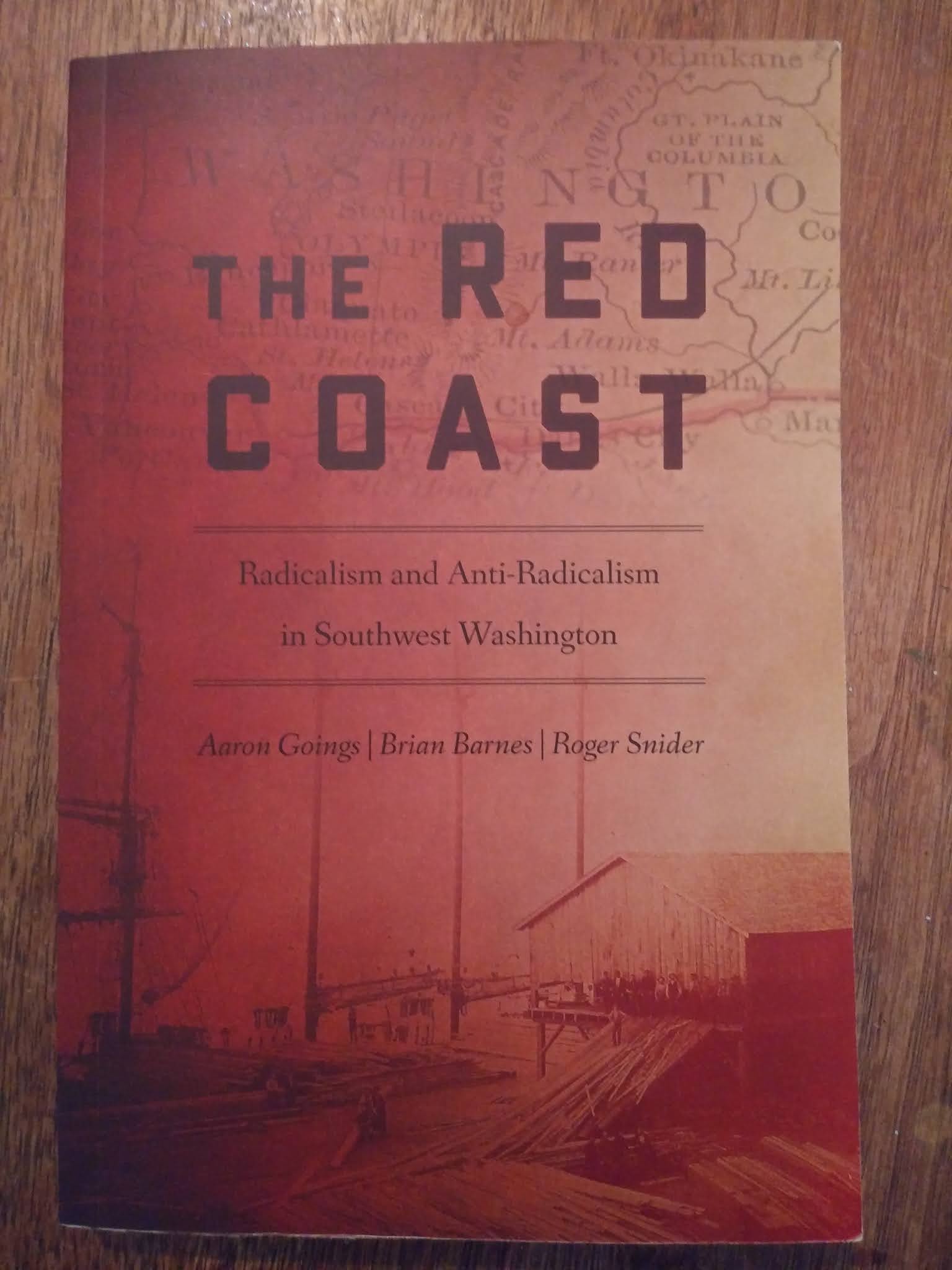
Book Review: Red Coast: Radicalism and Anti-Radicalism in Southwest Washington

The Red Coast is a rare book of Pacific Northwest history that unpacks a vital era. The labor, free speech, and political wars in the first third of the 20th century is an often misunderstood and glossed-over part of our heritage. Written by three authors, including two St. Martins Saints (I guess), the episodic nature of the book makes it interestingly readable. 

This book goes straight onto my shelf of classics of Pacific Northwest history. My criteria are generally works that are based on original research and primary sources, but also take a new perspective. Red Coast does both of these in spades. 

Other works I put on that shelf include Confederacy of Ambition, by William Lang, and the three statewide histories by Robert Ficken. Red Coast gives a clear view of a unique period in our history. Despite the well-known incidents, such as the Centralia Massacre, Red Coast ties these lowlights into a consistent narrative that redefines our understanding of regional history through the Depression. 

My primary insight, though, is on the second part of the subtitle of the book: Anti-Radicalism in the early 20th century. Or, what seems to be now the conservative re-radicalization of Southwest Washington.

Throughout my life, Southwest Washington has always been a stable, union-friendly Democratic bastion. In fact, this has been true since the re-alignment of politics in Washington after the 1932 election. Before the Roosevelt wave election in 1932, Washington was a Republican supermajority state. Democrats in 1932 swept the table and reestablished a new balance of power. Even after the parties again realigned in the late 1980s (King County voted for Reagan twice!), Southwest Washington Democrats held onto a seemingly genetic stranglehold on legislative and countywide seats in Grays Harbor, Pacific, and other Southwest communities. 

Obviously, since the 1980s it became plenty obvious to point out a Democrat from South Bend was not the same kind of Democrat from South Seattle. But the big Democratic Party tent was big enough to keep the Coastal Caucus happy and on the team.

The taste of the coastal voters seemed to change in recent years with less than stellar returns for top ticket Democrats. The election of Rep. Jim Walsh and how well Trump did the same year in Southwest Washington indicates that in a decade or so we’ll be talking about how the region re-aligned, yet again.

After reading Red Coast, I’m not sure if this is a re-alignment or the end of an 80-year truce or a tapping into of a strong political tradition in the region. The echos between current conservative politics and the chapter on Rep. Albert Johnson are strong. Rep. Johnson served in the 3rd Congressional District for almost two decades and was a direct product of the anti-radical movement in Southwest Washington described in The Red Coast. While anti-radicalism is the second fiddle nemesis in The Red Coast, it seems to be the more lasting phenomenon worth studying. I don’t want to spoil the book, but the Wobblies did not win.

Johnson’s primary legacy was anti-immigrant politics and actual anti-immigrant legislation. I need to do more work on this, but there seems to be a direct tie-in from Johnson’s political work to the specific Oregon brand of “Free Soil” politics that birthed the black exclusion laws. But that is for another day.

Johnson’s anti-immigrant politics dove-tailed with the homegrown anti-radicalism in his district because Wobbly and Socialist politics largely rotated around ethnic lines. The socialist camps and community halls were also largely Norweigian cultural centers.

So, this brings us back to today in the post-2016 Southwest Washington. It may be too early to tell, but despite Washington being a safe state for Democrats statewide, we may see the cementing of a new conservative alignment in Southwest Washington this November. In fact, if Democrats can run the table everywhere else, but Republicans can keep the seats they’ve already won and possibly pick off an incumbent, I’d say that shift has happened. Also, I don’t think its too much to say that the energy at the top of the ticket in 2016 and 2020, with barely hidden anti-immigrant sentiment, is one of the reasons why. 

There is a lot more to the regional political identity in Southwest Washington (and the broader Pacific Northwest) than anti-immigration politics.  But reading The Red Coast reminds us that this isn’t a new evolution, but rather a part of the DNA that is just now finding new emphasis again.

I bought my copy at Browsers Books downtown. You should buy a copy locally as well.

We have to face Slade Gorton’s legacy, not bury it

The evil that Slade Gorton did lives after him.

In the weeks following his death, I think it is a good time to relitigate the legacy of Slade Gorton. It isn’t only about damning the man himself and whether he has a “racist bone in his body.” It is also about how we as a region understand our own fairly recent history. It is also about how we will continue to understand racism in the Pacific Northwest. If we can let Slade Gorton off the hook, we can continue to let ourselves off the hook.
The Boldt Decision is the big case that everyone points to when we talk about Slade Gorton, Indian Fighter. I spent nearly 20 years working at the Northwest Indian Fisheries Commission blinking at the public retelling of Slade’s time as Attorney General. I didn’t get into it then, but I was also part of a team on which picking a fight with an elder statesmen was a particularly bad strategic move. 
There also was not a lot of love in that world, if any at all, for Gorton. He was pretty hated and I don’t think I need to explain that.
1. Not Boldt, but around Boldt.
I am not going to relitigate Boldt, that is for much smarter people than me. And in the end, Gorton lost that case. His office and the institution of the state itself (different independent offices) spent years fighting federal court orders. But again, in the end, he and his fellow travelers lost. After the Supreme Court finally weighed in in 1979, the state and the tribes set up a system of co-management that stood Gorton’s understanding of tribal sovereignty on its head. 

Let’s backtrack a little though. Let’s talk about the time between the Boldt Decision and the decision in Washington State Commercial Passenger Fishing Vessel Association. This second case is where the Supreme Court finally put its stamp of approval on the Boldt Decision. But why isn’t it called “U.S. v. Washington” (which is the official name of the case in which Judge Boldt decided)?

Because when the two agencies that managed fisheries in Washington wrote rules to implement Boldt, they were sued by fishing organizations (like the Passenger Fishing Vessel Association). They argued that allowing tribes to catch 50 percent of the salmon violated the equal protection clause in the state constitution. 
I don’t want to get into the legal arguments here. I’m going to give you a huge spoiler: The Supremacy Clause. It’s a thing.
But, while Passenger Vessel was winding its way first through Thurston County Superior Court, up to the state Supreme Court and eventually on the U.S. Supreme Court’s docket, a lot of shit was going on.
I think the 9th Circuit’s decision in Passenger Vessel (as quoted by the Supreme Court) says it best:

The state’s extraordinary machinations in resisting the [1974] decree have forced the district court to take over a large share of the management of the state’s fishery in order to enforce its decrees. Except for some desegregation cases …, the district court has faced the most concerted official and private efforts to frustrate a decree of a federal court witnessed in this century. The challenged orders in this appeal must be reviewed by this court in the context of events forced by litigants who offered the court no reasonable choice.”

“Except for some desegregation cases…”

That should ring in your ears. 

That was in 1979. For decades, federal courts had been hearing segregation cases and forcing local school boards and states to impliment Brown vs. Board of Education. In one line, the federal courts compared Slade Gorton to segregationist John Ben Sheppard. 

In the South, this local and state defience meant that President Eisenhower would send the 101st Airborn into Arkansas to open the schoolhouse doors. In Washington, we would need to have the U.S. Coast Guard and the Federal Marshals acting as game wardens.

It wasn’t the arguing of the orignal case that dooms Gorton. Granted treaty fishing rights was probably new territory back then and deserved an honest fight in court. But the disengenous route to Supreme Court, plus the stoking of violence and disent is what tells you what kind of Attorney General he was.

In the mid-1970s as federal marshals and the Coast Guard attempted to implement court decrees, non-tribal fisherman rammed their boats and physically blockaded their work. Tear gas was fired at non-treaty fishing boats. At one point a gillnetter was shot when he tried to ram an enforcment boat.

At the end of the day, these fishing groups had an ally in the state’s top attorney, who took their arguments about federal supremacy and treaty rights to the Supreme Court and lost.

2. Oliphant, the nut of Gorton’s arguments and the downstream impacts

Outside of Boldt, there has not been a lot of (if really any) discussion of Gorton’s record regarding treaty rights and tribal sovereignty. I’ve seen brief references that Gorton argued in front of the Supreme Court fourteen times (fourteen times!), but little discussion of what he actually did with his time.

Fun fact, of the fourteen cases that Gorton argued in front of the Supreme Court, five were cases against tribes. One of those cases was Oliphant vs. Suquamish Indian Tribe. This case has become a classic in Indian law because of how it limited tribes’ ability to enforce criminal law on their reservations. The basic crux of the case is that Oliphant was arrested by Suquamish cops. He appealed, not because he was innocent of whatever he did, but because he claimed the tribe could not enforce criminal codes against non-tribal members. 

And of course, in the same way Gorton inserted the state Attorney General of Washington State into Passenger Vessel on behalf of non-tribal fisherman, he interserted the office into this case. His office was not a party to the case, but he had a chance to limit tribal sovereignty, so he took it.

And, while this argument is present in other Gorton tribal arguments, I want to point it out here. In Oliphant, Gorton argued:

The Sovereignty of the United States over the area which is now the State of Washington under the concepts of sovereignty which have always been accepted in western country, in western civilization in the United States came from explorations beginning with those of Robert Gray and from a series of treaties, the Louisiana Purchase Treaties with Spain and Great Britain culminating in the treaty with Great Britain of 1846 under which we settled the northwest frontier of the United States.

At that point, the United States’ claim to the sovereignty over the Washington area was total, absolute and complete.

This is the smoking gun.

In Gortons’ legal mind, the tribes in fact do not exist. Tribal sovereignty as a thing itself does not exist. His arguments in front of the Supreme Court were a forearm crashing of all the place settings off the table. All of this we are arguing about is totally pointless because, at the end of the day, it was the sovereignty of the United States that is “total, absolute and complete.” He thought he was arguing with non-entities.

Even though Gorton won in Oliphant, tribes continued to exist as governments. They continued to have the ability to prosecute their own members, and despite efforts in his legislative career, grew in capacity. But Oliphant hung around the neck of the tribal legal system and had real-world impacts on tribal members.

In 2011, the Bureau of Justice Statistics reported: 

  • 55 percent of American Indian and Alaska Native women experienced physical violence from an intimate partner in their lifetime.
  • 90 percent of American Indian and Alaska Native female victims of intimate partner violence report an inter-racial perpatorator.
And these cases were not being prosecuted on the federal level, the default jurisdiction for non-tribal members in Indian Country.

We’ve recently begun pulling back on the strings of Oliphant. In 2013, Congress passed an update of the Violence Against Women Act which specifically gave tribal courts jurisdiction over non-tribal defendants in domestic violence cases. 

When we talk about Gorton’s legacy, the unbearably high rate of Native women that are beaten and raped by their partners is as worthy of discussion as to when he “saved baseball.”

3. Not a racist bone in his body

At the end of the day, I don’t care if it really was true whether Gorton held racist anger in his heart. The question is whether he supported racists in his actions as Attorney General and (more importantly for us today) whether he put together an institutionally racist system.

The former is obviously true in the role he took as Attorney General during the lead up to Passenger Vessel. He had the opportunity for years, but especially during the at-sea riots in 1976, to pull the state back and negotiate a settlement. He had a choice to insert himself and the state of Washington into a Supremacy Clause fight alongside non-tribal fishermen and he decided to fight a losing battle. We waited for years until we began to set up the co-management system.

The former is even more true with his arguments in Oliphant and the impacts it had for decades. Gorton argued as an instrument of the state that tribal sovereignty doesn’t exist. 

He had a choice to insert himself and the state of Washinton into a case whether someone like me can punch a tribal police officer in the face, and he won that case. The downstream impacts of that case meant that thousands of sexual violence victims that are also tribal members never received justice. 

That is a racist system that Slade Gorton built.

In 1891 when someone stood up against Thankgiving

C.B. Reynolds of the Washington Secular Union in 1891:

We no objection to pumpkin pie, but we do protest against its being seasoned with theology.

That is about the best quote ever.

And, the quote really puts a light on how far back our churched vs. unchurched tradition goes back up here. Although I doubt the WSU had a long tradition (hard to find any evidence of them beyond the early 1890s), it was already being pointed out that our region is pretty ungodly 25 years later:

The great problem, to my mind, in the Pacific Northwest is lack of religious life. Many causes contribute to this. The newness of the country, its people coming here from all parts of the world, strangers to each other, without the family and home connections; the population is cosmopolitan, with nearly every nationality represented, with a large proportion of Southern Europeans and Orientals, who have no religious life nor Sunday observance.

It didn’t matter in the end what Reynold’s and the WSU wanted, Gov. Ferry did his part and issued a proclamation and honored the almighty anyway. I mean, who else are you going to be thanking?

Real estate of Kurt Cobain’s life

If at least one of the houses that Kurt Cobain grew up in in Aberdeen won’t sell, but is still priced above the average for the neighborhood, what do you assume the selling power of Cobain to be?

A house out on Delphi and still owned by Courtney Love, and the likely most local last resting place of Kurt Cobain,  has been off an on the market for years now. And, it still hasn’t sold.

People know where Kurt Cobain lived and slept. But, it doesn’t seem like we’re at the point yet where that means anything extra. Other than noting that someone is trying to make a little bit more off of his name but can’t.

Maybe we’ll never reach that point of any historic value of the real estate.

« Older posts Newer posts »

© 2026 Olympia Time

Theme by Anders Noren — Up ↑