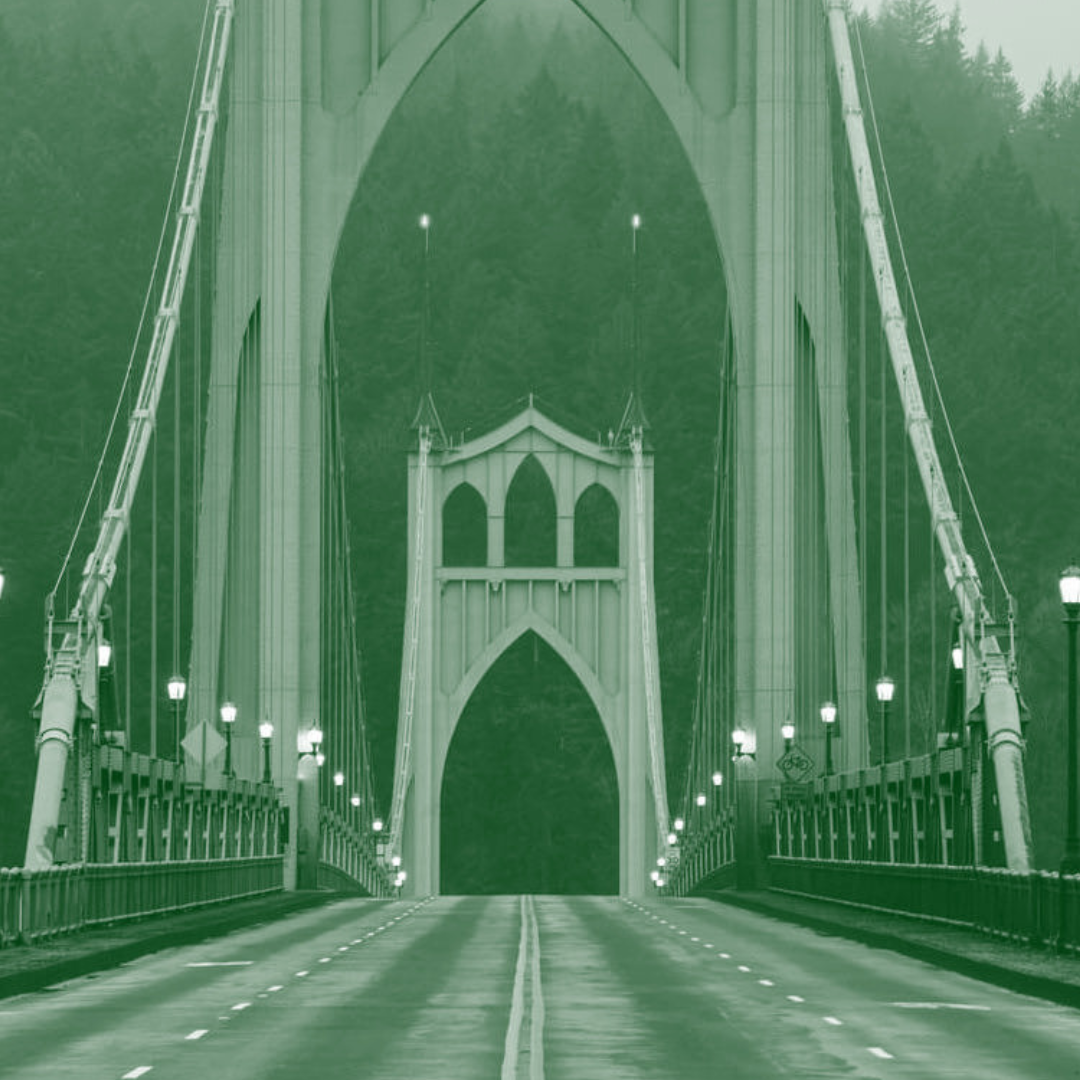
Wildwood takes place in Portland’s Forest Park, though the movie never says so explicitly. Just past the park’s edge lies the Impassable Wilderness. It’s a hidden territory of talking animals, bandits, mystics, and an exiled aristocrat. Two kids, Prue and Curtis, cross into it while chasing crows who kidnapped Prue’s little brother.
They do eventually find and rescue him. What they don’t find is anybody who lived there first. There’s no village on the riverbank, and no trace of the people who fished, burned, and traveled Portland for thousands of years before Portland. The woods stand empty, filled by the movie with imported folklore. This is called terra nullius. That’s the legal doctrine letting European settlers look at a place full of people and see a blank slate.
Land acknowledgments push back on that idea. They grew out of Indigenous protocols of greeting, spread through Canada and Australia, and now open civic meetings and school assemblies across North America. The concept is simple. Before you start something here, say whose ground it is. It’s a small habit that interrupts the blank-slate narrative. That applies to writers drawing maps of invented worlds on top of real ones just as much as it applies to city councils.
Terra nullius isn’t the only borrowed thing in Wildwood. The Wildwood wilderness runs on medieval court politics, featuring hereditary rulers, an Avian Principality, and a bandit hierarchy. The coyote armies dress like Russian Cossacks. The Mystics are druids living deep in the trees who emerge straight out of Slavic fairy tales. Framing all of it is the English portal fantasy, where sensible city kids step through into an enchanted woodland full of animals in clothes. It’s a neighborhood Beatrix Potter and C.S. Lewis would recognize.
It’s worth asking where the story is actually happening. Think of the final episode of St. Elsewhere, where the whole hospital turns out to have lived inside a kid’s snow globe. Once you know where a story takes place, everything in it reads differently.
Suppose the forest and its magic really were what mattered. The movie would then owe us an explanation of how European magic got to Oregon, who brought it, when, and what happened to the magic that was already here. It never says. The magic just exists, and all of it is borrowed. That’s a clue. In the story, the parents hand over their own child on a bridge, starting the whole sequence with their choice.
A third-person narrator can still sit inside a family’s perspective. The story tells it from the outside, but what it describes is what these people would reach for. They’re a family living in a city, a few generations past whatever country their ancestors left, carrying plenty of technology and not much local history. When trouble comes, their toolbox holds fairy tales from somewhere else. You can understand why, since that’s what they were handed.
So what would something deeper look like, for the family and for the movie?
W.P. Kinsella’s The Iowa Baseball Confederacy offers another approach. Kinsella also wanted magic rooted in a place, reaching for something American and pastoral, which in his case was baseball. But the game at the center of his book, a strange, time-bending contest that won’t stop, exists because of a curse. An Indigenous man laid it on the land, keeping the curse from disrupting the tidy past the white settlers tried to build. His modern characters have to face displacement and stolen ground, because the stolen ground drives the story. Wildwood lays British courts over the Oregon woods. Kinsella’s wonder was inseparable from the history of the land itself.
Wildwood had two chances to get closer to home, and it passes on both. The first was the crows.
A murder of crows grabs baby Mac and carries him off, staying on as the Dowager Governess’s infantry and air force. Along the Coast Salish and Northwest Coast, Raven and Crow are anything but henchmen. Raven is a trickster and a transformer who shapes the world with cunning, while Crows serve as helpers to people with their own magic. In Wildwood they’re dark, obedient muscle. They fill the same job the White Witch’s wolves have in Narnia and the flying monkeys have in Oz. A bird the region’s own stories treat with respect gets cast as a simple minion.
The second chance was the coyotes. The movie makes them Cossack mercenaries working for the Governess, which is an odd role for an animal that already has one in regional lore. Across the Columbia Basin, across the mountains from the Willamette Valley, Coyote is a trickster, a creator, and a teacher. The actual animal only arrived in western Oregon recently. Clearcut forests and the removal of wolves opened up the country, letting coyotes move in behind settlers. An army of coyotes working for an exiled aristocrat could have been a story about how outside powers find hired hands among the displaced. Instead, the coyotes are just another ancient danger of the wilderness, because the movie doesn’t ask where they came from.
It’s easy to keep piling on, and it isn’t entirely fair. Two writers help explain why Wildwood is the movie it is.
Tom Hayden’s Irish on the Inside explores assimilation and what it costs when descendants of immigrants lose old languages, stories, and connection to place. What’s left is a gap, and people fill it with whatever’s nearby. Wildwood’s toolbelt relied on Beatrix Potter, C.S. Lewis, and the European folklore that comes down through generations of children’s books. When the movie wants to show its love for the woods in the city, those were the words it had.
Wendell Berry addresses the next part in The Unsettling of America, noting that many Americans feel displaced from the land by economic forces and act like transients on ground they could nurture. We can track that displacement in car-dependent urban layouts that keep us off our feet and separate us from our neighbors. Learning to belong to a place takes time, affection, responsibility, and commitment. Wildwood has affection and responsibility. Through Prue’s bike ride through the city, Wildwood pays real attention to Portland’s hills, plants, and people. The myths in the woods come from elsewhere, but the love for the setting is genuine. Seen that way, the movie is a stepping stone, an earnest first attempt by someone trying to root his imagination where he stands.
Rhododendrons can show what an honest version looks like.
Back in the Eocene epoch, a broadleaf forest ran in a belt around the northern half of the world. Then the climate cooled and ice broke the belt apart. Surviving rhododendrons were left stranded in pockets, with some in the gorges of the Himalayas and China, some in the mountain forests of Southeast Asia, some in the Caucasus, and some on the coast of North America. When settlers carried cultivars back across the ocean and planted them next to the native Pacific rhododendron, which happens to be Washington’s state flower, they put long-separated plant cousins into the same dirt.
A gardener recognizes that a cultivar is imported while acknowledging it’s growing there now. Both plants share the yard. A story can work the same way. Settler history is part of a place, and a writer can bring inherited stories alongside an understanding of current realities. However, the forest isn’t empty, because the native plant has history and stands right next to you.
A version of Wildwood that took this ground seriously would treat Forest Park as a place where imported elements meet what was here first. The Governess, her coyotes, and her feudal courts would read as an outside power pushing into the country with its own established ways. The woods would push back.
Wildwood feels familiar at first because many Pacific Northwest readers grew up looking at wet green woods through a European lens. This is how we come to think of grass lawns. Cool-season grass takes well to Pacific Northwestern winters, and portal fantasy or British pastoral themes fit easily too. It feels like a comfortable grass laid over ground that was logged flat long ago. Nobody planted a lawn with bad intentions.
But a lawn requires steady water. In July and August when the rain stops, unwatered grass turns to straw. Native prairie plants, Douglas firs and rain gardens keep growing through the dry summer because they’re adapted to it after surviving many dry seasons.
If we want stories that endure dry periods of misplaced memory, we can set aside the imported turf and examine what grows beneath. By looking at the actual dirt and respecting the deep roots already holding it together, we can tell a fantasy and a history that truly belong here.

