Author: Emmett O'Connell (Page 36 of 176)
| 1984 presidential results in Washington State. |
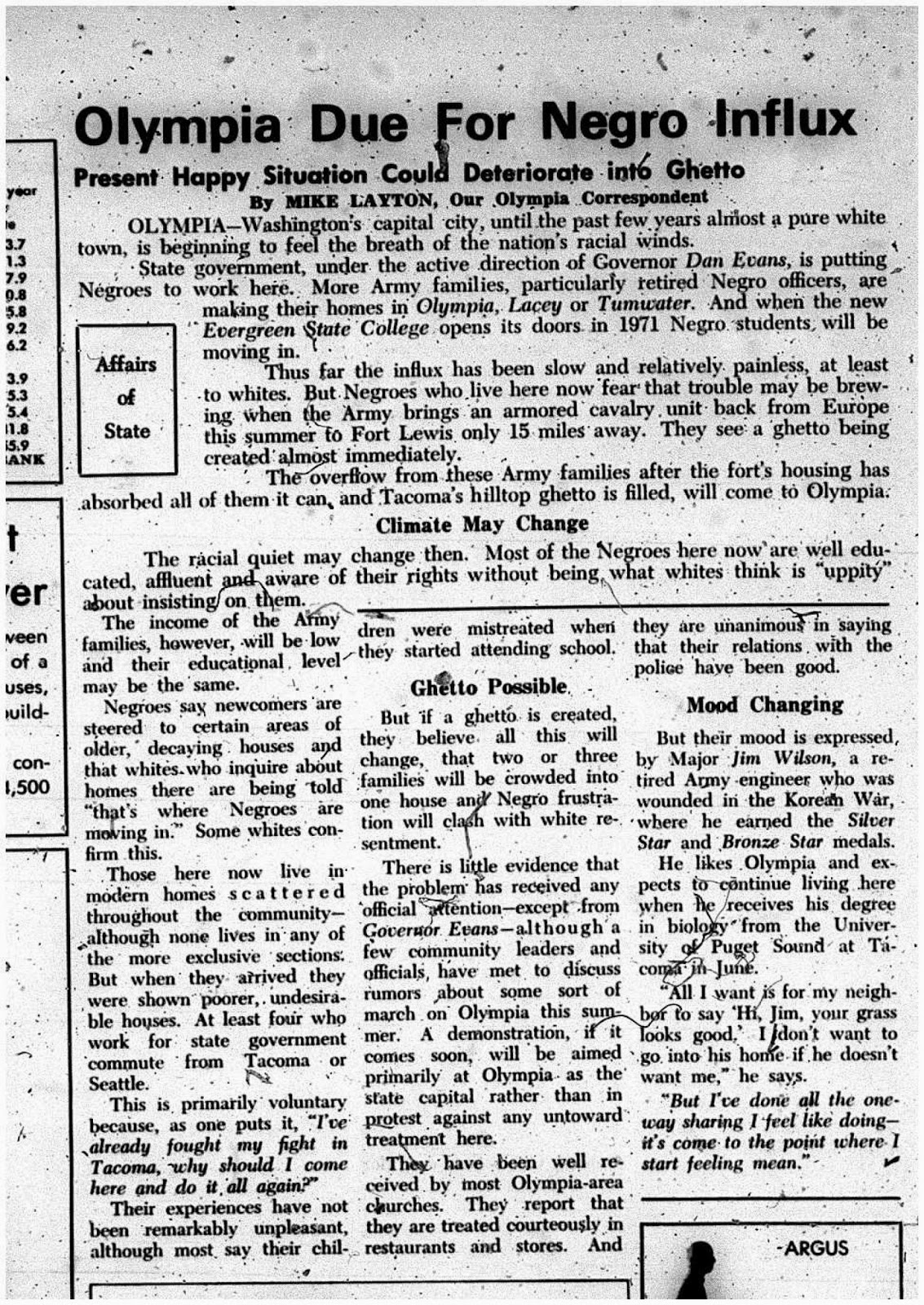
The 1980 and 1984 elections in western Washington baffle me a little bit. The Reagan Revolution was strong throughout the entire Cascadian coast, except for a few counties at the mouth of the Columbia River.
Both Thurston and King counties (among other Puget Sound counties) are traditionally Democratic now. But, just about 30 years ago, they were heavily in Reagan’s camp. I’m trying to figure out why this is. But, I’d appreciate anyone that has a more precise explanation.
So, working down from the things I know:
1. Dan Evans, John Spellman (and other moderate Republicans like Slade Gorton) that started their careers in the 1950s and 60s came from out of King County. Both Gorton and Spellman were elected in 1980, so (even though Spellman lost in 1984 to Booth Gardner) its likely that the “main stream” Republican mojo in Puget Sound was strong in the early 1980s. From what I’ve read, Spellman’s loss to Gardner had more to do with Spellman being a bad manager than party identification.
2. Republicans (even Reagan) weren’t attached to social politics like abortion) in 1980 and 1984. I-471, which would have prevented public funding for abortion, failed statewide in 1984, with major losses in both Thurston and King counties. Reagan won in counties that voted against an anti-abortion initiative. Not what you’d really consider possible now 30 years on.
3. The social conservative wave didn’t seem to crash in Washington State until the 1988 Republican presidential caucuses. That year, conservative Christians took over the party caucuses and threw off the moderate business friendly brand, voting for Pat Robertson. Eight years later, Ellen Craswell repeated history, taking the Republican nomination for governor (but getting beat by a lot by Gary Locke).
So, to me, the two statewide elections in the early 80s seems like the lag time between the Evans revolution in the 1960s and the Christian social conservatives catching up in the late 80s. The memory of Reagan’s is of a stalwart social conservative. But, at least in Washington, it seems like the momentum of more moderate Republicans carried him through two elections.
Does that make sense?
So, this time of year seems a good a time as any to ask, but what did you think of Olympia Time this year? I’m not sure how many noticed, but I started on a regular schedule of blogging about April or May this last year. Two posts a week, which turns out to be eight or nine posts a month.
I’ve kept to a handful of topics, mostly local history and blogs. But, I’ve stretched out to include Cascadia Exists too. These posts explore the political or social patterns that already exist in our region.
I also dribbled out much longer written pieces that didn’t really have a home on the blog. I finally polished them up and put them together in a free (or pay what you want) book.
For the time being I’m going to keep up this pattern, two posts a week and every other Monday an Olyblogosphere. The posts under the Cascadia Exists header are getting long and numerous enough that I might try stitching them together into something more coherent (another book!) by fall.
I hope your 2013 went well, and I hope all the best for you this year. And, I know your dying to know, so here are my favorite posts I wrote since I started the new regime:
2. The long history of the Seattle Freeze
3. Thoughts about loss and oysters
4. Why won’t those damn kids just obey the will of our Grecian columns?
6. Sue Gunn reconnected the ends of the Cascadian political spectrum
1. Dig through the muck, find the history (from ArchaeOlygy):
Rip into it with heavy machinery, as happened when Mission Creek was
restored this Fall, and the stratigraphy makes the depositional history
that much clearer. The modern beach has been accumulating atop the
slumping clay fill of the road that dammed the creek a couple or three
generations ago. The yellow clay beneath the asphalt calved off and
melted away over the years after the road was built, spreading itself
thinner down the beach, taken by the very tides and waves that bring the
gift of gravel, sand, and shell from the north (including quit a few
Olympia Oyster shells, which probably died decades ago in polluted Budd
Inlet).
2. The Yodelling Lama wonders about freshwater otters and shellfish. Maybe they’re freshwater shellfish.
3. Holy cats. Ask on r/olympia what you should know before moving to Olympia? Brace yourself.
You will have a tough time making friends because it’s a college town
with a transient population. Locals figure you’re going to split in a
year or two so they don’t bother trying to get to know you. #1 rule:
stay out of the drug culture. Heroin is huge here. It is everywhere. You
may out of loneliness and desperation for interaction be drawn in.
Every year some Greener freshman turns on and falls in and the army of
undead living in the woods grows. On every corner holding a piece of
cardboard is some asshole that I can say “Damn, I remember when she was
new and cute.” It’s really sad.
4. Marcus and family heads over to the Lights at Ken Lake. Hey, by the way, thank the sponsors this year (Eastside Big Tom and A+ Services). Another awesome Olympia light display is Olympialightstravaganza!
What I can point to is a point when political parties in Washington
tried to force greater political allegiance and were bucked by the
voters. About 15 years ago the Republican and Democratic parties sued
and were able to get Washington’s old open primary law tossed by the
courts. In the old version, Washington voters did not register by party
and were able to vote for any candidate in a primary. The top vote
getter from each party would advance.
After the courts
threw out that version (because the parties said that by not controlling
who voted in their primaries violated their rights to association) the
state instituted a more closed primary. Each voter would get a series
ballots with only a certain party’s candidates on each. You’d turn in
one ballot, forcing you to participate in only one primary.
This was similar to Oregon’s current primary law in which parties have the ability to open their primaries to non-registered voters.
The
Washington voters quickly rejected the more closed primary system,
opting instead for a Top Two primary, which actually just works as a
qualifying election. Instead of the original primary system that sought
to break down the walls that guarded parties by opening up their
nomination processes to the general public, the Top Two makes that
meaningless. The Top Two passes along the top vote getters, even if both
say they’re Democrats or Republicans.
A similar
election system was rejected by more than a 10 percent margin in Oregon,
giving argument to the point that maybe Oregon and Washington aren’t
that alike in political cultures. But, an analysis after Measure 65 went down in flames said the loss had more to do with the explanation of the measure than anything else.
That
Oregon voters were used to their current system and Washington voters
had a new system foisted on them by the courts and the parties was
probably the best way to explain the difference in the two initiative
results.
The most important thing to think about in
terms of the possibility of a Top Two system in Oregon is that the idea
itself in 2008 came from the political center of the state political
culture. Rather than some quixotic political dreamer, Measure 65 was
proposed by two former Oregon secretaries of state and supported by a
popular former (and now again current) governor. And, now its coming back again.
So, the idea of voting systems that ignore the institutional power of parties likely have some home in the Cascadian
political culture. Rather than a large group or band centered politics,
like religion, politics are grown from much smaller groups and from the
person themselves. It is important to participate, the civic good is
worth promoting. But, no large organization or institution is going to
tell the average Cascadian voter what to do.
I’m not sure what I expected to find when I was looking for some data on party affiliation broken down by state. I thought it would mirror religious affiliation. Strong groups of affiliated folks along the edges, but also a broad center of non-affiliated folks who didn’t feel like they belonged to any particular party.
In a way, I did find that. Both Washington and Oregon have strong numbers (usually a majority) of non-Democratic or Republican voters.
The surprising thing for me was that New England was even independent. New Hampshire, Vermont and Maine (for example) each have strong independent numbers above both Democrats and Republicans. Outside a few other states, this pattern is pretty unique to Cascadia and New England.
So, what I set out to see was that if Cascadia’s anti-institutional and independent streak in religion extended to politics. And, maybe that’s true. There might also be a connection between religion and politics in New England. If you look at the maps here, you see large swaths of high variety and low allegiance in regions across New England as well.
I think there’s something to the way we vote in primaries around here, the actual machinations of voting, but that’s for the next post.
Black houses of Olympia by Jeremy Quist (via flickr)
People are trying to create a mythology around the Olympia Black Houses that simply doesn’t exist. There’s no evidence that Duane Stephen Moore is anything but a typical small business owner (in this case a dentist and a rental owner) who has unique atheistic tastes.
So, that’s my conclusion. Yesterday I put up a map I’d been working on of all the rental houses that Moore owns throughout town. Olympia’s biggest urban legend in recent years has been that there’s something sinister about the houses, that if you mapped them, they’d make a pentagram.
I don’t know what you can see, but there’s no pentagram there for me.
Take away the black paint that seems to touch almost everything (short of the Reef Bar downtown) he owns, Moore seems like a pretty typical entrepreneur. He owns over a dozen rental houses, at least three commercial properties, owns a construction company (to hire sub-contractors to take care of the rentals?) and is an active dentist in Shelton. If the color were blue or yellow (or blue and yellow), I wouldn’t be writing this post.
Also, there’s nothing in the Olympia code to prevent anyone from painting their house black. So, if the city is fining him for having black houses, I’m not sure why.
I didn’t talk directly to Duane (or indirectly) when I was putting this post together. Neither has anyone else that’s written about the black houses either. He’s been referenced a few times in the local paper, but never directly quoted. That gave me the impression that he’s someone that values his privacy.
Also, if I stand by my “regular guy, interesting tastes” position, then I wouldn’t call him, because there’d be nothing really to discuss.
Nik Neburn made the movie I linked to above about the Black Houses. He also made an interesting documentary about the Paul Ingram case. Nik quotes Norman Cohn to make a point about the Ingram case that I think applies to the black houses too:
To understand why the stereotype of Devil-worshiping
sects emerged at all, one must look not at the beliefs or behavior of
heretics […] but into the minds of the orthodox themselves.
While Olympia hipsters are hardly religious fundamentalists, the stories surrounding the black houses do more to cast Olympia overall as a weird and interesting place than to explain anything about Duane Moore or the houses themselves. Because we want Olympia to be a certain way, we make the houses seems weirder than they actually are. And, if it wasn’t the black houses, we’d find something else out there to make up stories about.
1. Icy, icy, coldcoldcold at the Deschutes falls and dams.
3. Now this is a fascinating post. I suggest you read about Allison Dickson’s conversation with an unnamed Olympia bookstore. But, it boils down to “we don’t want your reading because people can buy the ebook.”
4. Camille is trying to coax the light back during the dark Christmas time.
This is some sort of sports team, from the Washington State Historical Society:
But, I really doubt it is a basketball team, as labelled by the WSHS. Mostly because it labelled as being taken in 1885 and James Naismith didn’t create the game until six years later. I think its much more likely that what we have here is an actual soccer team.
For one thing, the year is pretty good for the spread of the game. The first nationwide soccer association launched in 1884, the first national cup in 1885 along with the first international friendly. While all three of these events occurred inside the New York/New Jersey area, soccer obviously existed while basketball did not.
You can find some trace evidence of soccer in Washington State in the same era. This 1891 newsclip from Yakima mentions soccer being played.
Now, here’s some funny history about the Olympia Collegiate Institute. At different times, appently both the Methodists and Lutherans ran the old OCI, but merged them with Tacoma-area schools at different times. The Methodists absorbed OCI into the University of Puget Sound in the 1880s. The Lutherans restarted OCI (Later the Pacific Lutheran Seminary), absorbing it into Pacific Luthern University in the 1910s.
While Tacoma couldn’t end up stealing the capital from Olympia, they did make away with two colleges.
A couple of years back I was shocked (shocked!) at the high rate of immunization exemptions in Thurston County and especially the Olympia School District. Back then the state had just passed a law where parent’s have to more expressly say why they’re exempting from immunization. Apparently that extra social hurdle has worked in Thurston County.
While the countywide trend has gotten back to the statewide average, it looks like Olympia still stands out like a sore thumb in the county. All of my data came from here.
County rates are coming down:
Olympia still out there:
Cascadia is known for its high rates of people who don’t like giving their kids shots (for whatever reason), but there’s been very little explanation of why. Some people pointed to that in Washington it had been easy to get out of immunization. But, that has changed, and the rates are still pretty high.
What if there is a broader social culprit? I’d say its possibly a cause of how people on the ends of either the left or right liberal slant (traditional political spectrum) don’t necessarily feel the social pressure to conform to something getting immunized. The Inlander piece I linked to earlier points out that homeschoolers and religious schools have some of the highest rates of exemptions in 2011. Possibly our social culture of living and let living allows for people to shut themselves off from guarding the public health.