I was not able to make it to the Housing Options hearing with the Planning Commission tonight. But here is what I sent them (and what I planned on saying).
Page 12 of 177
The Red Coast is a rare book of Pacific Northwest history that unpacks a vital era. The labor, free speech, and political wars in the first third of the 20th century is an often misunderstood and glossed-over part of our heritage. Written by three authors, including two St. Martins Saints (I guess), the episodic nature of the book makes it interestingly readable.
This book goes straight onto my shelf of classics of Pacific Northwest history. My criteria are generally works that are based on original research and primary sources, but also take a new perspective. Red Coast does both of these in spades.
Other works I put on that shelf include Confederacy of Ambition, by William Lang, and the three statewide histories by Robert Ficken. Red Coast gives a clear view of a unique period in our history. Despite the well-known incidents, such as the Centralia Massacre, Red Coast ties these lowlights into a consistent narrative that redefines our understanding of regional history through the Depression.
My primary insight, though, is on the second part of the subtitle of the book: Anti-Radicalism in the early 20th century. Or, what seems to be now the conservative re-radicalization of Southwest Washington.
Throughout my life, Southwest Washington has always been a stable, union-friendly Democratic bastion. In fact, this has been true since the re-alignment of politics in Washington after the 1932 election. Before the Roosevelt wave election in 1932, Washington was a Republican supermajority state. Democrats in 1932 swept the table and reestablished a new balance of power. Even after the parties again realigned in the late 1980s (King County voted for Reagan twice!), Southwest Washington Democrats held onto a seemingly genetic stranglehold on legislative and countywide seats in Grays Harbor, Pacific, and other Southwest communities.
Obviously, since the 1980s it became plenty obvious to point out a Democrat from South Bend was not the same kind of Democrat from South Seattle. But the big Democratic Party tent was big enough to keep the Coastal Caucus happy and on the team.
The taste of the coastal voters seemed to change in recent years with less than stellar returns for top ticket Democrats. The election of Rep. Jim Walsh and how well Trump did the same year in Southwest Washington indicates that in a decade or so we’ll be talking about how the region re-aligned, yet again.
After reading Red Coast, I’m not sure if this is a re-alignment or the end of an 80-year truce or a tapping into of a strong political tradition in the region. The echos between current conservative politics and the chapter on Rep. Albert Johnson are strong. Rep. Johnson served in the 3rd Congressional District for almost two decades and was a direct product of the anti-radical movement in Southwest Washington described in The Red Coast. While anti-radicalism is the second fiddle nemesis in The Red Coast, it seems to be the more lasting phenomenon worth studying. I don’t want to spoil the book, but the Wobblies did not win.
Johnson’s primary legacy was anti-immigrant politics and actual anti-immigrant legislation. I need to do more work on this, but there seems to be a direct tie-in from Johnson’s political work to the specific Oregon brand of “Free Soil” politics that birthed the black exclusion laws. But that is for another day.
Johnson’s anti-immigrant politics dove-tailed with the homegrown anti-radicalism in his district because Wobbly and Socialist politics largely rotated around ethnic lines. The socialist camps and community halls were also largely Norweigian cultural centers.
So, this brings us back to today in the post-2016 Southwest Washington. It may be too early to tell, but despite Washington being a safe state for Democrats statewide, we may see the cementing of a new conservative alignment in Southwest Washington this November. In fact, if Democrats can run the table everywhere else, but Republicans can keep the seats they’ve already won and possibly pick off an incumbent, I’d say that shift has happened. Also, I don’t think its too much to say that the energy at the top of the ticket in 2016 and 2020, with barely hidden anti-immigrant sentiment, is one of the reasons why.
There is a lot more to the regional political identity in Southwest Washington (and the broader Pacific Northwest) than anti-immigration politics. But reading The Red Coast reminds us that this isn’t a new evolution, but rather a part of the DNA that is just now finding new emphasis again.
I bought my copy at Browsers Books downtown. You should buy a copy locally as well.
The evil that Slade Gorton did lives after him.
Let’s backtrack a little though. Let’s talk about the time between the Boldt Decision and the decision in Washington State Commercial Passenger Fishing Vessel Association. This second case is where the Supreme Court finally put its stamp of approval on the Boldt Decision. But why isn’t it called “U.S. v. Washington” (which is the official name of the case in which Judge Boldt decided)?
The state’s extraordinary machinations in resisting the [1974] decree have forced the district court to take over a large share of the management of the state’s fishery in order to enforce its decrees. Except for some desegregation cases …, the district court has faced the most concerted official and private efforts to frustrate a decree of a federal court witnessed in this century. The challenged orders in this appeal must be reviewed by this court in the context of events forced by litigants who offered the court no reasonable choice.”
“Except for some desegregation cases…”
That should ring in your ears.
That was in 1979. For decades, federal courts had been hearing segregation cases and forcing local school boards and states to impliment Brown vs. Board of Education. In one line, the federal courts compared Slade Gorton to segregationist John Ben Sheppard.
In the South, this local and state defience meant that President Eisenhower would send the 101st Airborn into Arkansas to open the schoolhouse doors. In Washington, we would need to have the U.S. Coast Guard and the Federal Marshals acting as game wardens.
It wasn’t the arguing of the orignal case that dooms Gorton. Granted treaty fishing rights was probably new territory back then and deserved an honest fight in court. But the disengenous route to Supreme Court, plus the stoking of violence and disent is what tells you what kind of Attorney General he was.
In the mid-1970s as federal marshals and the Coast Guard attempted to implement court decrees, non-tribal fisherman rammed their boats and physically blockaded their work. Tear gas was fired at non-treaty fishing boats. At one point a gillnetter was shot when he tried to ram an enforcment boat.
At the end of the day, these fishing groups had an ally in the state’s top attorney, who took their arguments about federal supremacy and treaty rights to the Supreme Court and lost.
2. Oliphant, the nut of Gorton’s arguments and the downstream impacts
Outside of Boldt, there has not been a lot of (if really any) discussion of Gorton’s record regarding treaty rights and tribal sovereignty. I’ve seen brief references that Gorton argued in front of the Supreme Court fourteen times (fourteen times!), but little discussion of what he actually did with his time.
Fun fact, of the fourteen cases that Gorton argued in front of the Supreme Court, five were cases against tribes. One of those cases was Oliphant vs. Suquamish Indian Tribe. This case has become a classic in Indian law because of how it limited tribes’ ability to enforce criminal law on their reservations. The basic crux of the case is that Oliphant was arrested by Suquamish cops. He appealed, not because he was innocent of whatever he did, but because he claimed the tribe could not enforce criminal codes against non-tribal members.
And of course, in the same way Gorton inserted the state Attorney General of Washington State into Passenger Vessel on behalf of non-tribal fisherman, he interserted the office into this case. His office was not a party to the case, but he had a chance to limit tribal sovereignty, so he took it.
The Sovereignty of the United States over the area which is now the State of Washington under the concepts of sovereignty which have always been accepted in western country, in western civilization in the United States came from explorations beginning with those of Robert Gray and from a series of treaties, the Louisiana Purchase Treaties with Spain and Great Britain culminating in the treaty with Great Britain of 1846 under which we settled the northwest frontier of the United States.
At that point, the United States’ claim to the sovereignty over the Washington area was total, absolute and complete.
This is the smoking gun.
In Gortons’ legal mind, the tribes in fact do not exist. Tribal sovereignty as a thing itself does not exist. His arguments in front of the Supreme Court were a forearm crashing of all the place settings off the table. All of this we are arguing about is totally pointless because, at the end of the day, it was the sovereignty of the United States that is “total, absolute and complete.” He thought he was arguing with non-entities.
Even though Gorton won in Oliphant, tribes continued to exist as governments. They continued to have the ability to prosecute their own members, and despite efforts in his legislative career, grew in capacity. But Oliphant hung around the neck of the tribal legal system and had real-world impacts on tribal members.
In 2011, the Bureau of Justice Statistics reported:
- 55 percent of American Indian and Alaska Native women experienced physical violence from an intimate partner in their lifetime.
- 90 percent of American Indian and Alaska Native female victims of intimate partner violence report an inter-racial perpatorator.
We’ve recently begun pulling back on the strings of Oliphant. In 2013, Congress passed an update of the Violence Against Women Act which specifically gave tribal courts jurisdiction over non-tribal defendants in domestic violence cases.
When we talk about Gorton’s legacy, the unbearably high rate of Native women that are beaten and raped by their partners is as worthy of discussion as to when he “saved baseball.”
3. Not a racist bone in his body
At the end of the day, I don’t care if it really was true whether Gorton held racist anger in his heart. The question is whether he supported racists in his actions as Attorney General and (more importantly for us today) whether he put together an institutionally racist system.
The former is obviously true in the role he took as Attorney General during the lead up to Passenger Vessel. He had the opportunity for years, but especially during the at-sea riots in 1976, to pull the state back and negotiate a settlement. He had a choice to insert himself and the state of Washington into a Supremacy Clause fight alongside non-tribal fishermen and he decided to fight a losing battle. We waited for years until we began to set up the co-management system.
The former is even more true with his arguments in Oliphant and the impacts it had for decades. Gorton argued as an instrument of the state that tribal sovereignty doesn’t exist.
He had a choice to insert himself and the state of Washinton into a case whether someone like me can punch a tribal police officer in the face, and he won that case. The downstream impacts of that case meant that thousands of sexual violence victims that are also tribal members never received justice.
That is a racist system that Slade Gorton built.


Recognize that even when your good intentions are truly good, that’s totally meaningless. Try this on for size: when you accidentally step on somebody else’s foot, you do not make your good intentions the focus of the episode. Instead, you check to make sure the other person is OK, you apologize, and you watch where you’re going. You don’t get annoyed with the person you stepped on because you caused her pain or declare that she is too sensitive or defend yourself by explaining that you meant to step to the left of her foot… But I’m a nice person does not cancel out the fact that you’ve silenced, marginalized or used your privilege to further disenfranchise black and brown people, whether you intended to do it or not.
Last November I posted about the history of race and housing in Olympia. I tracked local ordinances to outlaw racial discrimination in housing. I also wrote about some housing developments that have racially-based covenants.
- We build much of our city in the most expensive housing type.
- Single-family homes are the most expensive housing type. Do I need to give you a link to back that up?
- And, in the Pacific Northwest, income is a proxy for race.
One of the most interesting, long-term and simmering debates in Olympia, is how several dozen blocks in SW Olympia are connected to the rest of the city.
Southwest Olympia south of Division and east of the mall is an interesting place. Unlike anywhere else in the city, they are unusually cut off from the rest of the city. Other than 9th Avenue and 4th Avenue, there is really no way to access much of the Southwest side neighborhood.
But, like a lot of things you’ll read on my blog anymore, it wasn’t always that way.
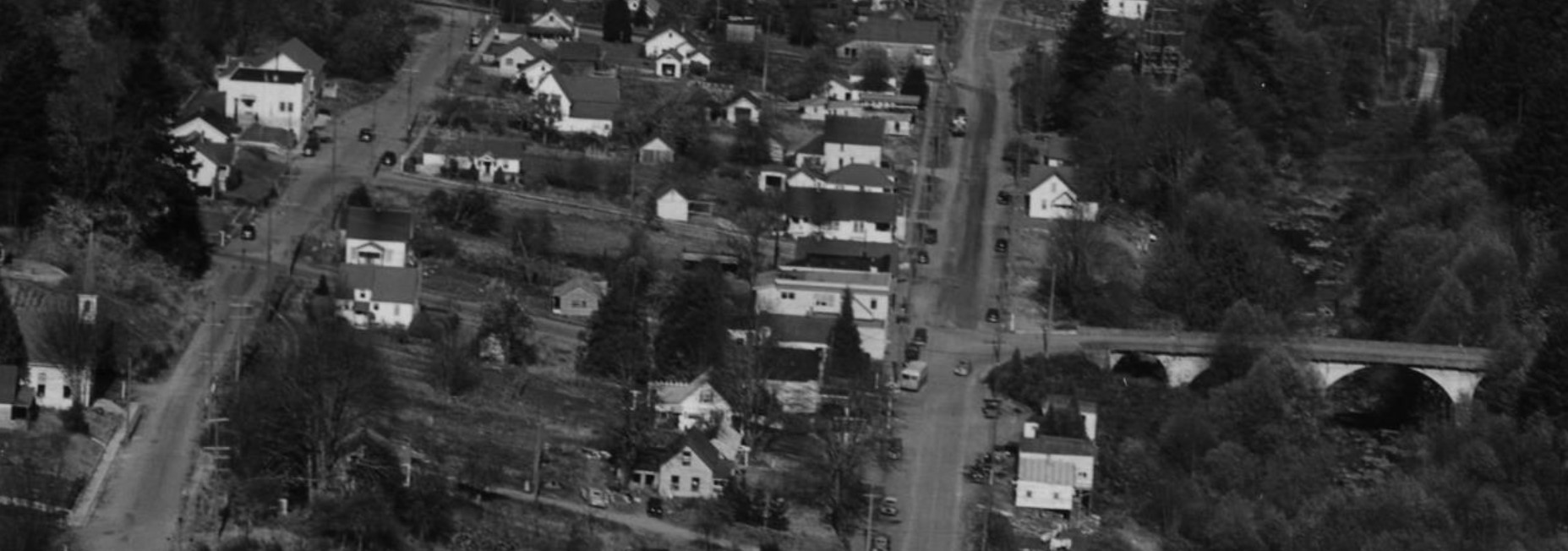
It turns out that the weirdest little street on the westside, Caton Way, which juts northeast from near 9th and Lee street for half a block is actually the last portion of an old county road that had connected the westside with the rest of the county.
Black Lake Way can be seen plainly here in this 1945 plat map:
In the 1937 version of the westside map, Blake Lake Way is the primary route out of west Olympia.
Not Karen Fraser, but Karen Frazier.
Because the name of a street in Southeast Olympia resembles the name of a longtime local politician, I’ve always wondered who the Karen Frazier (not Fraser) of the street actually was. Who had been well-known or important enough in Olympia decades ago to name a dog-legged street after?
Well, it turns out, no one at all. Karen Frazier never existed.
What the name signifies is the overlapping plans of how housing developments used to be planned and then abandoned. One of the vital steps before building a neighborhood is to subdivide a larger property, plan where the streets are going to go and then name them. This plan is called the plat and is submitted to the local government.
Here is a portion of Squires plat in 1890:
Here is Boone’s plat in 1950:
1. I got into a discussion this afternoon with a local, talking about the state of the Olympian and whether it would be worthy of support if it changed its corporate structure to a non-profit. Here’s the original argument:
I don’t disagree about local news being produced by non-profits. Great idea.
The Olympian is the only professional organization covering the news in the city I love. Let’s just not call them names while they’re doing it is all I’m saying.
Also, I think we’re missing a lot of nuance on the current state of the Olympian’s corporate owners, the McClatchy company. I’ve been reading a lot about them lately, so I wanted to write down what I’ve learned.
2. I’m not sure how many of us realize how quickly the fate of the Olympian could turn. And turn so quickly and quietly that we’d have no reason to notice. Right now, the paper’s parent company is in the process of trying to negotiate a deal on $124 million in pensions it is due to pay. After spending the better part of the last decade paying down $4 billion in debt it took on to buy up Knight Ridder (of which the Olympian was part), McClatchy seems to face this one additional hurdle to start making forward progress.
While this is happening, the stock price of the company tanked, going now for only pennies per share. That gives the managers of the company very little room to move as they try to chart a path forward. The immediate risk from my point of view had been just that McClatchy would declare bankruptcy. Maybe, I thought, they would just shut the Olympian down, maybe just fold it directly into the Tacoma News Tribune.
But there is a fate worse than death. And a fate that because McClatchy almost killed itself buying our paper (along with dozens other) we’ve avoided as the company tries to get itself back on its feet. Hedge funds, like the one described here, are ripping through the carcasses of struggling newspapers, feeding investments with the goodwill of subscribers:
It is no secret that the newspaper business is in decline. So it’s hardly surprising that Freeman would feel the need to shrink the head count at his newspapers, just as almost every other newspaper owner has had to do for years.
But what sets Freeman apart is that he seems to have a rather unique view of a newspaper’s purpose. In this view, his papers are intended not so much to inform the public or hold officialdom to account, but to supply cash for Freeman to use elsewhere. His layoffs aren’t just painful. They are savage.
…
Last year, Digital First Media’s chief executive, Steve Rossi, sent a company-wide email saying that the company was “solidly profitable,” and that “advertising revenue has been significantly better” than competitors. Yet the layoffs have not let up. Just last week, Alden Global imposed another round of layoffs, including a third of the staff at the Denver Post. As recently as 2009, Denver had two competing newspapers; it is now down to 66 journalists in one demoralized newsroom.
And, this is a fate we’re avoiding in Olympia because our newspaper was luckily bought by a company that is still interested in being a newspaper company.
Meanwhile, in August, the New Media Investment Group announced that it was buying Gannett Co. and combining it with its GateHouse Media subsidiary, which instantly created the largest newspaper chain in the country. New Media is controlled by Fortress Investment Group, and its approach is not terribly different from Alden Global’s. People are starting to call papers owned by hedge funds “ghost papers” — defined by the New York Times as “thin versions of once robust publications put out by bare-bones staffs.”
Although they’ve had their share of layoffs, McClatchy’s 30 media properties… are not ghost papers. A little more than a year ago, Julie K. Brown, a journalist at the Miami Herald, published an extraordinary expose of the convicted sex offender Jeffrey Epstein; that series sparked an outcry that led to Epstein’s arrest in July. In October, the well-regarded McClatchy Washington bureau documented a disturbing rise in the rate of cancer treatments at Veterans Affairs hospitals. And just a few weeks ago, the Kansas City Star published a powerful examination of Missouri’s public defender system
I’ve pulled a lot of quotes from Bloomberg’s coverage of McClatchy, but Joe Norcero’s “McClatchy Goes Digital to Ward Off ‘Ghost Papers’” article is a good discussion as any of McClatchy’s current situation. The most telling part of the article to me is where I learned that the actual McClatchy family hasn’t taken a dividend in a decade. This is not a company that is trying to squeeze blood from a stone.
3. The Sacramento News and Review is an alt-weekly that does a great job skewering the Sacramento Bee, the McClatchy mother paper. But even they point to the Bee as an irreplaceable local asset. Whenever I feel sad about the state of local papers, I remind myself that people of goodwill exist by reading Eric Johnson’s “Support the Bee Anyway” and “Save the Bee.”
For the record, I’m all for the non-profit, locally controlled Olympian. I’m all for the web-based non-profit locally owned web-based, podcast heavy local news organization. I’m all for all of that.
But this is a bus stop, not UberX. I need to pay the fare for the bus that gets me closest to my destination. So I support the Olympian anyway.
Given what we know about the world back then, I can hardly believe that to be literally true. But it is possible that the debate over open housing only brought such attitudes to the surface.
The housing practices that Amanda Smith and other Olympians were trying to prevent by adopting Open Housing rules in the 1960s were in reaction to decades of racist practices. It seems that at least on the surface, we’re still seeing the impact of these practices decades later.
1. Olympia real estate agents as late as the 1960s actively steered African American home-buyers away from certain neighborhoods.
(African American residents) put the blame for the trend toward a (racially segregated) ghetto squarely onto the practices of some real estate businessmen…
What is happening, they say, is that real estate salesmen are trying to steer Negroes into certain areas while at the same time urging whites not to buy there “because Negroes are moving in.” A check with some whites who are hunting houses confirms this.
According to at least one Lacey city councilmember in the 1990s, Lacey was one of the places where real estate agents would steer minority customers.
2. There were certain neighborhoods in Olympia that as late as the 1940s were officially off-limits to anyone who was not white.
This is by no means a comprehensive list, but while it didn’t seem to be common practice, there were a few neighborhoods in Thurston County that has racial covenants. Two of these were in Olympia, and a third I found was Beachcrest, north of Lacey.
Stratford Place, one such neighborhood just north of Olympia High School, had these racial covenants baked in.
Both of these came up at the same time, so I’m doing them in one post.
1. Answering Steve Salmi’s question here first:
…Dan Leahy was right to “follow the money” regarding tax breaks for developers – including Ron Rants. Olympia would do well to display greater transparency in its decision making if it wishes to build the credibility of Missing Middle initiatives.
For the sake of historical honesty, it would also be helpful to know if Ron Rants is now being subsidized to undo the very problems he helped to create – both as an elected official and a development industry leader.
First from May 1980:
Fellow commissioner Ron Rants said the existing policy didn’t mesh with his personal view. The city should be encouraging mixed housing, he remarked. Mix housing includes having duplexes in single-family neighborhoods.
Then in September 1980:
Rants said the city, in fact, should encourage denser living patterns within city limits, to put an end to what he called rapid leap-frog growth to the county.
I will say that Steve’s point that the city commission, which was on its way out in the early 80s, was certainly the body that laid the groundwork for a series of downzoning in the 80s and 90s, they didn’t seem to be enthusiastic about putting on the density brakes. In fact, to me, it seems like the same populist dynamics that put in the city council form of government where the same dynamics that were also arguing for exclusive single-family zoning throughout the city.
2. In the past few months, the opponents of denser and less expensive housing in Olympia have started using Sam Stein’s “Capital City” like a cudgel. Without really explaining how Stein’s arguments about how the modern real estate industry works in regards to single-family zoning, they simply state that more options for buildings (for-profit, non-profit or government) would just allow for more building and builders are bad.
A historic district, a contextual rezoning––which means changing the zoning rules to match what’s there right now––or a downzoning, which means in the future people will only be able to build smaller than what’s here right now. So it wasn’t even, I said neighborhood before, but it’s really block by block, block by block by race, so white blocks––predominantly white blocks––got protected, predominantly African American, Latino, and Asian blocks were subject to big, new development. And so, the result of that ends up looking like integration. If you look at those prior, mostly Black, Latino, and Asian blocks, and you see there was this luxury development that was built and suddenly all these white people moved in, now something else is happening. But at the same time, they cut off the ability to build out low-income and mixed-race development on those white blocks. And so, they were channeling integration in one way and cutting it off in the other. It’s like a one-way street that’s going––there’s a one way street and you’re moving in the wrong direction. If we want to do integration, we need to unsegregate those white spaces. The problem is not the concentration of people of color in neighborhoods that they built up over a long period of segregation and disinvestment. So that in many cities the integration that’s happening is the exact wrong way to do it.
In context to Olympia and the Northwest, this brings up a few things for me.
One, we’ve seen how the debate over changing single-family neighborhoods into “ghettos” has affected the course of Olympia housing policy. Calling people racists in historic terms is not fun, but I’m just going to leave that there.
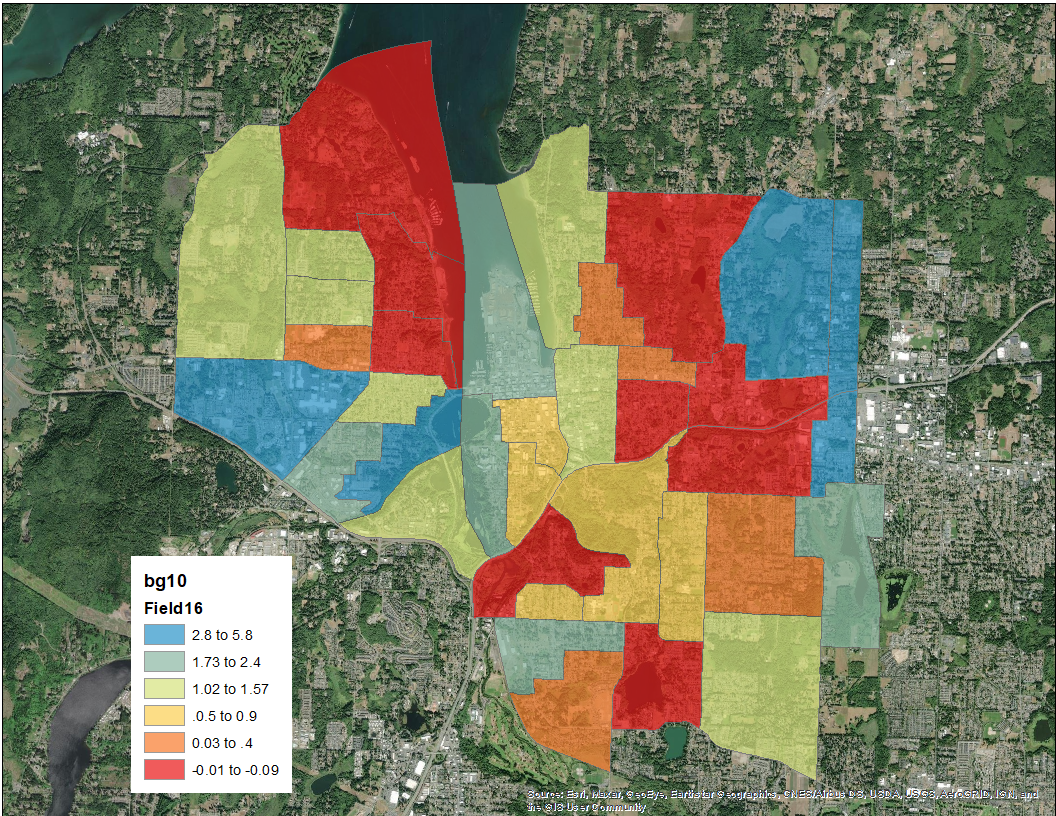
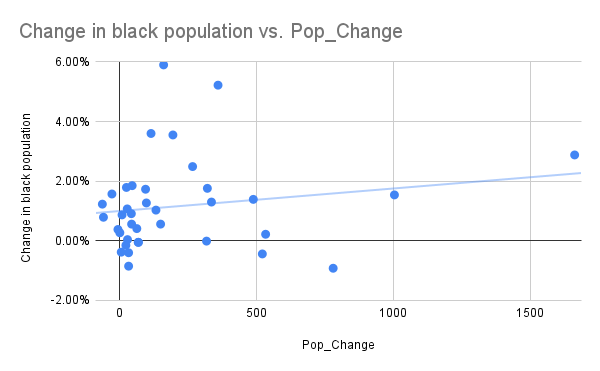
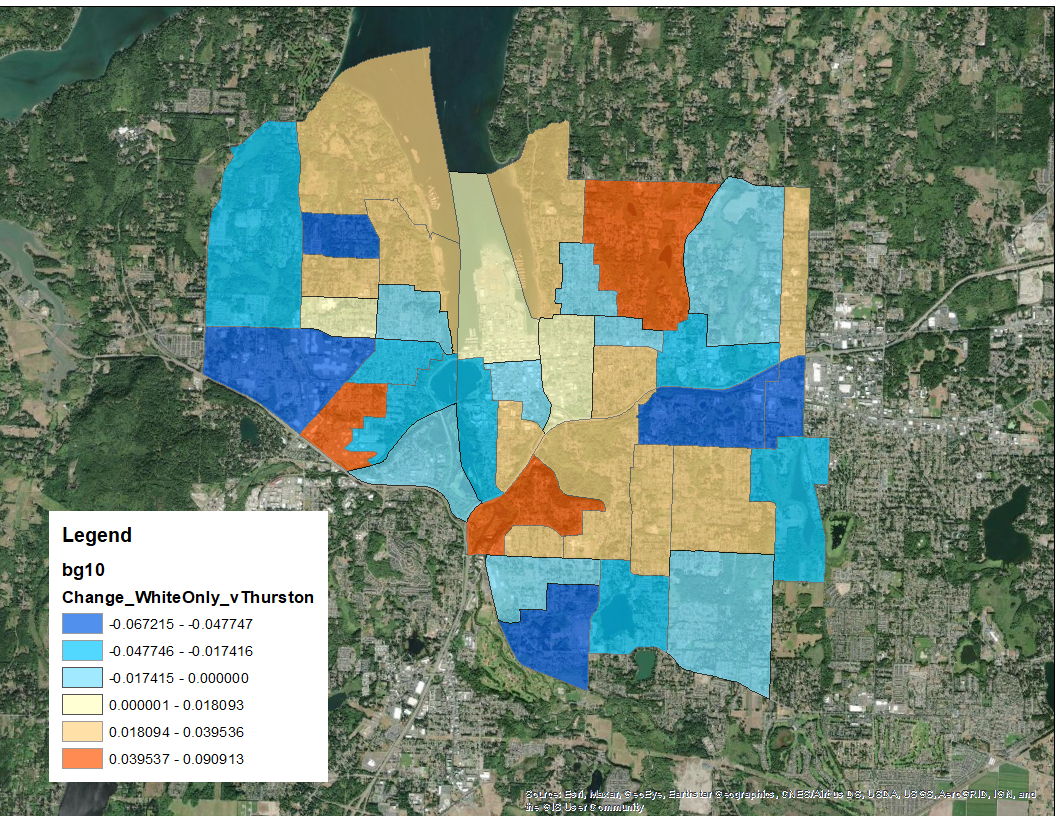
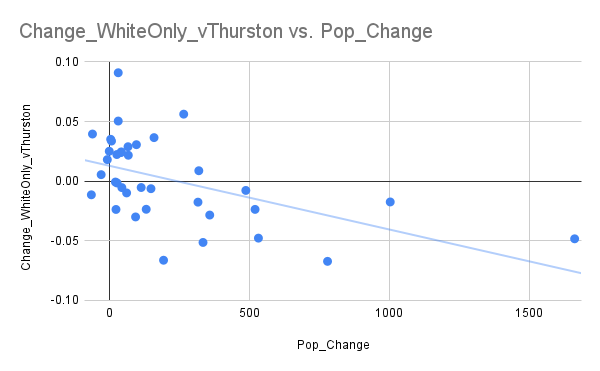
Two, people who trot out Stein are also unironically talking about “nodes” of high-density growth in Olympia. There are places where added density that could take place in single-family neighborhoods should more appropriately go. And, unsurprisingly, when you poke around a block group map of white distribution around Olympia, places with a lot of apartments (existing “nodes”) also have the fewest white people.
So, to my question: how is Stein’s discussion of protecting white neighborhoods not like what happened and is happening in Olympia?