History, politics, people of Oly WA

Category: Washington Politics (Page 1 of 26)

The Power of Nightmares but Dreaming of Something Better

The streets were under a state of siege. They were gripped by a level of civic breakdown that feels ancient in its brutality. 

A powerful media figure styled himself as a guardian of law and order. He spent months radicalizing the public against a perceived foreign threat. Through his writing and speeches, he cast social conflict as an invasion and dissent as subversion. 

This campaign led to the formation of a heavily armed force that ignored the courts and civic institutions. In organized raids, its members rounded up hundreds of people they didn’t like. They beat them with clubs. They forced them at gunpoint out of town and banished them from the places where they lived and worked. 

The air was thick with talk of Americanism versus treason. The local press framed these purges as a necessary cleansing of the community.

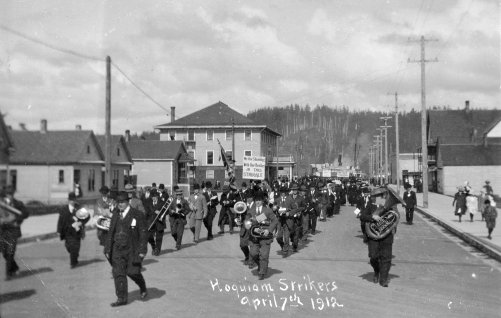
This wasn’t Minneapolis or Chicago in 2026. This was Hoquiam in 1912.

The events of the Grays Harbor County War started a political firestorm. It shattered local politics and created the framework for the immigration system we’re still fighting over today. What happened on the banks of the Hoquiam River wasn’t a weird one-off event. It was a prototype.

Albert Johnson was the central figure. He was a newspaper editor who later carried this model of vigilante justice to Congress. The workers he targeted were immigrants tied to the Industrial Workers of the World. Like the mob that stormed the Capitol on January 6, 2021, the Citizens’ Committee that terrorized the IWW was made up of local businessmen. These men believed they could restore order with ax handles and rifles. This conflict was a rehearsal for the nationalistic energy that became the Immigration Act of 1924. Our technology is different now, but the blueprint is the same. People exploit local unrest, turn economic stress into a cultural threat, and use that panic to justify national fear.

Grays Harbor was the lumber capital of the world. Its wealth came from the hard work of Finns, Greeks, and Slavs. These immigrant workers lived in dirty camps and worked ten-hour days in dangerous mills. In late 1911 and early 1912, the IWW organized them. They started with free speech fights and ended with a massive strike in March 1912. The mills stopped. The business elite panicked.

Johnson was the editor of The Daily Washingtonian. He became their main voice. He didn’t just write columns. He used his paper to help lead the Citizens’ Committee. This was a vigilante group made up of people who saw themselves as “respectable.” They ignored the police and did whatever they wanted. They raided union halls and beat strikers. By May 1912, they crushed the strike. Workers were loaded onto trains at gunpoint and told to never come back. Johnson told the public this wasn’t about wages. He said it was about protecting America from foreign anarchy.

That story became the foundation of his career. He was elected to Congress in November 1912. He brought another paper, the Home Defender, to D.C. to keep the fight going. Over the next decade, he turned the logic of Grays Harbor into federal law. Congress passed the Immigration Act of 1917, which added literacy tests. This was just the start.

By 1919, Johnson was the chairman of the House Committee on Immigration and Naturalization. He wanted his ideas to look official. He hired a eugenicist named Harry Laughlin to be his expert. The results were laws that narrowed who was allowed to be American. In 1921, he wrote the Emergency Quota Act. In 1924, the Johnson-Reed Act finished the job. It used the 1890 census to decide who could enter. This was a trick to exclude the same Southern and Eastern Europeans Johnson fought in Washington. When President Coolidge signed it, Johnson called it a second Declaration of Independence.

He turned mob violence into a government machine. Things like deportation and visas weren’t acts of a crowd anymore. They were part of a permanent system.

Alternative History of Hoquiam

But I’m not writing today to just tell you what happened in Hoquiam was inevitable. Right now, we’re trying to find a way out. So, let’s imagine a world where Johnson didn’t succeed.

But what if this didn’t happen? It’s useful to look at how history could have gone differently. We’ve seen that history isn’t always a straight line. There’s a version of this where the “Red Coast” didn’t just resist but built a bridge between different groups. Imagine if the 1912 strike ended with a coalition of workers and farmers. In this version, the local middle class is disgusted by the violence. They decide that you can’t have law and order if you’re breaking the law to get it. Johnson’s paper is sued for libel. He loses his money and his reputation before he ever gets to D.C.

The Washington State Grange helped make this possible. They were a powerful group of farmers who cared about the democratic process. They hated the vigilantism of the Citizens’ Committee. They saw the deportations as a threat to everyone’s civil liberties. The Grange condemned the business elite. They put their support behind local leaders who stood against the violence. This gave the middle class the cover they needed to speak up. It broke the power of the anti-labor group and made room for a new Labor Defense League.

In this timeline, Stanton Warburton, a progressive Republican, wins the 1912 election instead of Johnson. He beats him by speaking out against the ax handle tactics. Because Warburton keeps his seat, the path to the 1924 Act is severed. Instead of racist quotas, we get the 1928 Integration Act. It creates a federal office to help new workers. By 1930, 18% of the population is foreign born. These people become a huge group of customers that helps the economy stay stable during the Depression. American identity becomes about what you contribute rather than where your parents were from.

The labor movement wins by changing what it means to be American. They argue that including people is the best way to stop exploitation. The Labor Defense League teaches English and civics while they organize. They say an immigrant with a union card is a better American than a man with a club.

Without Johnson, eugenics would never have become a part of our policy. The leaders of the immigration committee are progressives who care about the economy, not “purity.” This focus on solidarity changes everything. Unions and farmers work together. Farm owners in the fruit regions agree to fair wages and housing in exchange for a stable workforce. They create a direct path to citizenship.

If that had happened, our politics today would be different. We wouldn’t be obsessed with demographics or cultural panic. We’d talk about economic solidarity instead. We wouldn’t hear much about “replacement” or “dilution.” We’d focus on building unions and protecting workers. This would stop the race to the bottom that makes people hate immigration.

Our experts would change too. We wouldn’t listen to people who scream about border crises. We’d listen to people who study how to help newcomers join the community. Success would be measured by how fast people pay taxes and join the workforce.

Johnson’s power came from turning local fights into a national panic. We still see this. A fight in a city or a border dispute becomes an existential crisis. The lesson of this alternate history is that local resistance matters. If Hoquiam had said no to Johnson in 1912, we might have a more open democracy today.

The 1924 Act is still with us because it made immigration a matter of crime and race. Before Johnson, “illegal aliens” weren’t really a thing in our laws. He built the world of border patrols and caps. Even after the overtly racist parts were removed in 1965, the structure stayed. Johnson didn’t just win a fight in a small town. He changed the whole conversation. He made us ask if people should be here at all instead of asking how to welcome them. That choice still has us stuck today.

The Current Counterfactual

We can see the emotional reality of this counterfactual in modern Pacific County. It sits right next to Grays Harbor. In 2017, the area was shaken when ICE agents detained Mario Rodriguez at the post office in Long Beach. Mario wasn’t a stranger. He’d lived on the peninsula for twelve years. He worked as a bilingual teaching aide in the local schools. He was a neighbor, a volunteer, and a friend. When he was taken, the reaction from the local white community was not what you might expect. Many of these people had voted for the very policies that led to his arrest, but they weren’t happy. They were shocked.

Even the local police chief, Flint Wright, was rattled. He had supported a tougher border, but he spoke up for Mario. He called him a pro-law enforcement guy. He said anyone would want him as a neighbor. This reaction shows that when abstract talk about “illegal aliens” meets a real human being, the old logic falls apart. The people of Pacific County didn’t see an invader. They saw a hole left in their neighborhood. They formed a support group that eventually became a nonprofit. They fought for their neighbor.

This local pushback is today’s proof that Johnson’s vision was never inevitable. It shows that even in the conservative timber and fishing towns of Southwest Washington, people can choose their neighbors over a club. The ghost of 1924 is still in the machine, but stories like Mario’s remind us that we can choose a different path. We don’t have to live in the reality Albert Johnson built. We’ve seen a glimpse of something else. It’s much closer than we think.

The Whitman Statue Is Our Confederate General Statue. It is Time to Go

For the last year or so, the state has been tied in knots over a very simple question: where should we put the Marcus Whitman statue once it’s removed from its current spot at the Capitol?

Down the hall? Near the Senate dining room? Outside, under cover, fingers crossed it doesn’t get vandalized or fall apart? Maybe leave it where it is and move everything else around it?

Watching this debate unfold has been oddly familiar. Not because the details are the same, but because the pattern is.

We’ve seen this movie before. Just not here.

In the South, communities spent decades arguing about what to do with Confederate statues. Every option was explored except the obvious one. Move it somewhere else. Add context. Put up a plaque. Keep it for history. Avoid controversy. Respect “both sides.” Study it a little longer.

Sound familiar?

Eventually, many of those places had to face the truth. Those statues were never neutral. They weren’t built to teach history. They were built to tell a story about power, race, and who belonged. And once that truth was unavoidable, the only honest option was removal.

Marcus Whitman occupies the same space in Washington’s history.

That may make some people uncomfortable, but discomfort isn’t a reason to avoid clarity.

The Whitman statue was not erected because historians reached a careful consensus about his importance. It was erected because a specific myth needed a physical anchor. The “Whitman Saved Oregon” story wasn’t just wrong. It was useful. It framed white settlement as inevitable, benevolent, and divinely sanctioned. It pushed Native people to the margins. It wrapped colonization in religion and heroism.

That story has been thoroughly debunked. Not recently, but decades ago.

And yet, the statue remains.

That’s why the comparison to Confederate generals matters. In the South, statues of Robert E. Lee and others weren’t really about the Civil War. They were about reinforcing white dominance long after the war ended. Many were erected during periods of backlash against Reconstruction or the civil rights movement. They told a story about who was in charge and whose version of history mattered.

Whitman’s statue does the same thing here. Different region. Different century. Same purpose.

The Whitman myth emerged in the late nineteenth century, decades after his death, at a moment when the Pacific Northwest was trying to explain itself to the rest of the country. The story claimed that Whitman’s 1842 ride east “saved” the region from British control and secured it for American settlement. It cast him as a lone, heroic figure whose actions supposedly determined the fate of the entire region.

That version of events was never supported by serious evidence. The boundary question between the U.S. and Britain was already being negotiated through diplomacy, economics, and military power. Whitman played no decisive role. But the myth stuck because it did important cultural work. It centered white, Christian settlers as the rightful authors of Washington’s history and treated Indigenous nations as background characters in their own homelands.

The myth also served a political purpose. Elevating Whitman, it justified land seizure, missionary violence, and the displacement of tribal members as part of a righteous and inevitable process. It replaced treaty rights and sovereignty with a comforting story about destiny and sacrifice. That framing made colonization feel moral instead of brutal. It made white supremacy feel like history instead of ideology. It is no mistake that we spent decades denying treaty rights and jailing tribal fishermen like Billy Frank Jr., because the story of Whitman made that inevitable.

The Legislature already recognized this, even if it didn’t quite finish the job. In 2021, lawmakers voted to replace Marcus Whitman with Billy Frank Jr. in both the U.S. Capitol and the Washington State Capitol. That decision wasn’t subtle. It was a clear statement about who represents Washington’s values and history.

Billy Frank Jr. fought for treaty rights, environmental protection, and the rule of law. His life and work are grounded in truth, not myth. Elevating him was the right call.

But when it came time to deal with the Whitman statue in Olympia, the Legislature stopped short. No clear instructions.

At a recent joint meeting of the State Capitol Committee and the Capitol Campus Design Advisory Committee, Lt. Governor Denny Heck said the quiet part out loud. The committees, he acknowledged, don’t have guidance from the Legislature on what to do with the Whitman statue here. They’re trying to navigate “sensitivities” without knowing what outcome lawmakers actually want.

So now we’re stuck in the process.

We’re talking about structural engineering studies to see if a four-ton statue can sit in a hallway. We’re debating whether it should be inside or outside. We’re spending time and money figuring out how to preserve a monument the state has already decided should no longer represent us.

Meanwhile, Billy Frank Jr.’s family has made it clear they don’t want his statue sharing space with Whitman. That shouldn’t surprise anyone. Pairing them would flatten history into a false equivalence. As if these figures occupy the same moral or historical ground.

They don’t.

What’s striking is how often people say this is all too complicated. It isn’t.

Across the country, far larger and heavier bronze statues have been removed. Robert E. Lee monuments towering multiple stories high came down in Richmond and Charlottesville. A massive Confederate monument in Raleigh was dismantled. One Lee statue was melted down and turned into new public art. Size didn’t stop those communities. 

Washington isn’t being asked to do something unprecedented. We’re being asked to catch up.

And here’s the part that often gets lost. Removing the Whitman statue does not erase history. It corrects a distortion. History lives in books, archives, classrooms, and museums. Statues live in civic space. They tell us who we choose to honor.

Right now, the state is bending over backwards to honor a lie because it’s heavy and old and awkward to deal with.

That’s not a good reason.

The Whitman statue is our Confederate general statue. It was built to promote a false, harmful narrative. We know that now. Pretending otherwise just delays the inevitable.

The Legislature should finish what it started: tell the Capitol Committee plainly that the Whitman statue should be removed from the Capitol Campus entirely. Not relocated. Not tucked away. Retired.

Deaccession it. Dismantle it. Repurpose it. But stop pretending it needs a place of honor.

This isn’t about tearing down history. It’s about telling the truth.

Brier Dudley is wrong about the news

Brier Dudley’s recent column, “No wonder election results are wacky: Fewer follow the news,” carries significant weight in Washington State. As a leading voice in the movement to fund news organizations, Dudley often frames the boundaries of what policymakers consider possible for future public funding of journalism.

However, his latest diagnosis of our “wacky” election results rests on a fundamental misunderstanding of how voters actually behave and where they are finding their signal in the noise.

Dudley’s thesis is that a lack of news consumption leads to “civic illiteracy” and “wacky” results, such as the election of progressive Katie Wilson as mayor of Seattle. But on his way to create a thesis that builds support for local journalism, he ignores the basic calculus of voting. Voting is an opt-in activity.

In political science, this is called “information efficacy”: the belief that you know enough to make a choice. People who truly feel uninformed don’t typically cast “wacky” ballots; they don’t cast ballots at all. This “voter roll-off” is why local turnout is often a fraction of national turnout. If someone shows up to vote for a “neophyte,” it’s rarely because they are operating in a vacuum. It’s because they have consumed media, be it a TikTok breakdown, a thread on X, or a digital endorsement, that gave them the confidence to act.

The Seattle Blind Spot

Also, if Dudley’s thesis were universally true, Seattle would be a strange place to prove it. He laments the decline of newspapers and TV, yet ignores the vibrant, digital-native ecosystem that currently drives Seattle politics.

While the Seattle Times remains a vital institution, it is not the only game in town. The city continues to fund public television; KUOW is a massive, robust newsroom; and then there is The Stranger. Whether one agrees with its politics or not, The Stranger remains a primary driver of city elections. When “neophytes” win, it is often because they were vetted and promoted by these alternative local outlets. By ignoring these players, Dudley isn’t describing a news desert; he’s describing a landscape where daily newspapers no longer hold the only map.

Olympia and Thurston County are a better example of the news desert that Dudley wants to use. The election results here, though, don’t match the results of his thesis. Rather than “wacky,” we tend to elect local leaders who stand in the deep trough of our local version of centrism. This is because the voters who tend to opt in have the time and inclination to do the extra work to research their choices. This is not an argument for less information. A broad and informed public is obviously a good thing for electing good leaders, but ensuring that once they are elected, they do the right thing.

“Social Media” Doesn’t Mean What You Think It Means

Dudley, like many, uses “social media” as a catch-all for “no news” or “unfounded opinion.” However, by 2025, telling a researcher that you get your news from social media is a meaningless data point. It doesn’t tell us what you are seeing. Are you following KUOW’s journalists on Mastodon? Are you watching live-streamed City Council clips on YouTube? Or are you reading a post from your neighbor on Nextdoor?

Social media is a delivery mechanism, not a source. The problem isn’t that people are “on social media.” The problem is that we have outsourced our civic square to attention-seeking algorithms.

Credibility is Now Built on Engagement

We cannot recreate the 1995 newsroom. The back-and-forth between media and audience has opened up permanently. Today, credibility is built on engagement, not just clicks to a paywalled article, but the actual work of being present where people are.

However, we must admit the anti-democratic force of current algorithms. Most platforms optimize for outrage because outrage pays more. This is fundamentally different from a newspaper’s old role of setting a shared civic agenda. We don’t just need people to come back to paywalled websites; we need a next way that fixes the digital architecture itself.

The Next Way: Digital Public Spaces

What does a pro-democracy digital space look like? It looks like an algorithm that benefits the community by not stoking outrage, and moderation systems that protect people from harm while inviting debate.

A promising example is Roundabout, a new product from the nonprofit New_Public. Roundabout is designed to revive the civic commons role that local newspapers used to play. Unlike Facebook, it is intentionally built against virality. It organizes local information, events, and shared concerns through structured channels and local stewards who guide the conversation.

Instead of a feed designed to keep you scrolling via conflict, Roundabout creates a digital space meant to help neighbors actually know one another and act together. It prioritizes usefulness over headlines and relationships over “likes.”

Looking back at old newsrooms and tsk-tsking candidates for making social media videos isn’t a strategy for the future. We don’t need to save the press of the past; we need to build a digital commons that treats us like neighbors and citizens rather than data points for an outrage machine.

It matters how we talk to each other, but it matter more where we talk to each other

Recently, I came across three interesting, overlapping stories about how government communicates with us. Each highlights tensions between joy, seriousness, and the incentives built into social media.

1. During the 2025 legislative session, the House Democratic Caucus (HDC) developed content described as having a “man on the street” perspective. The Legislative Ethics Board recently ruled against it.

Examples include:

  • March 17, 2025: A post featuring Rep. Zahn asked, “What music pumps you up?”
  • January 24, 2025: A post directed to Rep. Leavitt asked, “What is your go-to coffee order or snack during session?”
  • January 24, 2025: The caucus asked several legislators, “Describe your district in three words.”

These posts, along with others highlighting personal journeys, were criticized in a complaint suggesting these “puff pieces” were more appropriate for campaign materials than official social media posts. The Board concluded that the posts violated state rules on the use of public resources for campaign purposes because they lacked a legislative nexus.

Here we see a small example of harmless, joyful content being shut down simply because it was in the wrong bucket.

2. Meanwhile, the Center Square took a highly critical, detail-heavy approach toward similar content developed by the state Attorney General’s office. At first glance, the video was actually fun. Yet the criticism focused on the AG “wasting time” on a light-hearted video while other office issues demanded attention. It’s almost like the NFL cracking down on harmless end-zone celebrations: nobody is hurt, it’s just joy.

The broader lesson is that on official government channels, we’re expected to be serious and not have fun. This expectation exists despite the consistently creative, people-focused work the Department of Transportation produces every week.

3. By contrast, other officials use the cloak of “unofficial” channels to abandon even the pretense of harmless fun. State Representative Joel McEntire’s Facebook activity illustrates this clearly. While he previously claimed an unauthorized party ran a Twitter account in his name, he now openly manages his personal Facebook page.

Occasionally, he posts serious political content, but more often he engages in highly partisan and aggressive behavior, echoing the divisive rhetoric seen at the federal level. This includes ad hominem attacks, inflammatory comments (like suggesting a political opponent “needs to burn”), and calls for a boycott of a community activist’s business. One target, local activist and business owner Kyle Wheeler, recalled McEntire calling him a “pansy boy” and “delicate flower boy” in 2024—even while acknowledging Wheeler’s community work.

McEntire’s self-proclaimed “unofficial” page status, along with his title of “Chief of Mischief,” has allowed ethics complaints to be dismissed, since the Legislative Ethics Board lacks jurisdiction over personal accounts. Yet his behavior has drawn public criticism, including from a self-identified Republican who called it “childish insults” and an “embarrassment.”

How do we let ourselves be free?

These are small examples in Washington State, but they illustrate a broader trend: social media algorithms giving us different social incentives, and our institutions are not equipped to respond. The decline of local journalism, combined with attention-maximizing algorithms, means our online environments amplify the worst content.

As much as I respect the Project on Civic Health’s efforts to encourage civility, it’s not enough to ask people to control their own behavior. Smoking cessation is one thing; addressing the industry that created the addiction is something else entirely. Social media is designed to maximize attention, often at the expense of civility and community. People like McEntire are using these platforms exactly as intended: stoking outrage, drawing attention, and triggering the emotional rewards built into the system.

Real-world communities thrive on politeness, modesty, and small gestures of mutual care. Online platforms operate in almost the opposite way: they reward conflict, outrage, and self-promotion, which amplifies hate and division. This environment contributes to rising loneliness, anxiety, and mental distress, especially among young people.

Social media can be addictive, much like tobacco, and increased use correlates with worse mental health. Platforms are designed to keep users engaged, making regulation and conscious limits essential to prevent long-term harm.

I’ve been critical of school districts that adopt phone-free policies under the guise of student mental health when the real goal is classroom control. If schools were serious about the impacts of social media, they would ensure their own communications teams weren’t actively posting on spaces that are demonstrably harmful. They have not.

And there’s a reason for this: that is where the people are. We are trapped in a system where some people are finger-wagged for being “not serious” on official channels, while others are incentivized to be the worst versions of themselves on unofficial channels because it works. Meanwhile, serious communicators are stuck posting on platforms that reward outrage.

Kelly Stonelake captures this trap very well here.

The network effects are real. We can’t leave until enough of our actual friends, people we love, leave first. I’ve experienced this myself. I put Meta platforms on pause earlier this year, but returned because of the deaths of two men in my life and the need to connect with people during my mourning period. I could not fulfill my duties as a friend without the platform and the network. And now, I’m even raising money for Movember there because I couldn’t find another way to do it.

A step forward

One thing government could do is explore self-hosted, ActivityPub-powered social media. This idea had some momentum but seems to have stalled. Technically, it’s straightforward, and a handful of governments have experimented with it.

The first step in countering harmful network effects is to build a new network. Putting official government communication on a platform that no corporation can ever own is a vital first step toward reclaiming civility, community, and public trust.

Because yes, it really does matter how we talk to each other.

All Politics Is Local, All Politics Is Complicated

It’s the Saturday after Election Day, and I’ve been thinking about why people don’t vote in local elections. The answer, I think, is baked right into how local politics works, and how we talk about it.

Earlier this week, KUOW aired a “Sound Politics” episode that tried to untangle one piece of that puzzle: why school board elections in Washington are so confusing. It was a fascinating conversation about how state law allows school districts to run elections differently, but it got tangled up in language, using “city” and “school district” as if they were the same thing.

In Seattle, for example, school board candidates must live in specific “director districts,” but every registered voter citywide gets to vote for all of them in the general election. This unusual system exists only because Seattle’s population tops 400,000, a threshold that triggers a special rule in state law. Smaller districts like Highline and Tacoma operate differently.

It’s a great civics lesson, but also a perfect example of how confusing our systems can be. One of my broader theories about elections is simple: if people don’t understand the choices in front of them, they often just don’t vote. When confusion is built into the very structure of our elections, turnout doesn’t just sag, it sinks.

What bothered me about the KUOW piece wasn’t the reporting, but the terminology. Mixing up “school district” and “city” only deepens the public’s misunderstanding. I’ve seen this confusion play out locally in Olympia, where the city, the school district, and the port district all share the same name but have completely different boundaries. In Seattle, it’s even more complicated: the school district’s governance depends on the city’s population, even though the two are technically separate entities.

This is a microcosm of a much larger problem: state law makes local government more complicated than it needs to be. And that complexity collides with how we communicate about elections, especially in odd-numbered years when only local offices are on the ballot.

Another Sound Politics episode this week encouraged listeners to send it to “procrastinating voters.” It was a nice idea. Except that, unless you lived in the 26th Legislative District, Seattle, or King County, only one segment of the show actually applied to you. Even within those areas, it covered just a fraction of what was on people’s ballots.

That’s not a dig at the reporters, though they might have oversold it a bit (“Send this to someone who hasn’t voted in Western Washington, or, you know, anywhere in Washington…”). The truth is, no local NPR station (even in Seattle) could possibly cover the hundreds of races happening across dozens of cities, school districts, and special districts.

Think of it this way: Bellevue, Kent, Renton, Federal Way, Kirkland, Redmond, and Auburn together have about the same population as Seattle. If election coverage were proportional, those cities together would get the same attention as Seattle. But they don’t. There are simply too many races, so coverage outside Seattle gets rounded down to zero. The result: even more focus on Seattle, even less on everyone else.

And as local print newspapers and radio newsrooms continue their slow decline, the information gap just keeps widening.

The biggest reason people don’t vote locally isn’t apathy (which would be an internal flaw) it’s confusion (caused externally). Don’t blame voters for not turning in ballots, blame the system we’ve created. The system is hard to understand, and the information needed to make sense of it is vanishing.

The Texting Election

This year, I’ve had more friends than ever ask why they’re being bombarded with campaign texts. The short answer: vote, and they’ll stop. If your name is not on a list of people who voted, the campaigns are going to keep on bugging you.

Anecdotally, it seems that local campaign texting is way up. It makes sense. Texting is personal and intrusive, but it’s also cheap. In a low-turnout year, every vote is precious, and traditional media reach is limited. When you’re voting for everyone from park commissioners to city council members, odds are you haven’t heard much about any of them through your normal news sources. So campaigns reach past the media and straight into your phone. It’s not elegant, but it’s effective.

What “All Politics Is Local” Really Means

All of a sudden, there is a popular saying now that “all politics is national.” It reflects how the presidency and federal politics loom over everything. That’s true, to a degree. Since the television era, local election turnout has steadily declined compared to national races.

But when Rep. Tip O’Neill said “all politics is local,” he wasn’t talking about turnout rates. He meant that good politics starts with understanding your community, and connecting those local needs to national decisions.

Rep. Marie Gluesenkamp Perez captured that spirit recently when she said she “just refused to let this race be nationalized. It’s not about the message. It’s about my loyalty to my community.” 

And if you zoom out and look at this week’s results from New Jersey, Virginia, and New York City, you can see that dynamic playing out. Each place faces the same national currents, but each community came up with its own answer.

Simplify the System, Raise the Turnout

If we want better turnout in Washington, we should start by making local government simpler. I don’t have a perfect fix, but I know that when voters look at their ballots and think, *“What the hell am I even voting for?”* those ballots are more likely to end up in the kitchen recycling bin.

All politics is local. But if we keep making “local” this complicated, we shouldn’t be surprised when fewer people show up to participate.

The Unsoeld of MGP’s Wendell Berry

I’m old enough and have been around long enough to remember when Rep. Brian Baird toured local Democratic organizations to personally explain his support for the surge in Iraq toward the end of the George W. Bush presidency. Baird had been one of the few Democrats to take a principled stand against much of the post-9/11 reaction. But after firsthand experience in Iraq, he changed his position and decided to support the surge in late summer 2007.

I remember a small afternoon meeting between Baird and the leadership of the Thurston County Democratic Party (of which I was a minor part). This was followed by a larger, heated gathering at Capital High School weeks later where he was grilled by attendees.

I bring up this bit of history because there’s been a lot of recent talk about Congresswoman Marie Gluesenkamp Perez and how she often cuts against the grain of national Democratic politics. But the Washington Third Congressional District has a history of electing Democratic representatives who do just that.

Since the 1980s, when national politics began to overtake regional identities, Washington’s 3rd District has elected three Democratic members of Congress, each with their own version of iconoclasm. Instead of being standard-bearers for a national party line, they’ve often resembled regional throwbacks, like a Yellow Dog Democrat from the South or a progressive Republican from the North.

Let’s go all the way back to Jolene Unsoeld, an Olympian who served in Congress after Don Bonker (a pro-logging, pro-labor, post-Nixon Democrat) and lost her seat in the 1994 Republican wave.

Unsoeld got her start in politics pushing for open government, leading the campaign for the initiative creating Washington’s campaign finance disclosure system. She entered office as an outsider and, in many ways, stayed that way, even while in Congress. Known for her deep convictions and distaste for spin and backroom deals, she routinely defied party expectations.

Her stance on guns was emblematic of this independence. In the state legislature, she supported moderate gun control, backing a bill that let police revoke concealed weapons permits from those convicted of carrying while intoxicated. But in Congress, her approach shifted. She opposed a blanket assault weapons ban, instead proposing a more targeted amendment to limit only imported assault weapons.

This frustrated progressives in her base, especially in Thurston County, who saw it as a betrayal. But her decision reflected a balance between her liberal values and a libertarian skepticism of federal overreach, one that aligned with many rural constituents.

Linda Smith, a hardline small-government conservative, defeated Unsoeld in 1994. When Smith ran for Senate in 1998, Brian Baird swept in and won the seat by ten points, after nearly unseating her two years earlier by fewer than 1,000 votes.

Baird’s own iconoclasm became clearest in his stance on the Iraq War. Like many Democrats, he initially opposed the 2003 invasion. But after visiting Iraq in 2007 and observing the U.S. military surge firsthand, he reversed his position, arguing that the strategy was working and that pulling out too early could lead to further chaos.

This change put him at odds with most of his party and with anti-war activists who had previously supported him. He defended the shift by saying it was grounded in evidence and experience, not ideology or political pressure. His support for the surge, he said, wasn’t about justifying the invasion but about honoring a moral obligation to reduce harm.

A year later, Baird’s independence cut the opposite way in foreign policy. After the 2008–2009 Gaza War, he was the first U.S. official in over three years to enter the Gaza Strip. Acting without the Obama administration’s approval, he publicly condemned the humanitarian devastation caused by Israeli military actions, calling the destruction “shocking and troubling beyond words.”

Baird even suggested that U.S. military aid to Israel should be used as leverage to change Israeli policy, a position almost unheard of in Congress. Few lawmakers were willing to even broach the idea of conditioning aid to Israel. But Baird did, again based on what he had seen for himself.

Which brings us to Rep. Marie Gluesenkamp Perez.

There are two particularly thoughtful pieces of writing about her I recommend: one by Warren Neth and another in Lower Columbia Currents.

A couple of quotes I want to pull out. First, from Neth:

Gluesenkamp Perez didn’t win by mimicking Trump, nor by abandoning the core of left economic values. She won by being real. But there’s a cautionary tale here: even candidates with deep working-class resonance risk losing their edge if they’re folded too neatly into establishment politics.

If Perez is Trump’s kryptonite, it’s because she offers a materially grounded, culturally fluent alternative to the right-wing populism that dominates districts like hers. But kryptonite doesn’t work if it’s locked away in an iron box.

Then from Currents:

It’s true that MGP defies stereotypes. The daughter of a Texas preacher who attended liberal Reed College and who co-owns a Portland auto repair shop, she’s equally comfortable quoting scripture and dropping “F” bombs.

On one hand, she shares progressive views on abortion, LGBTQ+ rights and access to childcare. But she take conservative positions on gun rights and supports the timber industry. (A well-used 1950s chain saw hangs in her congressional office.)

But before we get too deep, it’s important to note that Olympia is no longer in the 3rd District. After the 2010 redistricting, WA-10 was created and carved Olympia into a Pierce County-centric district, leaving only a conservative southern slice of Thurston County in WA-3. That slice got even smaller in 2020.

This matters. Brian Baird used to win the district with over 60% of the vote. In the post-9/11 2002 election, his Republican opponent only got 38%. The district Gluesenkamp Perez represents today is much more conservative and significantly more rural.

And politics themselves have changed. Readers of this blog should remember that Rep. Albert Johnson once represented WA-3 in Congress. Johnson is a significant and dark figure in Washington and American history. His eugenics-driven immigration policies were a direct translation of Washington’s own racist legacy, one designed to exclude anyone but white people from the economy.

The worldview of Albert Johnson has found new life in the Stephen Miller wing of today’s Republican Party. Gluesenkamp Perez’s politics cut directly against this foundation, focusing instead on the root economic insecurities that fuel movements like those of Johnson and Miller.

It is worth taking time to pull back the zoom lens on the day-to-day, vote-to-vote politics around her and take a look at her broader beliefs. Congressional politics, by default, are built around the bricks made available by the votes she needs to take. But her actual politics are deeper and different. Her recent interview with Ezra Klein cuts deeper into her personal politics and includes several standout moments:

  • On the “dignity and indignity” of work: She challenges a cultural hierarchy that devalues manual labor and glorifies office work, calling this mindset “deeply toxic.” She argues that people want to be useful and self-realized without needing a college degree, and that multiple forms of intelligence deserve respect.
  • On tariffs and domestic production: She acknowledges that tariffs can be misused, but sees them as potentially productive tools to encourage local manufacturing. She points to Canadian lumber dumping as a factor in the loss of local mills. (While I didn’t cite Don Bonker as an iconoclast earlier, it’s worth noting that he launched his national political career fighting raw log exports, which he saw as harmful to local jobs.)
  • On small-scale localism: Her economic vision centers on local self-determination, durable production, and skilled trades over cheap consumption. She advocates for policies that help people own property, build long-lasting products, and reclaim practical stewardship of resources. Her environmentalism is rooted in local realities, not just consumer choices.

This isn’t the kind of rhetoric you usually hear from a seasoned politician. It’s more like someone who just discovered Wendell Berry. And while Unsoeld and Baird ran against the grain of national politics in their own ways, Gluesenkamp Perez does so even more starkly, and necessarily, given the changing realities of both her district and our broader political landscape.

But in a lot of ways, Gluesenkamp Perez is a throwback to a form of Democratic politics that once thrived in resource- and industry-dependent regions like Southwest Washington. The idea that the economy should serve the people is hardly a radical stance in that tradition. What’s striking, though, is how deeply rooted her views are in a broader rethinking of how the economy is organized. Her politics aren’t just about protecting jobs; they’re about recentering economic life around human dignity, local resilience, and self-determination. That kind of economic vision, grounded in the lived experiences of tradespeople and rural communities, is rare in today’s national political landscape, and maybe exactly what the national discourse needs.

After SB 5400’s first run and the future of the debate over public media in Washington State

SB 5400 was a significant piece of proposed legislation. It envisioned a state-funded grant program that could have provided crucial support to journalism organizations.

However, the bill didn’t make it past the Senate Fiscal Committee, preventing it from reaching the Rules Committee and subsequently the Senate floor. As a fiscal bill, there was always a possibility of its sudden reappearance, but that didn’t happen.

One of the most encouraging aspects of any bill, including this one, is the community of support that rallies around it. In this case, the wide range of individuals and groups who testified in favor of SB 5400 presents a valuable opportunity to organize and advocate for more profound reform of public media in Washington State, especially as federal support diminishes.

Surprisingly, the most impactful development regarding public media in Washington State was the unexpected creation of a digital ad tax, an idea I suggested in my original testimony supporting SB 5400.

This development apparently stemmed from Governor Ferguson’s resistance to a general wealth tax, which led the legislature to seek alternative revenue sources.

Digital Ad Tax

Washington lawmakers passed SB 5814, a bill that imposes state and local sales taxes on a broad spectrum of advertising services. This includes digital ad creation, campaign planning, performance analytics, and online ad placement.

The tax aims to generate revenue by treating advertising services similarly to other taxable professional services. The bill defines “advertising services” broadly but specifically exempts those offered to newspapers, broadcasters, and billboard advertisers.

I’ve encountered criticism suggesting that our tax will “suffer the same fate” as Maryland’s pioneering digital ad tax. However, this seems like unwarranted pessimism, as Maryland’s ad tax appears to be faring well in its legal challenges.

It’s worth noting that Maryland’s digital ad tax has performed favorably in the courts so far, winning its only decision to date.

Last summer, a federal judge in Baltimore dismissed a First Amendment challenge to Maryland’s Digital Advertising Tax Act (DATA), which taxes digital advertising revenue. U.S. District Judge Lydia Kay Griggsby ruled that the plaintiffs, including the U.S. Chamber of Commerce and major tech trade groups, failed to demonstrate that the law’s prohibition on passing the tax on to customers through line-item fees or surcharges was broadly unconstitutional. She emphasized that the law had numerous constitutional applications and therefore did not violate the First Amendment on its face.

This decision followed earlier dismissals of other legal claims against the law, including those based on the Internet Tax Freedom Act and the Commerce Clause. Despite the court’s repeated upholding of the tax, tech companies continue to challenge it in Maryland’s Tax Court, hoping for a favorable ruling by fall.

Fundamentally, a digital ad tax addresses the core of the journalism crisis. Legacy publishers, particularly local newspapers, have overwhelmingly lost the advertising battle against online ad technology. Giants like Google and Meta, in particular, have used monopolistic tactics to dominate the entire advertising ecosystem, making it difficult for marketers to make sound business decisions while also supporting journalism.

Aside from dismantling the ad tech monopolies (which I will discuss later), taxing their perceived ill-gotten gains for the public good is the next most logical step for a state government lacking monopoly enforcement power. While the revenue from this tax isn’t currently earmarked for supporting public media, that’s a focus we can pursue in the future.

Change in Rhetoric

The most disappointing aspect of SB 5400’s journey was the noticeable shift in rhetoric among its supporters during the second public hearing and afterward. I began to see proponents argue that users posting links to news stories on social media platforms somehow constituted theft by these companies. The League of Women Voters’ summary of the second SB 5400 hearing stated: “(Tech giants are)..taking content the outlets produce without providing compensation and by siphoning off critical ad revenue from them.”

While the second part of this statement is true (they are indeed harming journalism by capturing ad revenue), the narrative surrounding “taking content” significantly misses the mark and establishes a policy objective I find deeply problematic.

This is the same rhetoric I’ve seen used to justify a link tax, similar to the California Journalism Preservation Act (CJPA).

Jeff Jarvis offered an excellent critique of the failed California link tax. He argues that the premise behind the CJPA and similar legislation is the false notion that linking to and quoting news constitutes theft. In reality, links benefit publishers by driving audience to their content, acting as free promotion. These laws fail to acknowledge the value that platforms’ links provide to publishers.

If platforms benefit from links to journalism, why did Meta reduce links to hard news in 2023?

Jarvis also emphasizes that links are fundamental to the internet’s architecture, enabling conversation, community, commerce, and collaboration. He agrees with Tim Berners-Lee, the inventor of the World Wide Web, who testified that charging for links undermines the principle of free linking and could render the web unworkable. Vint Cerf, another internet pioneer, also stated that requiring payment for links undermines the internet’s fundamental principles. He concludes that making links a bargaining chip ill-serves users and citizens and that a link tax could fragment the web, isolating California’s internet from the rest of the world.

When the link tax was debated in California, it created a division among supporters of public media, pitting for-profit legacy media, especially newspapers, against largely digital non-profit upstarts.

Without a united front, we are likely to see corporate interests prevail, as they did in California, where they essentially created a donation scheme instead of meaningful public media support.

Here are two other takes on links taxes that are worth your time:

Why Link Taxes Like Canada’s C-18 Represent An End To An Open Web

Why Google and Facebook Don’t Owe Publishers $14 Billion a Year

Google Ad Case

I want to briefly acknowledge that the once-distant possibility of the federal government breaking up ad tech monopolies may be drawing closer. Amidst all of this legislative action, a federal court ruled that Google is indeed a monopolistic actor in digital advertising.

A federal judge determined that Google unlawfully monopolized key digital advertising markets, specifically the Publisher Ad Server and Ad Exchange sectors, violating Sections 1 and 2 of the Sherman Act. The Department of Justice and 17 states alleged that Google employed exclusionary practices to stifle competition and maintain its dominance. The court agreed, finding that Google harmed rivals and limited publisher choice, but rejected a claim related to advertiser ad networks due to a lack of market definition.

The court will consider remedies next fall, with the DOJ likely seeking structural separation and behavioral restrictions, such as prohibiting self-preferencing. Judicial oversight is also anticipated.

Back to the Link Tax

A link tax system implicitly assumes that the ad tech monopoly held by Meta, Google, and other large programmatic systems will persist and that news organizations will be content with receiving a small portion of the revenue to keep journalists employed.

The true objective should be to dismantle the ad tech monopolists and enable publishers of all kinds to sell their own advertisements without any single organization controlling the entire ad tech stack. Failing this, taxing revenue from online ads and distributing it to support journalism is a much more direct policy approach.

Why are legacy media outlets more inclined to support a system that allows monopolies to endure? Why are newspapers specifically seemingly okay with monopolistic behavior, as long as it provides financial support?

Because they have been in the past.

Consider the Joint Operating Agreements (JOAs) of the 1970s, which supported journalism by creating local monopolies.

Joint Operating Agreements (JOAs) were effectively exceptions to U.S. anti-monopoly (antitrust) law, established through the Newspaper Preservation Act of 1970. These agreements allowed two competing newspapers in the same city to merge their business operations while maintaining independent editorial control. Typically, such collaboration between competitors (on printing, distribution, advertising sales, and other business functions) would violate antitrust laws designed to prevent collusion and preserve market competition.

Here’s how JOAs functioned as legal exceptions to monopoly laws:

Under traditional antitrust law, direct competitors cannot legally combine business operations (like ad sales or production) because it reduces competition, risks price-fixing, and often leads to monopolies. Such behavior would typically be considered anti-competitive under the Sherman Act or Clayton Act.

The Newspaper Preservation Act (NPA) specifically exempted newspapers from antitrust enforcement in certain cases. Lawmakers argued that the decline of newspaper circulation, especially in evening editions, meant that in many cities, only one paper would survive unless cost-cutting measures were allowed. The Act permitted competing newspapers to enter a JOA that pooled their business functions but maintained distinct editorial voices.

As documented in “The Chain Gang,” the era of JOAs was also marked by the decline of smaller newspapers that tried to operate alongside growing national chains, often aided by JOAs. During that time, local newspaper giants used predatory pricing, exclusive advertising deals, and the spread of false rumors to eliminate smaller rivals.

While the Act was intended to protect small or struggling papers from closure, critics argue that large media chains benefited the most, often absorbing or outlasting local competitors within JOAs. Over time, many JOAs dissolved as readership declined, digital media grew, and chain consolidation continued. In several cases, the supposedly “competing” papers ended up under shared ownership or folded entirely.

The Act created a rare legal space where business collaboration between competitors was explicitly allowed—a direct exception to the norm of antitrust enforcement. However, instead of safeguarding editorial diversity in the long run, the result was often further media consolidation and the eventual disappearance of the very newspapers the law aimed to protect.

If we continue down the path of proposing a link tax, the likely outcome is a deal that no one on the pro-journalism side desires and that primarily benefits the tech giants.

After journalism advocates disagreed over approaches (dividing their efforts between a link tax and a digital extraction tax), tech giants found a backdoor. A closed-door agreement between California lawmakers and Google to support local journalism fell short of expectations, benefiting Google by shelving more impactful legislation in exchange for a comparatively small financial commitment. This agreement has been widely condemned by journalists, community publishers, and advocates who argue that the funding is insufficient, lacks focus on localism and diversity (especially for ethnic media), and includes unrelated initiatives like an AI accelerator.

By prioritizing a less burdensome solution for the tech giant over the significant needs of a struggling local news ecosystem, the deal leaves many supporters of journalism feeling disappointed and under-served. The outcome underscores the power imbalance between Big Tech and community voices in shaping policies related to the future of news.

Therefore, when we revisit the idea of public media in Washington next year, the focus should be on unifying the potential division developing between the different approaches.

No Narcissus in our time. On history, HB 1576 and love of our communities

Narcissus died while staring at the pool. Confounded by the unreal beauty reflected in the pool, he wasted away while ignoring his own actual need to eat. That is what feels like is going on now with the debate between preserving history and the housing crisis.

For many people, Feliks Banel is to Western Washington history what Cliff Mass is to weather, or at least what Mass was before he ventured into controversial territory. Even more than Knute Berger on PBS, Banel’s segments on KIRO Radio reach a broad, commercial audience. His chosen topics often shape how we discuss and understand the history of our region.

Over the past few years, Banel’s non-KIRO Cascade of History radio show has frequently focused on the preservation of built structures. Examples include a gazebo in Everett, a house in Sumner, Memorial Stadium in Seattle, and a school in Parkland.

Most recently, Banel highlighted the debate around HB 1576, a bill that would prevent individuals who do not own a property from initiating the historic landmarking process for that property. Currently, this practice is only allowed in Seattle and Tacoma. Because these cities are among the largest in Washington, the ability to landmark a property against the owner’s wishes can be misused to block development that could radically improve our housing crisis.

This essay isn’t about the bill itself. Instead, it’s a letter to historians and local preservation activists passionate about this issue. It’s also a reflection on history itself, how we understand it, preserve it, and should approach it as people interested in history.

The Pitfalls of Local Control and Historic Preservation

The effort to federally landmark an entire neighborhood in Seattle shows the overlap between restrictive zoning and historic preservation.

In Wallingford, homeowners recently attempted to establish a federally designated historic district. While framed as a preservation effort, it would have functioned as a modern form of restrictive covenant, blocking affordable housing and density while maintaining exclusive, high-value single-family zoning.

This highlights a broader issue: land-use regulations, including historic preservation, are often wielded to maintain privilege rather than serve their stated purposes. Just as restrictive zoning laws have long hindered affordable housing, historic district designations can become tools for exclusion, reinforcing systemic inequalities in housing access by freezing exclusive uses in place.

This is why historians should tread carefully when engaging in issues of local control, which has historically been used as a method of exclusion.

Two quotes from the HB 1576 public hearing stand out:

  1. “It’s ridiculous to think the state would dictate local land-use decisions.”
  2. “Historic preservation is, at best, a local decision.”

These arguments echo the broader rhetoric of local control in land-use decisions. As I’ve written before, local control often benefits the wealthy and white while harming poorer and non-white communities. If we can make historic preservation arguments without relying on local control, we should.

Historians, of all people, should understand how local control has been used to exclude marginalized groups from communities. We must not repeat this mistake in the name of preserving buildings.

History as Growth, Not Stasis

This essay is ultimately about history and how we’ve historically grown as communities. For most of human history, until the last century, communities grew without what we now call “zoning.” Many of our most historic neighborhoods reflect this slow, gradual growth. We didn’t build massive neighborhoods all at once, nor did we stand in the way of new developments simply because they were new.

My favorite building in Olympia is at the corner of 10th and Capitol. It’s a historic single-family home that has been subdivided into apartments, with a restaurant attached to the front. All of these changes happened over decades after the construction of the initial house. It reflects the changing needs of the property owner, the neighborhood and our community. This kind of adaptive growth is how our cities evolved for much of history. Communities change, needs change, and our approach to history should reflect and document these changes, not resist them.

More People, Fewer Things

We should focus less on preserving the built environment and more on understanding human needs and historical context.

This idea is reflected in how Olympia recently redefined what we mean by “neighborhood character.” We changed the term in our local planning documents from preserving homogeneity and resisting change to promoting inclusivity, sustainability, and adaptability.

We shifted from defining character as a static built environment to character meaning as a community that reflects our values.

In this way, our community character is still being built. It’s defined by how we make decisions for everyone, even those who don’t live here yet. Paraphrasing what Bono once said about music, “When we glorify the past, the future dries up.”

When we choose to encase a building in glass, we freeze a piece of land in time. It will never reflect who we are becoming—only who we were.

In Olympia, we’ve redefined “neighborhood character” to focus on our values as people, not on preserving structures built at a specific moment in time.

A Final Note to History Lovers

To my history-loving friends, I offer this: Release yourself from things.

Historic character lies in our values, not our architecture. As Epictetus said, “You are not your body and hairstyle, but your capacity for choosing well. If your choices are beautiful, so too will you be.”

While architectural historians may disagree, we are not our buildings. We are our people.

And to borrow a phrase from the debate on parking in Washington State, we are in a housing crisis, not a history crisis. Housing affordability and homelessness are the crises of our times. Preserving history should not be used as a tool to worsen these crises.

Or rather, we are in a history crisis, but it is not a crisis of preserving too few buildings. Preserving too many buildings from a past we are trying to distance ourselves from is part of the history crisis we are currently in. The debate between historians and non-historians over preserving statues, rewriting our understanding of colonial history, or grappling with our racist legacy is the real historical crisis we face.

If anything, preserving buildings without context dampens the deeper understanding of our past that is possible.

Narcissus’s obsession with his reflection causes him to neglect his own well-being and ultimately leads to his demise. Similarly, an excessive focus on preserving historic buildings while ignoring the housing crisis can result in neglecting the well-being of current populations. This neglect manifests in rising homelessness, unaffordable housing, and social inequality, as resources and attention are diverted away from solving these critical issues.

History is not about freezing our built environment in time but about understanding how our communities grow, adapt, and reflect our values. By focusing on inclusivity, sustainability, and the needs of all people, not just preserving structures, we honor the true spirit of history. Embrace change, learn from the past, and ensure our decisions today create a more equitable future.

The Washington State flag is deeply and historically bad and we should change it

Earlier this week, Representative Strom Peterson introduced House Bill 1938, which proposes a comprehensive process to redesign our state flag.

This bill closely aligns with the ideas I outlined a few months ago. Both proposals aim to replace our current flag, a design often criticized for its complexity, lack of relevance, and uninspired “seal-on-a-solid-color” format, with something more representative of who we are as a state today.

While the bill and my idea share a common purpose, they differ in execution. The legislative bill favors oversight by the Washington Arts Commission, while my proposal places leadership with the Secretary of State, which currently serves as the custodian of all our state symbols. In balance, it’s probably better for the arts community to lead the charge.

The Relative Privation Fallacy: Why Symbols Matter

As of this writing, I am only one of two people signed up to testify in favor of the bill. The balance is largely on the con (by almost 20).

I expect the strongest argument against this bill is that we have bigger problems and that revisiting our flag wastes the Legislature’s time. This is a classic example of the Relative Privation Fallacy, also known as the “Not as Bad as” fallacy or “Appeal to Worse Problems.”

This happens when someone argues that a problem shouldn’t be addressed because there are bigger or more serious problems elsewhere. It dismisses legitimate concerns by comparing them to other issues, rather than addressing them on their own merits.

For example:

  • “You need to eat the food on your plate; there are starving children in other countries.”
  • “How can you complain about the Seahawks’ running game when there’s visible homelessness?”

While prioritization is important, this argument falsely suggests that working on one issue means ignoring all others. In reality, multiple issues can (and should) be addressed simultaneously. It also rejects the idea that we can have nice things.

We all know that symbols matter. Without much prompting, we can all think of negative controversies about symbols.

If symbols didn’t matter, we wouldn’t worry about racists in Ohio waving Nazi flags on overpasses? No one would fly a Trump flag from their truck while honking annoyingly through downtown Olympia (This happens more often than you’d think) if symbols didn’t matter.

We can also think of positive relationships with flags:

When we went to the moon, we planted a flag.

Our national anthem is a song about a flag.

Establishing a broad-based, open, and public process to create a new flag that represents the entire state does not mean we’re ignoring all the other issues facing us.

Our Flag: Historically Uninspired and Not Our Own

Right now, Washington’s flag is uninspired. It was not the result of a broad public process but rather something we arrived at late, 34 years after statehood.

While state flags existed before the 1890s, it wasn’t until the Chicago World’s Fair that the state flag craze really took off. By the time Washington chose its flag in 1923, only four other states didn’t have one.

But arriving at things late is part of our history. We’re also in the habit of letting national symbols and decisions dominate us. A 1913 effort to establish a state flag commission was nixed because we didn’t want to overshadow the national flag.

Even the current design of the flag, adopted in 1915 and made official in 1923, reflects the fact that we didn’t even really choose our own name.

When the bill to create the new territory reached Congress in 1853, they overruled our local preference. Kentucky Representative Richard H. Stanton proposed an amendment to change the name from “Columbia” to Washington, in honor of George Washington. Stanton argued that naming the territory after a national hero would better reflect the nation’s (not the territory’s) ideals and unity. No one, it seems, suggested to Stanton that if he liked Washington so much, he should volunteer to change Kentucky’s name. Despite the lack of input from the people who actually lived in the region, Congress approved the amendment, and the territory was officially named Washington.

The imposition of “Washington” highlights a recurring theme in the region’s history: the tension between local autonomy and federal authority. While the name honors a national figure, its origins reflect a moment when the voices of the people living in the region were overlooked.

I’m not saying we need to go as far as changing the state’s name (that would be crazy! looks around), but we don’t need to underline it with a state flag.

You could almost say we’re fiercely ambivalent about the name and symbolism of our state. Because they were largely chosen by outsiders, we don’t focus on how our symbols could actually be important to us.

There’s a deep, hidden-in-plain-sight reason for this ambivalence. While Oregon and California became states before the Civil War, Washington maintained a “failure to launch” status for decades.

Washington spent more time as a territory than any other state in the lower 48. This extended period of territorial governance profoundly affected our development and identity. Unlike other territories that quickly transitioned to statehood, Washington’s path was slower and more complicated, shaped by geographic isolation, economic challenges, and political neglect.

Probably our best historian, Robert Ficken, argued that this prolonged territorial status fostered a sense of ambivalence among Washingtonians. Cut off from the rest of the country by the Rocky Mountains and lacking significant infrastructure, the territory was historically dominated by outside economic forces, generally from Chicago or California.

Ficken highlights that the push for statehood only gained serious momentum after the completion of the trans-Cascadian railroad in the 1880s. The railroad connected Washington to itself and the rest of the nation. Before this, the region’s internal isolation made it difficult to grow on our own without outside investment or assert our political voice.

If so many decisions were made outside of Washington State for us, why would we care?

State name? I’m sure there are bigger fish to fry.

Dumb state flag? Why do we need one? If we need one, who cares what it looks like? It makes sense that we’ve internalized not wanting anything nice of our own.

A Flag for the Future

So, the strongest argument for keeping the current flag is that it exists (we don’t need to expend any effort), that it’s old (seemingly historic), and that it accurately features the person our state is named after (Get it, Washington?). But even our state’s name was not our own choice. The flag serves as a reminder of that, but it doesn’t tell us anything about who we are today.

HB 1938 is not just a rejection of our current flag; it is an opportunity.

It gives us the chance to engage the public in a meaningful way and to choose a symbol that truly represents Washingtonians. Our state deserves a flag that is not just something we inherited, but something we can be inspired by.

Let’s seize this moment to create a flag that reflects the beauty, diversity, and spirit of Washington. After all, symbols matter, and so do we.

The Pacific Northwest’s particular racist past exists

This week, there was a discussion about a couple of bills (HB 1710 and HB 1750) that would put more teeth into laws around voting and elections in how they address structural inequities against non-white voters. I’m not going to get into the details of the bills, but there was a phrase that kept on popping up throughout the discussion on the bill that I take great exception to.

“Our region does not struggle with a racist past, not the same way the deep South does.”

I take great great exception to this phrase and too many people who should obviously know better are repeating it.

What follows is a brief survey of our history around race in the Pacific Northwest. This is not an inclusive essay by any means. For example, I’ve skipped over any history regarding tribes, which should be anyone’s first stop on our troubling tour of racism in the Pacific Northwest. I also skipped over the 1920s anti-immigration laws that originated in the Pacific Northwest and our own experience with the Klan.

But, what I have tried to do here is show how we don’t need to be a slave state for the politics and the economy of the 1850s deep South to pervade our region. 

Our region has a troubling history of systemic racism rooted in the idea that the region’s economy should primarily serve white people. This foundational belief, born during the run-up to the Civil War, has shaped the Pacific Northwest’s development and continues to influence its social and economic structures. From early exclusion laws to modern-day housing policies, the region’s history reveals a persistent effort to maintain a largely white society, even as it claims to move “beyond race.”

This blog post explores the direct through-line of our historical and contemporary manifestations of racism, focusing on how economic exclusion has been central to the region’s identity.

The Founding of a White Utopia: Exclusion Laws and Economic Competition

The Pacific Northwest’s racial history begins with its founding during the mid-19th century, a time when the nation was deeply divided over slavery. While Oregon and Washington were never slave states, they were far from being bastions of racial equality. 

Early settlers, many of whom were white Appalachians fleeing the economic dominance of the slave-holding South, brought with them a vision of a free labor white utopia. This vision was codified in Oregon’s Black exclusion laws, which prohibited African Americans from living in the territory. As historian Alan Johnson notes in “Founding the Far West,” these laws were not motivated by a belief in racial equality but by a desire to protect white laborers from economic competition.

A territorial judge in Oregon encapsulated this sentiment in a ruling on a fugitive slave case, stating that slavery was incompatible with the “nature of the Oregon community.” He argued that allowing slavery would deter the influx of “free white labor,” which he described as a “fertilizing flood” essential to the region’s prosperity. In other words, the exclusion of Black people was not about moral opposition to slavery but about preserving economic opportunities for white settlers.

This early framing of the Pacific Northwest as a region for white economic advancement set the stage for a pattern of racial exclusion that would persist for generations. The region’s founding principle, that its economy should serve white people, became a cornerstone of its identity.

The Chinese Exclusion Era: Labor, Unions, Racial Scapegoating and Progressive Politics

The economic underpinnings of racism in the Pacific Northwest became even more apparent with the arrival of Chinese immigrants in the mid-19th century. Chinese laborers played a crucial role in building the region’s infrastructure, including railroads and mines, but they were met with intense hostility from white workers who viewed them as economic threats. As early as during the Civil War in 1864, the Washington Territorial Legislature enacted a discriminatory “Chinese Police Tax,” explicitly designed to discourage Chinese immigration and protect white laborers.

The anti-Chinese sentiment reached its peak in the 1880s, culminating in violent expulsions of Chinese communities from cities like Tacoma and Seattle. The Chinese Exclusion Act of 1882, the first federal law to bar an ethnic group from immigration, further institutionalized this discrimination. White labor unions, including the Knights of Labor, played a significant role in these exclusionary efforts, framing Chinese workers as a threat to white economic stability.

This era highlights a recurring theme in the Pacific Northwest’s history: the use of racial exclusion to protect white economic interests. Even as progressive labor movements emerged, they often coexisted with deep-seated racial prejudices, creating a paradoxical legacy of economic justice for some and systemic discrimination for others.

The infection spread into the 1890s when the country was shaken by an economic depression and Progressive politicians took control in the region. Sylvester Pennoyer, governor of Oregon from 1887 to 1895, built his political career on anti-Chinese sentiment, positioning himself as a leader of exclusionary policies in the Pacific Northwest. He campaigned on the claim that Chinese immigrants undercut white laborers, a common grievance among white workers at the time, and openly supported the Chinese Exclusion Act. His rhetoric and policies reflected a broader trend in the region, where progressive labor movements advocating for economic justice often coexisted with deep-seated racial prejudices, particularly against Chinese communities. This paradox, championing workers’ rights while simultaneously restricting them along racial lines, was a defining contradiction of Pacific Northwest progressivism.

John R. Rogers, Washington’s governor from 1897 to 1901, similarly embodied this contradiction. Though best known for his contributions to public education through the “Barefoot Schoolboy” law, Rogers also espoused anti-Semitic views, blaming economic instability on Jewish financiers in his 1892 book The Irrepressible Conflict or the American System of Money. Like Pennoyer, Rogers demonstrates how many early progressives in the region fused economic reform with exclusionary and discriminatory beliefs. Their legacies reflect both the advances and the moral failings of a movement that sought justice for some while denying it to others.

Segregation and Housing: From Restrictive Covenants to Down-zoning

The legacy of racial exclusion extended into the 20th century through housing policies designed to maintain segregated communities. Racial restrictive covenants, which prohibited property sales to non-white buyers, were widely used in cities like Seattle, Tacoma, and Spokane. These covenants, reinforced by federal redlining policies, ensured that Black, Asian, and Indigenous residents were confined to marginalized neighborhoods.

In 1964, a proposed open housing law in Seattle failed after significant resistance from local real estate interests and white homeowners. The law aimed to prevent discrimination in housing, particularly against Black residents. However, opposition was intense, with many fearing a loss of property values and an increase in racial integration. Despite strong advocacy from civil rights groups, the law was defeated in a referendum.

By 1968, a shift occurred in the political and social landscape, driven by heightened awareness of racial inequality and the Civil Rights Movement. The assassination of Dr. Martin Luther King Jr. earlier that year amplified the urgency for reforms. This led to the successful passage of a stronger open housing ordinance in Seattle. The new law prohibited housing discrimination based on race, religion, color, or national origin, marking a significant victory for civil rights activists. The 1968 law was part of a broader national movement toward racial justice, culminating in the federal Fair Housing Act later that year. The flip in Seattle’s stance between 1964 and 1968 reflected broader societal changes and the increased pressure for civil rights legislation.

Even after the Fair Housing Act of 1968 outlawed housing discrimination, Pacific Northwest cities found new ways to enforce racial exclusion. Down-zoning, reducing the density of housing in certain neighborhoods, became a tool for maintaining racial homogeneity. In Seattle, for example, neighborhoods like Queen Anne Hill were down-zoned in the 1970s, effectively limiting the construction of affordable housing and preserving the area’s white majority. Similar patterns emerged in Olympia and other cities, where down-zoning was used to prevent racial integration.

The impact of these policies is still felt today. Seattle’s historically Black Central District, once home to over 90% of the city’s Black population, has seen its Black residents displaced by rising housing costs and gentrification. The region’s history of housing discrimination underscores how economic exclusion has been central to maintaining a largely white society.

The Myth of Moving “Beyond Race”: Initiative 200 and Colorblindness, Bussing and the White Utopia Redux

In the late 20th century, the Pacific Northwest’s racial dynamics took on a new form with the rise of colorblind rhetoric. Initiative 200 (I-200), passed in Washington State in 1998, banned affirmative action in state employment, contracting, and higher education. Supporters of I-200 argued that the region should move “beyond race,” claiming that race-conscious policies were divisive and unnecessary in a supposedly post-racial society.

This rhetoric ignored the ongoing structural inequalities faced by people of color, framing racial disparities as a thing of the past. By eliminating affirmative action, I-200 effectively erased efforts to address systemic racism, reinforcing the region’s historical commitment to serving white economic interests.

The desire to move “beyond race” reflects a broader trend in the Pacific Northwest: the belief that the region’s racial problems have been solved. Yet, as the history of housing discrimination, labor exclusion, and educational inequality demonstrates, the region’s racial dynamics are far from resolved.

The issue of racial segregation in the Pacific Northwest extends beyond housing and into the realm of education. The 2007 Supreme Court case Parents Involved in Community Schools v. Seattle School District No. 1 highlighted the ongoing struggle for racial integration in schools. The case challenged Seattle’s use of race-based tiebreakers in student assignments, which aimed to maintain diversity and avoid racial isolation. The Court ruled that such practices were unconstitutional unless they were narrowly tailored to address a history of de jure segregation.

This decision reflected a broader national trend of retreating from race-conscious policies in education, even as racial disparities in schools persisted. In Seattle, the ruling effectively ended efforts to use race as a factor in school assignments, further entrenching patterns of segregation. The case underscores the tension between the region’s progressive ideals and its resistance to policies that address racial inequality.

Selling Seattle by James Lyons explores the nature of racism and white identity in the Pacific Northwest, set against the backdrop of Seattle’s cultural and historical development.

In the 1980s and 1990s, Seattle was often marketed as an urban area that “worked,” a city that avoided the strife and dysfunction seen in East Coast or California cities.

The book examines how Seattle, and the broader Pacific Northwest, has been shaped (despite marketing efforts to the contrary) by racial and ethnic tensions.

In terms of white identity, the book delves into how the Pacific Northwest has often been seen as a progressive region, but one where whiteness and white privilege have been maintained and even normalized in certain ways. It challenges the notion that the Pacific Northwest is a “colorblind” or racially neutral space, highlighting how the dominance of white identity has persisted in both subtle and overt forms throughout the region’s development.

Lyons acknowledges that, despite the region’s progressive image, the Pacific Northwest has a complex history of exclusion, segregation, and inequality, particularly toward Indigenous peoples and communities of color. He emphasizes that while Seattle may appear multicultural, the region’s structural and social systems often favor white residents, perpetuating the legacy of racism.

The book also highlights that the struggle for racial justice in Seattle and the broader Pacific Northwest involves both historical and contemporary issues, including ongoing battles around gentrification, immigration, and representation in local media and politics. Lyons argues that the region’s cultural identity—often associated with “liberal” values—can sometimes obscure these deeper racial challenges.

In the 1980s and 1990s, the Pacific Northwest became a destination for white Californians seeking a “functional urban environment.” This influx of white residents further reinforced the region’s racial homogeneity, as many of these newcomers were drawn to the area’s reputation as a progressive, largely white society. The promise of the original settlers—that the region would be a haven for white economic advancement, was largely fulfilled, creating a self-perpetuating cycle of racial exclusion.

This era also saw the rise of the “post-racial” narrative, which framed the Pacific Northwest as a region that had moved beyond race. This narrative ignored the ongoing structural inequalities faced by communities of color, reinforcing the idea that the region’s racial problems had been solved. The reality, however, was far more complex, as the region continued to grapple with issues of housing discrimination, educational inequality, and economic exclusion.

The Pacific Northwest’s history of racism is rooted in the idea that its economy should primarily serve white people. There is a straight line black exclusion laws and Chinese expulsion of the 19th century to the down-zoning policies of the 20th century, the region has consistently prioritized white economic interests at the expense of communities of color. This legacy continues to shape the region’s social and economic landscape, even as it claims to move “beyond race.”

We’ve already seen how this idea of “moving beyond race” was central to the debate around Initiative 200 in 1998 and into the decision to challenge school desegregation system.

The Pacific Northwest’s promise of a “white utopia” has come at a steep cost. It’s time to reckon with that cost and build a region that lives up to its progressive ideals. This requires not only recognizing the past but also taking concrete steps to address the structural inequalities that continue to shape the lives of people of color in the region. By doing so, we can begin to create a Pacific Northwest that truly serves everyone, regardless of race.

The Pacific Northwest’s history of racism is deeply intertwined with its economic priorities, from the exclusion laws of the 19th century to the down-zoning policies of the 20th century. This legacy continues to shape the region’s social and economic landscape, even as it claims to move “beyond race.”

This history continues to shape our communities today, and a deeper understanding of our past equips us to better address the challenges we face now. While the Pacific Northwest is not the post-slavery South, it has its own legacy of racism, one that is as significant and damaging as Jim Crow, yet distinct in its origins and manifestations. 

Comparing chattel slavery to exclusionary practices is not the right starting point. Instead, we must confront our own history directly, on its own terms, and grapple with the unique ways racism has been woven into the fabric of our region. Only by doing so can we begin to dismantle its enduring effects and move toward a more just and equitable future.

« Older posts

© 2026 Olympia Time

Theme by Anders NorenUp ↑