History, politics, people of Oly WA

Category: Olympia history (Page 10 of 10)

Where Quiemuth was murdered in Olympia and why it doesn’t really matter because we still need to deal with Bunting

The last few years I’ve been strangely fascinated with finding out where in Olympia Quiemuth was murdered. I mostly wanted to find out because I think its an under heard story in Olympia, especially the reaction of our citizens that lead to the murderer getting off.

Drew Crooks will present his findings on probably the same topic (at least the location) next week, so now’s a good as time as any to put out what I found. In short, I probably disagree with Drew about where Quiemuth died.

There are a few resources that firmly pin the location at the old Stevens house on the Capitol Campus (this one and Rogues, Buffoons and Statesmen), but I think they’re mistaken.

The more I’ve plugged into this Quiemuth topic, the more I find the history of the area a lot darker than what is commonly known. When I read Mighty Mountain, it seemed that Binns was making dramatic statements about how some folks were back then. But, now, it almost seems like he was pulling his punches.

There was a least a minority of people for whom killing Indians was not a big deal, or at least part of why they came West. The rest, while they did complain a bit, did very little to bring the murderers to justice.

Read Sarah’s Olympia 1853 and my Murders in Thurston County, 1854 to 1857 for more context, but killing Indians was a majority of crime in our early days.

In terms of Quiemuth, it all started out with trying to find where exactly in Olympia he died, with the the intent of possibly memorializing his murder. There are two possible options from my
research.

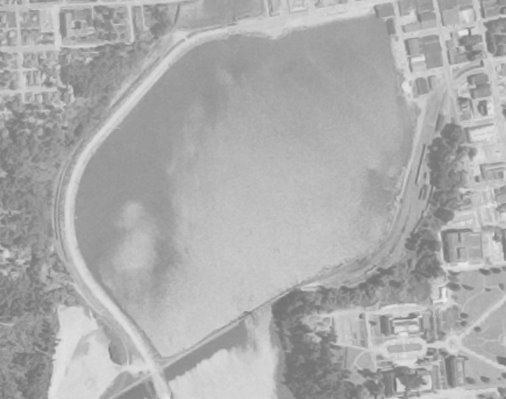
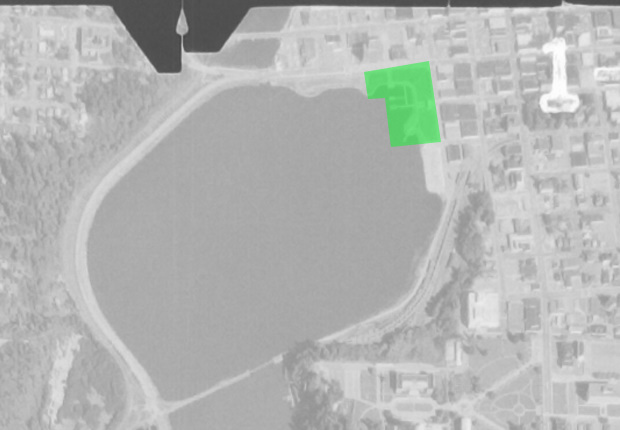
These clips (One, Two and Three) put the murder either at Gov. Stevens’ first offices where the Olympia Center is now or at his newly constructed house on the NE corner of the Capitol Campus. Because of references to an alley way in clip 4, I tend to think its the original offices references in clip 1.

Also, the timeline moves very quickly in terms of where Stevens’ and his family lived and when Quiemuth was killed. The murder occurred on November 19 and the family moved into the new house in December. Makes me think it is very unlikely the family would move so quickly into a house that was the scene of a violent murder.

Also, interesting enough, there is no mention by Hazard Stevens in his biography of his father there is no mention of Quiemuth being brought to the new (or under construction) house. There was obviously an office in the house at some point, but its more likely its the offices referred to in clip 1.

Then, I got onto the topic of who killed Quiemuth. There is a lot of thought that Joeseph Bunting was obviously the killer, but that the political sentiment in Olympia led him to get off. Bunting, though, was not done after Quiemuth. These clips (Five, Six, Seven) tell the story of a later murder by Bunting and family. Clip 8 fingers Bunting years later as Quiemuth’s murderer, without any hint of controversy.

No direct evidence, but its pretty clear that if Bunting isn’t our man, someone like him was. And, Olympia at the time failed to turn him in.

So, in my mind, a few questions remain. Where did Quiemuth die (hopefully we can figure this one out) and do we memorialize where he died?

And, does Olympia owe anything for Bunting? In memorializing Quiemuth, should we take the blame for our city not turning in the murderer?

Review in five thoughts of “Olympia: a People’s History”

In celebration of the 150th anniversary of Olympia, the city published a collection of historical essays. I picked it up a copy from the library a few days ago, and have a few thoughts.

1. I don’t like that the edition was hardback, I don’t like that the content is copyrighted. Hardback, 8.5×11 books are a bummer to read, seem worth keeping on your bookshelf as collectibles than actually reading them.

Also, while its not illegal for a local government entity to copyright a work, its not something I’m a big fan of. We should consider why the federal government is not allowed to copyright, and then think about why our taxes are used to put together content that we are not all free to use.

2. Using the phrase “People’s History” is curious. Typically, something titled “People’s History” is a reference to the seminal Howard Zinn history or an offshoot that Zinn himself edited. This book is obviously not of that series, and less obviously, doesn’t even follow the same theme.

3. That’s not to say that there aren’t some good sections in the book. The sections on Rebecca Howard, Women, the Chinese Community and (in part) Little Hollywood were what I thought the book would be. Unrepresented stories of Olympia’s history that don’t get told much.

Its interesting that the most fascinating chapter and a topic I’ve never seen discussed anywhere else (Rebecca Brown) was written by the least experienced of the writers.

4. Important points of history missed.

The essay on John Miller Murphy by Roger Easton was pretty good, but it paints Miller as a up from the bootstraps newspaperman. An important part Easton missed on Murphy’s return to Olympia in 1860 was that he came back to establish a Republican newspaper in 1860 near the beginning of the Civil War. Democrats up to that point had been in charge of territorial politics, but with the Democrats also leading the fight to secede in the South, Republicans were ready to take the advantage in Washington.

Daeg Aerlic Byrne’s essay on Little Hollywood misses the point on why the city in the late 30s worked to remove the shanytown. In the paragraph that he writes that “something changed” and that “no available document explains why” Olympia city fathers would want to do away with Little Hollywood, he Byrne also names what exactly changed. The year before the city moved to get rid of Little Hollywood, the state legislature began funding what would eventually become Capitol Lake. Before they built the lake, they had to get rid of the shantytown, its pretty simple.

5. Still worth checking out from the library too. The book itself is a bit high priced ($35), but it does go to a good cause (the Bigelow House museum). What this book did spell out to me is the need to collect and encourage ongoing scholarship about Olympia’s history.

Maybe after a year of selling the original run, why not post the essays online (minus copyrighted images) and develop an online historical journal?

Best histories of Olympia, Part 2 (the ones you can read online)

Where the Potholes Are on scribd. This is a personal history Mary Ann Bigelow, and a great one at that. The best part about this book is that it covers in personal detail the portion between about 1920 through 1960s.

There are a lot of well written passages, this is the one that most attracted me:

How does the strangeness wear away and turn into a kind of pride?

Although Bigelow was talking about a much different Olympia, I think this is how newcomers who become long-time residents end up feeling. That Olympia is weird to them at first, but the weird things end up becoming what they’re most proud of, in part, because they start to understand the weird things.

Another thing worth noting here is that within a few pages Bigelow talks about how important the train station was in Olympia, and then a few pages later, that Olympia has always needed (and still did need) a railway.

I’ll take credit (or blame) for putting this one online. I know you can buy it at the Bigelow house as a fundraiser, but since it isn’t in copyright, never was copyrighted and was paid for partly by the city, I felt o.k. scanning and posting it.

Plus, if you want to support the Bigelow house, please, please, please donate.

“The Life of Isaac Stevens (Part 1 and Part 2)” on Google Books. This isn’t so much about Olympia, but it includes much of the most researched portions of Olympia’s history, the early years around the Indian Wars.

I include it here mostly because if you try to find an original version, good luck. Either you’ll pay through the nose or you just won’t find one. These online editions are invaluable.

Early History of Thurston County on Google Books. I can’t say I’ve actually read this one, butit appears to be in the same vein as “Where the Potholes Are,” a regional history with personal bent.

What I can certainly say about it, is that it provided with me an extremly valuable piece of historic information, the exact location of Gov. Issac Stevens’ original office, where he worked in the first year or so after arriving in Olympia.

Best histories of Olympia, Part 1 (the ones I already wrote about)

This is the first part of a series of undermined length about the best written histories of Olympia. This part deals with two books that I’ve already blogged, so will be really easy for me.

The best, the most complete (up to the 1960s or so) is “Rogues, Buffoons and Statesmen” by Gordon Newell. This is a seriously thick book that covers almost every moment of Olympia’s history (from the state government and local perspective) from pioneer days to the 1960s. Of course its incomplete now because its so old now, but still very complete.

The second best book would of course be something that updates RB&S to the current day.

Here’s what I wrote about it earlier:

Generally speaking, the books tells the story of Olympia from main street and the Capitol. Gordon was an old time newspaper guy in Olympia, so he had great background for both Olympia scenes. He also lived early enough in Olympia’s history that the really old stuff really wasn’t that old to him. It is oft-referred to, but seldom seen. There are only six copies in the Timberland system, a few of which don’t circulate.

The lack of local library (or even digital editions) is made up by there being a lot of affordable copies online. Right now, Amazon has several copies under $20.

The second is “Confederacy of Ambition.” Certainly less of a total history than RB&S, but also deeper (if that’s possible). My earlier review.

This book is great because it takes on the glossiness that people put on local history when they’re being lazy. Like this:

Washington began as a state founded by optimistic settlers with utopian dreams, and to some degree that sentiment continues resonating.

Uh, no. If William Winlock Miller was the typical settler (and I think he was), he may have been optimistic, but he certainly wasn’t utopian. He was a driven, realistic, politically savvy and business focused sort of guy.

Or, more simply, it fills in with personal history the gaps that are left when you do a local history that just names names and takes down dates.

Newer posts »

© 2026 Olympia Time

Theme by Anders NorenUp ↑