History, politics, people of Oly WA

Author: Emmett O'Connell (Page 30 of 177)

Olympia and Thurston should follow Poulsbo and Kitsap’s lead (at the very least) and what your PUD candidates think about that

Internet connectivity should be a basic utility, like sewer, water and garbage. Directly speaking, that isn’t possible in Washington State. Some local governments can, but PUDs cannot directly connect their customers. They can provide service to businesses that sell retail connections to customers.

So, in Kitsap County, the PUD up there is wiring up the cities of Poulsbo and Bainbridge Island, which then are turning on municipal wifi:

There were four antennas placed in downtown Poulsbo.

“Which was not enough,” Jones said.

An upgraded system will likely equate to more antennas throughout a coverage area.

“I’m willing to put a tower on my house,” joked Poulsbo Port Commissioner Jim Rut-ledge, who attended the May 28 meeting.

“I’m willing to wear one,” quipped Councilman Ed Stern.

Improving the system may require KPUD to further expand its fiberoptic system to accommodate additional antennas.

A few weeks ago, I asked various PUD candidates what they thought about the Thurston PUD rolling out not only internet service, but reaching out to customers.

Here is my question:


PUDs are allowed by law to become wholesale internet service 
providers. With the already limited number of private companies providing internet access abandoning net neutrality, we have the opportunity through our PUDs to help provide inexpensive and fair access.

Do you think the Thurston PUD should enter the broadband market?

Here are their responses.

Chris Sterns:

I would say yes, if we could do it with a successful business
plan. Each county PUD has entered the Telecom/Fiber Optic wholesale
marketplace under their own different business model. This reflected
whether or not they were already an electric utility, how big they are
and whether or not their model was successful. Noanet is the consortium
of PUD’s that provides the main conduit of the internet fiber-optic
system that everyone already uses including the private telecoms and the
cell phone towers which are now hooked up to it! It passes through our
county along side of the federal BPA transmission lines. Electric
utilities utilize fiber to run their electric utilizes more efficiently
(connecting up all their electric substations) that a water utility
cannot do. Both electric and water utilities have cut back on Noanet
participation due to revenue losses that their electric customers made
up. Some had more secure private sector participation, others dropped
out since customer density was low in rural counties. I will not enter
this business to become a loss leader (lose money just to get into the
market). Some other counties had residents who felt this was a good
idea, I don’t and their commissioners rejected the federal grants to
start up services because they felt they couldn’t make it work
profitably. I have attended along with Commissioner Russ Olsen
Washington PUD Association meetings on how each PUD runs their fiber
optic system. We are looking closely at what would work best here. The
first place to go would be the densest areas in the north county cities.
These cities have already laid down dark fiber when they dig up their
streets for water line replacement. All it needs is to be connected and
lit up.
Other areas can be added from a profitable core area. C.S.

P.S. The federal regulators (FCC) are considering overriding our
state law that limits us to only wholesale service, we are the only
state with those direct restrictions and yet cable remains unregulated.
They have better lobbyists! The only other proposed systems are
government to government services.

 Brian Hess:

I am still researching this issue and have found some things that I
think the PUD can do to assist with the challenge.  One way to assist
is being the repository of information not only about
telecommunications, but also water and power.  The PUD should have
available data for all within the county to look at and research and
then be able to make educated decisions about their choices.  The PUD
currently puts out a newsletter, but only to those that receive services
from it.  I believe that the newsletter should go out to all residents
within the county.  While campaigning it has occurred to me that not
many know that there is a PUD and what it does.  This is wrong since
each property owner within the county pays taxes to the PUD.

One of the challenges we face with
telecommunications, or any other utility, is the infrastructure of such
utilities.  I have read a story about how cities are being challenged by
the telecommunication companies when the city wishes to install fiber
optics within their limits.  I am still researching this issue, but my
first response is that it is not right that a city cannot provide
infrastructure for its residents.  I am still researching this issue and
will hope to have a better response soon.

I have also read about a city in Washington
that set-up free WiFi for all within the city limits.  I am trying to
find that article again to share with you.  I am also wanting to
follow-up on it to see how successful it has been.  This is another way
that telecommunications can be provided to all.
Hess went on for a lot longer than that, but didn’t end up coming back to the internet issue at all.
Basically, Sterns seems more versed on the topic, and makes a great point towards the end. The urban part of the county seems better suited for connectivity soon. Fiber has already been laid and it would just take the PUD to light it up. Since the PUD right now is a somewhat disconnected water utility, it doesn’t have the built infrastructure to just add on internet.

But, why did the Indian Shirt Story change?

Heather Lockman does a great job sketching out the Indian Shirt Story in Olympia (the actual story) and how it changed over the years.

If you don’t end up watching the video (but you should), the gist of it is that the details in the story get more sinister and anti-Indian as the years go on. So, why over time, did people telling the story of an Indian who wants a shirt change details to make them more scary?

It probably has to do with how we related to Indians when the story actually took place (1850s) and when the final details of the Indian Shirt story were finally added (in the early 1900s).

In those initial years, the relationship with Indians and non-Indians was certainly and violently one sided. Most of the murder victims between 1854 and 1857 were Indians being killed by white people. Yes, we now have stories of farmers abandoning their homesteads for towns and blockhouses, but when you look at the details of the Puget Sound War, you find the Mashel Massacre, Quiemuth and Leschi. You also have the internment of hundreds of other non-combatant Indians during the war.

There were certainly victims of the war on the non-Indian side, but in those years, you could hardly imagine the majority of whites (especially pre-Puget Sound War) being afraid of an Indian asking for a shirt.

The rest of this post will be a long log roll for my own book “Oyster Light,” (here or here) so I apologize. I do suggest you buy Heather’s book. Its a good one.

Even after the war, roving bands of whites walked into Indian reservations and murdered people, seemingly without punishment. From Oyster Light’s “All the Bunting Trails”:

George McCallister (the late James’ 21 year old son) headed the group to bring in Too-a-pi-ti. The young McAllister, between the murder of Quiemuth and going out to track down Too-a-pi-ti, had also reportedly killed another Nisqually Indian on the tribe’s reservation, who had bore some guilt for his father’s death.

The era of the original telling of the Indian Shirt Story was a violent time, mostly for Indians. But, as the years go along, the relationship changes. Mostly to an attitude of glorifying the past and bringing to light actual fears whites had of being murdered themselves, and ignoring their own violence.

In her talk, Heather points out the phenomena locally in the early 1900s of beginning to worry about the imminent deaths of that original pioneer generation. Many of our first historical monuments date from the first two decades of the last century.

Looking at those years deeper, it also shows how the Indian/non-Indian relationship had changed. Mostly, the concern was “why didn’t these Indians just go away?”

From Oyster Light’s “E.N. Steele”:

The local anti-Indian sentiment surrounding the cases is encapsulated in an editorial in the Olympia Recorder that ran the same day as the Kennedy v. Becker news.

Coverage of Peters’ and James’ case was typically sprinkled with terms like “squaw,” “pow wow,” and “Papooses.” While Steele himself wasn’t immune to language like this, the Recorder editorial shows that defending Indians for fishing and hunting was not a popular task:

The Indian thinks his ancient treaty rights give him the authority to shoot a deer or spear a salmon at any time he contends that the game laws do not affect him. He declares that the white man is trying to go back on his bargain… Of course the supreme court, in holding that the game laws abrogate the treaty, is ruling that the laws were passed to govern all the people, white, red, black and yellow, and that the treaty is superseded just as all former laws that conflict with new ones are repealed.

If it is non-Indian history, it is a vital cultural heritage to be preserved. If its a treaty with Indians, it is “ancient” or in contrast to modern living.

Non-tribal society at this point had moved on. It remembered the blockhouses and their own telling of the Puget Sound War, so naturally, the Indians in the shirt story would be violent and scary, approaching at night, threatening a young mother. The implied context in the early 1900s is that the non-Indians in the 1850s heroically defeated the violent Indians. They forget about George McCallister and others like Josepth Bunting and Jim Riley.

Hoo boy. You should read about Jim Riley. He’s a piece of work.

Statues, bees, food and punks (Olyblogosphere for August 18, 2014)

1. The Olympia’s Plinth Project from OlySketcher.

2. Bees from that Amicus blog.

3. Our best local food blogger was out. Back in now? I dunno, she showed us a pi pie though. That was cute:

Besides, we’ve all dropped out of life at some point during the
course of it, but no one likes to admit to that. I could brag about
finishing my Master’s degree; I could tell you stories about the US
healthcare systems and a crazy neurologist that would make you want to
emigrate to a cold, dark Scandinavian country; I could say that I was
running out of recipes, which would be entirely true; I could just
pretend it didn’t happen like I do with some of the jobs I leave off my
resume, but I think I’m just going to admit to it. I dropped out. I gave
out. I burned out.

 4. A small piece of Olympia music scene, RVIVR playing Party Queen at the Flophouse from Campfire Island.

There’s no paywall to public records in Whatcom County

So, there shouldn’t be one anywhere else.

If you’re looking for public documents from the Thurston County Clerk (or from practically any other county clerk in Washington State) you need to pay exorbitant fees. Like almost $30 for downloading a 16 page document from a public database.

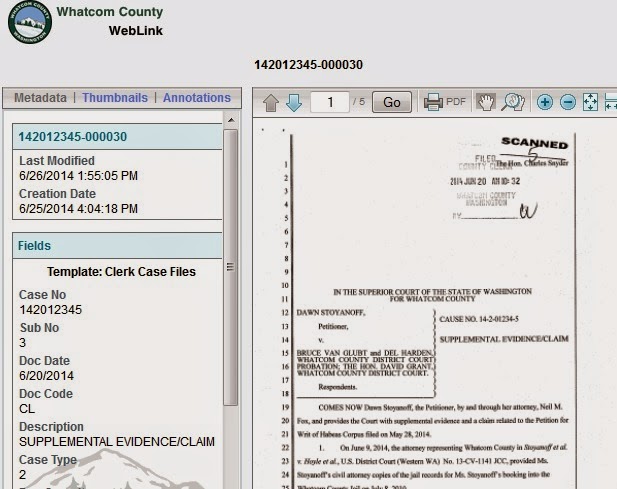
But, not in Whatcom County. The Whatcom County superior court maintains a public database that offers direct access to court filings with no charge. As it should be.

Here is a link to the Whatcom County Superior Court database. Before searching for court documents, you need a case number, which you can search by individual name or business name here.

Once you plug in a case number you’re interested in, you are given direct access to the entire court record.

What in most counties is an unnecessarily arduous and expensive process, is simple and free in Whatcom County. 
I emailed the Whatcom clerk, Dave Reynolds, about his county’s choice not to charge, and he responded:

This system was in place before my time, but I fully support it. We feel
it saves on both staff time and foot traffic into the court house to
obtain documents. We wouldn’t charge for someone to come into the office
to look at a file. If they chose to make copies, there would be a cost
and staff time. I believe it actually saves money by freeing up staff
time to do more important tasks. We have had significant reductions in
force over the past several years. Further, it provides equal access
regardless of financial resources.

Providing for free what should already be free not only makes it easier on the clerk but provides equal access. That sounds great.
This county shows that we don’t really need to charge $4 transaction fees plus $.25 per page for public documents. Even though state law allows clerks to collect expensive fees for public documents (much more than what you’d pay for a document from any other part of government), Whatcom County doesn’t.
An interesting wrinkle is that what also makes Whatcom County different is that it doesn’t have an elected clerk watching over court records. Whatcom County rewrote its county charter in the late 1970s and rolled the function of the clerks office into the superior court. I might be reading into that fact a bit too much, but having to support an entire other office aside from just the courts probably justifies keeping open as many revenue streams as possible.
I emailed both candidates for Thurston County Clerk about what they thought of the public records paywall, neither of whom have written back yet.
What Whatcom County shows is that there is really no reason (other than just bringing more money into a specific county office) to charge so much for public records.
These aren’t private documents, there is no reason the clerks’ offices should be charging so much for them. From RECAP the Law:

We are a nation of laws. Our law is created not only via legislation,
but also through the adjudicative process of the courts. Whereas we
generally have open and free access to the statutes that bind us, case
law has had a more mixed history. Earlier experiments in secret proceedings did not go well. Western law subsequently developed strong precedents
for access to judicial proceedings — citing the importance of
transparency in promoting court legitimacy, accountability, fairness,
and democratic due process. When the law is accessible, “ignorance of
the law is no excuse.”

The public interest is not served when only those who can afford it can have access to what goes on in our courts.

Why does the Olympia Oyster House mean so much to us?

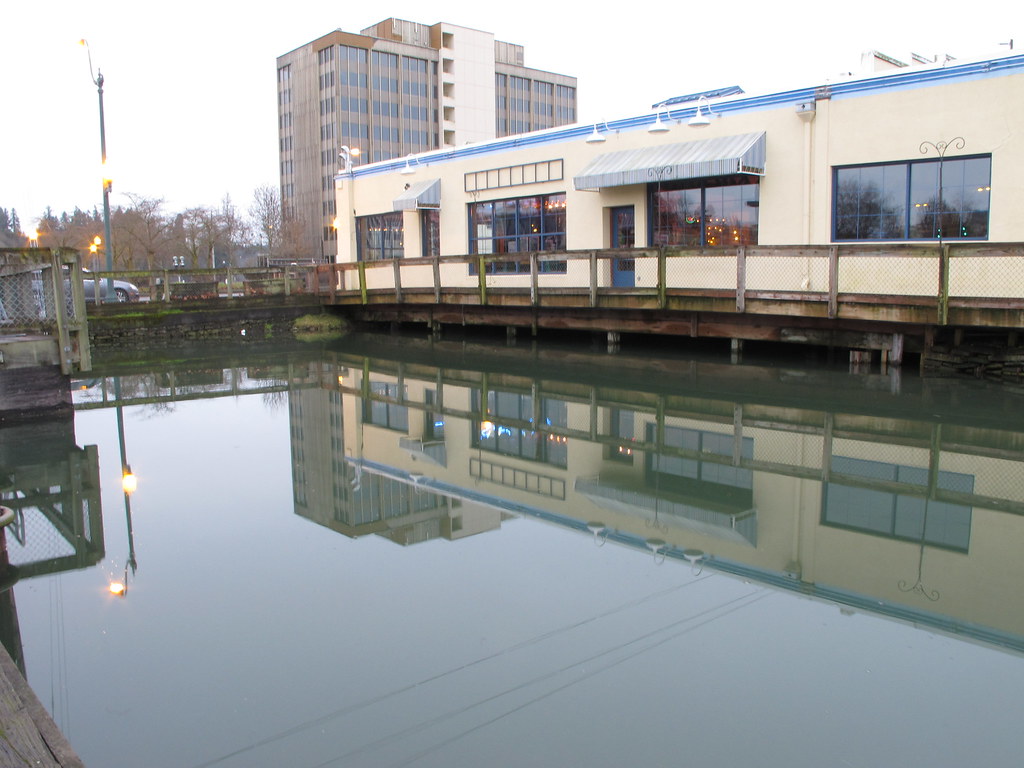
The Oyster House will open back up tomorrow after more than a year closure because of a fire.

After a false start of an announced opening near Lakefair weekend, the Oyster House posted up last week August 12. And, Olympia caught fire.

I don’t think it would be a stretch to expect a line out the door when they reopen.

But, why does the Oyster House, seemingly more than any other restaurant (short of maybe the Spar) hold such a high place in Olympia?

It certainly isn’t the food. I’d agree with most that the food there is good, decent, but generally unexciting. I suppose that works because it remains accessible to most people. It is a pretty standard, fairly priced, Cascadian seafood place. But, certainly below the standard of the other shoreline seafood places even in Olympia.

You have to admit, the Oyster House has a pretty nice location. Practically all the traffic crossing Olympia is funneled right in front of the Oyster House. And, no other business on that stretch (sorry green Vietnamese place) has the sense of the Oyster House looming over that corridor, sitting crisp and smartly on the southern edge of Puget Sound. Everyone who lives here passes by the Oyster House often enough to get it stuck in their head.

Unlike a lot of place, the Oyster House has grown up with Olympia. Other places that compete with the Oyster House’s stature in Olympia either stayed stale for too long (the Spar, only recently updating under new ownership, aren’t that old (Darby’s) or appeal to a broad enough group (Ben Moore’s).

The Oyster House has evolved, is widely acceptable and has a long history.

A history so long, I’d say it is effectively been the restaraunt that grew up with Olympia.

My unified field theory of Cascadian history holds that (come on now, stay with me) that we either turned a major corner or that our history really started in the 1940s. While the foundation of the region was set in the first 100 years, my theory is that we didn’t really start building the house until World War II crossed off all the failed efforts in our start and stop history after statehood.

Since the 1940s, our history (even locally here in Olympia) has been a straight shot in one general direction. We’ve left behind the resource extractive industries, and grew in at a regular pace into a generally professional, quasi-government and college town.

And, the Oyster House has been there since our growth started. It left its own resource extractive history behind, switching fully from an oyster plant to a restaurant. Three since then, the restaurant was destroyed by fire. Each time, it came back, updating itself as it went along.

The most recent update in the early 1990s, when the now ubiquitous floor to ceiling windows and clean floor plan were added, were reactions to the closure of the Oyster House that I remember as a kid. I only went in there only once or twice, mostly because it wasn’t a place for families.

Tall backed chairs, hardly any windows and dark. It seemed like a place where men and women would come together outside of a family setting and speak as men and women do. It was a cigarette era place and by the 1980s, that sort of place was not the centerpiece of our town.

This was the Olympia that in the 80s had won the Olympia marathon trial, had build the Washington Center and shelved their old form of city government. Finally, the added benefit of Evergreen was growing shoots in town, and we’d moved past the Oyster House being a smokey dark gathering place.

And, after this most recent fire, the Oyster House is coming back again. It looks like the same general layout is still being used, the large windows are still there as well. Which makes sense. I feel like Olympia is so much more of the family centered place that killed the old cigarette Oyster House in the 80s.

I understand that the Oyster House isn’t accessible to everyone. For a town that isn’t very diverse, it is diverse enough in taste for
people not to like the Oyster House in the same way they don’t like Lakefair. In exactly the same way. But, Lakefair is crowded and so will the Oyster House tomorrow.

My less than meaningful Top Two primary (Imagining a better WA10 candidate)

On my primary ballot, there was only one race that really mattered. Even technically mattered. I live in the central portion of the county, so neither PUD race that actually had a primary was on my ballot. I also don’t live in Lacey, so a very important fire levy was also not on my ballot.

The only race that had more than two candidates was the congressional race, incumbent Denny Heck versus a Republican (Pierce County councilmember) and two independents.

I was going to write this post to criticize those two independents, but I really only think one actually deserves criticism. Sam Wright is a typical crank sort of candidate. Not putting much of any effort into campaigning, shooting for a high profile position with no real effort behind his campaign. Enough about him.

On the other hand, Jennifer Ferguson is fascinating. She only ended up getting just about 5 percent of the vote, but I hope this doesn’t end up being her last race. Like Sue Gunn two years ago, I think Ferguson should aim lower next time, and get her foot in elected office somewhere else.

In some pretty interesting ways, Ferguson really does represent the WA10. I wrote awhile back how WA10 really is a military base community district, and in a lot of ways she speaks to that community.

From her website:


Do you want someone to serve you that values people and quality of
life?  Would you want someone to represent you that has a community
track record of service and commitment such as volunteering 2500 hours
in less than 13 months at Madigan with soldiers in acute distress and
other mental health disorders to include PTSD?  Would you like someone
to serve you and represent you that believes in standing up for what is
right and has shown it over and again such as going to congress when the
PTSD program at Madigan was shut down causing a congressional
investigation? Would you want someone to serve and represent you on a
large scale that has served and represented their entire life as a
volunteer in the military community and in University Place PTA,
President of UP Soccer Association, University Place Sheriffs Academy,
and the list goes on?

In her work as a mental health provider, Gigi has worked with youth
on drugs, youth in gangs, women as domestic violence victims, and
families who have lost their children to the state for many reasons.
Jennifer is a hard worker and committed to making this a better place
than she found it.  Jennifer is committed to her faith which causes her
to touch hearts, minds and lives where she goes. 

Don’t get me wrong, I really like Denny Heck. I voted for him this week and I’ll vote again for him in November. He does a great job on JBLM and other WA10 issues and is a polished and intelligent politician.

But, there is something about Ferguson that strikes me as very authentically WA10. We’re a very new congressional district, so our political identity is still being developed. But, she seems to speak much more clearly to the concerns of base communities.

So, not this time around, but I think she should take a crack at another local office. Like, who is taking on Doug Richardson next year?

Bridges, woods, and waxwings (Olyblogosphere for August 4, 2014)

1. From Olympia WA (via olynews), the Rainbow Bridge. I wish I knew where this was. I can’t place it.

2. Also from Olympia WA, a blog post about LBA Woods, and balanced:

So yes, Olympia could purchase the properties, but we wouldn’t even have
a park. We’d have another project on add to our ever increasing to do
list. I’m not outright saying Olympia shouldn’t try to purchase the
properties, but Olympia already has a lot of unfinished projects. It’s
important to consider what else we could do with that money. And before
die-hard park fanatics demand my head on a plate for suggesting that
Olympia shouldn’t save the LBA Woods, in the future I’ll write a piece
about potential compromises and other reason why I’m torn on the
subject.

This is the Olympia blog I’ve been waiting for.

3. “It’s like they put an amusement park in the middle of downtown.” YDHWM covers LakeFair and other parks of fun. The only thing you’ll need to help you remember LakeFair.

4. Cedar Waxwings is a pretty cool name for a bird:

That is why I was surprised once again to notice something intriguing happening there: a whole flock of birds flitting on and off the wood pile. What was going on? From far away, these birds looked rosy in color, so I thought at first they might be finches. But in checking them out through binoculars, I discovered they were cedar waxwings, and they were “hawking” – catching food on the wing.

Summer archive post: Soccer history, two stories about Puget Sound

First, you might not have known, but soccer has a deep and rich history in Cascadia (from a submission I put into GoalWa):

This isn’t a thorough history of high level Puget Sound area soccer,
but rather a quick overview of what I could find in a few places about
the earliest soccer in the area. I drew solely from articles I could
find at Chronicling America and the Internet Archive.
I put my emphasis on adult intercity soccer, ignoring mentions of
international soccer (there seemed to be some friendlies played in
Seattle) and school soccer.

The years I was able to find resources were basically from 1906
through the early 1920′s. That said, these years seem to represent a
high water mark for local soccer.

The Seattle Wanderers traveled to Bainbridge Island to play the Port Blakely
team at Pleasant Beach in 1906. This game, and the Wanderers
themselves, are the earliest reference to Seattle soccer I could find.
Below this article is an interesting reminder of how old some issues in
soccer really are. The article is about why the game itself is called
“soccer,” reminding more mainstream fans of the full name of the sport
of association football.

But, did you know its also true that Olympia itself (tiny little Oly!) has its own rich history of club soccer. This includes a trip into what I think is the best sporting tournament in America, the U.S. Open Cup:

The 1973 campaign by the Olympia Olys in the Challenge Cup turned out a
little better. They won their first round game on February 11 against
the Rainier Brewers 4-1, but a couple of weeks later, they dropped 4-2
against the San Jose Portuguese. That team would end up losing to
eventual champions Maccabi Los Angeles.

Club soccer in western Washington was different back in the 70s. Most
semi-pro teams played in the state soccer league, which kicked off in
the early 1950s and at its peak was a three division system. Olympia’s
first entry into the league was in 1965. That team played at Stevens
Field, the old high school stadium just south of the Lincoln School.

Remember history is deep. Its varied. The history you know is often there because someone wrote it down. The saying “history is written by the winners” is so true, that its not even funny. But, we can look beyond that first telling of history, digitize way more stuff than we ever had before, and go back and relearn what we know about ourselves.
 

Summer archive post: Aunt Sally and the Sounders naming contest

This piece ran in GoalWa just about two years ago now. I really like it. People disagreed with me, but I think the name was going to be Sounders all along. It worked better if we owned it.

My main takeaway from the recent Forbes blog series on the Sounders (E Pluribus Sounders)
was how well-considered the move from the minors to MLS was. At every
point, it seemed like the current Sounders ownership group made the
right decisions, from marketing, to branding to player personnel.

Forgive me if I’m off base, but the blog series rang true to me. I
really do remember things going pretty smoothly from the USL to kick-off
in the MLS. Which, made me think hard about the one time it seemed like
the Sounders owners were about to make a mistake: when they were
deciding on the team.

In spring 2008, the club announced a web-based vote on the name of
team, and that “Sounders” would not be among the choices. But, when the
actual vote took place, there was a chance for fans to write in a vote.
Most people wrote in “Sounders” or something close, and the rest is
history.

But, why does it seem strange to me that an ownership group that
seems to have done practically everything else right, might have gotten
something so basic so so so wrong? I mean, Seattle Republic? Really?

Is it possible that the Sounders proposed purposefully bad names like
Alliance and Republic to raise the interest (and ire) of the fan base
to force the issue on the Sounders name?

This sort of proposal has some relations in the real business and real estate planning world. This sort of thing is called a straw man proposal (not straw man argument) or an Aunt Sally.

A straw man proposal is used in business settings as a rough document
to kick off a discussion. Everyone is in the loop, so no one thinks the
original proposal is a possible end to the discussion.

On the other hand, an Aunt Sally is disguised as a serious proposal
(we want to Build a 20 story building!) when a much more reasonable goal
(no really, just a 10 story building) is desired. So, you’re able to
walk back the large building for a not so quite large building. A 10
story building may have been equally opposed as a 20, but its much
easier to swallow than a 20.

So, in our case, the ownership really didn’t try to pull a straw man
proposal (since we obviously weren’t in on it) or an Aunt Sally (since
we would’ve gone for the Sounders in the first place.)

So, the real end of the false dilemma was probably to further engage
and connect the fan-base in the name and the overall brand. It worked on
me, I certainly remember feeling a sense of massive relief and pride
when the result of the vote was announced.

The original context of the naming process seems particularly out of sync:

“The three naming options will be announced Tuesday, March 25,
and were chosen through fan focus groups, internal committees and fan
suggestions, but will not include Sounders.”

“I have great respect for the Sounders and the club’s history,”
said MLS Commissioner Don Garber. “While we should celebrate the past,
we believe the MLS Seattle team should be about where we are headed
tomorrow and help position the club globally.”

For one, I’m not sure how they could have conducted real focus groups
on naming the team and avoided finding Sounders at the top of the heap.
The end result of the process was 49 percent of all voters writing in
“Sounders.”

Also, while the MLS has a bad reputation for respecting its NASL
roots, it had been ten years since the San Jose club had first rebranded
to its NASL-original Earthquakes. Also, by the time the Sounders
started ramping up in 2008, the MLS Earthquakes 2.0 had already hit the
field.

Also, since the Quakes and Sounders, both the Whitecaps and Timbers have come back with their NASL names with no discussion.

Lastly, two of the proposed names — Alliance and Republic — seem to
indicate that it was more about the voting process and the fans actually
choosing than anything else.

Any serious person would know that Sounders was a powerful name
locally, it was unlikely to carry any bad feelings from the NASL days
because the Sounders had been so well supported in those days. To me,
the point of the vote was to give the fans the chance to put their own
stamp on the team when the first game was still over a year away.

The long history of hating and loving Boeing

When we jump on the bandwagon around here, we sure do jump on hard:

Senator Bone attacked Boeing in February and March of 1934. He referred repeatedly on February 20 to an unnamed “air- plane factory” that had “made 90 percent profit out of the Govt.” and proclaimed that he did not want his country to be “helpless in the face of the inordinate and extortionate demands of privately owned airplane companies.” On March, 6 the senator went further, he named names. As part of a broader attack on firms that did business with the federal government, he charged that Boeing had made profits of 68 percent on navy business and 90 percent in its dealings with the army, and he complained about the company’s employment, at $25,000 per year, of a vice president to solicit business from the federal government. For the Tacoma Democrat, money and politics mixed in alarming ways.

Less than 10 years later, the Seattle Chamber of Commerce would join with labor leaders to rally for Boeing.

The quick turnaround in the political and cultural center of Washington state towards Boeing obviously had more to do with World War II and the company’s ability to capitalize on the war. Boeing had gone from a small-to-medium size operator in the airplane industry to the center of the Puget Sound economy. Almost 20 percent of the entire workforce of King County was somehow connected to Boeing by the end of the war.

This turnaround, from whipping boy to savoir isn’t untold, it may just not be well understood. Other people have written about it, but usually just in the terms of I outlined above, which can be pretty simple.

But, there are a few more wrinkles I think worth exploring.

First, Senator Bone. If you like my Business/Libertarian or New England/Appalachia duopoly of Cascadian politics, Bone falls into the Libertarian Appalachian wing. Firmly anti-corporate, Bone took a shot at Boeing in the same way that Washingtonians took shots at the rail-road companies. His political tradition fell from the same tree the spawned anti-corporate talk at both the Washington and Oregon constitutional conventions.

Also, it is hard to understate the double impact of the Great Depression and World War II had on reshaping our region. Nominally, we were friendly business Republicans region prior to the 1930s, but the political map was whipped clean in 1932.

But, with World War II, the inertia from the 1930s began to recenter towards business in the 40s. Youngins like Scoop Jackson and Warren Magnuson were much more friendly with the traditional New England political thought. And, by the end of the war, Washington’s economy and culture had changed, and a cadre of young business friendly Democrats were ready to fight for Boeing.

« Older posts Newer posts »

© 2026 Olympia Time

Theme by Anders NorenUp ↑