History, politics, people of Oly WA

Author: Emmett O'Connell (Page 24 of 176)

Did Washington State politics change been 1928 and 1930?

Before the 1932 election, there was hardly a Democrat in the Washington state legislature. One Democrat in the senate in 1929, eight in the house (compared to 89 Republicans). Everything chanted in 1932 when the landslide went to the Democrats.

By 1935 (after the entire Senate has seen an election since 1932), the partisan split in the legislature was 37 to 9 Dems over Republicans in the senate and 91 to 8 in the house.

This isn’t a new story in Washington State history, but one that bears investigating.

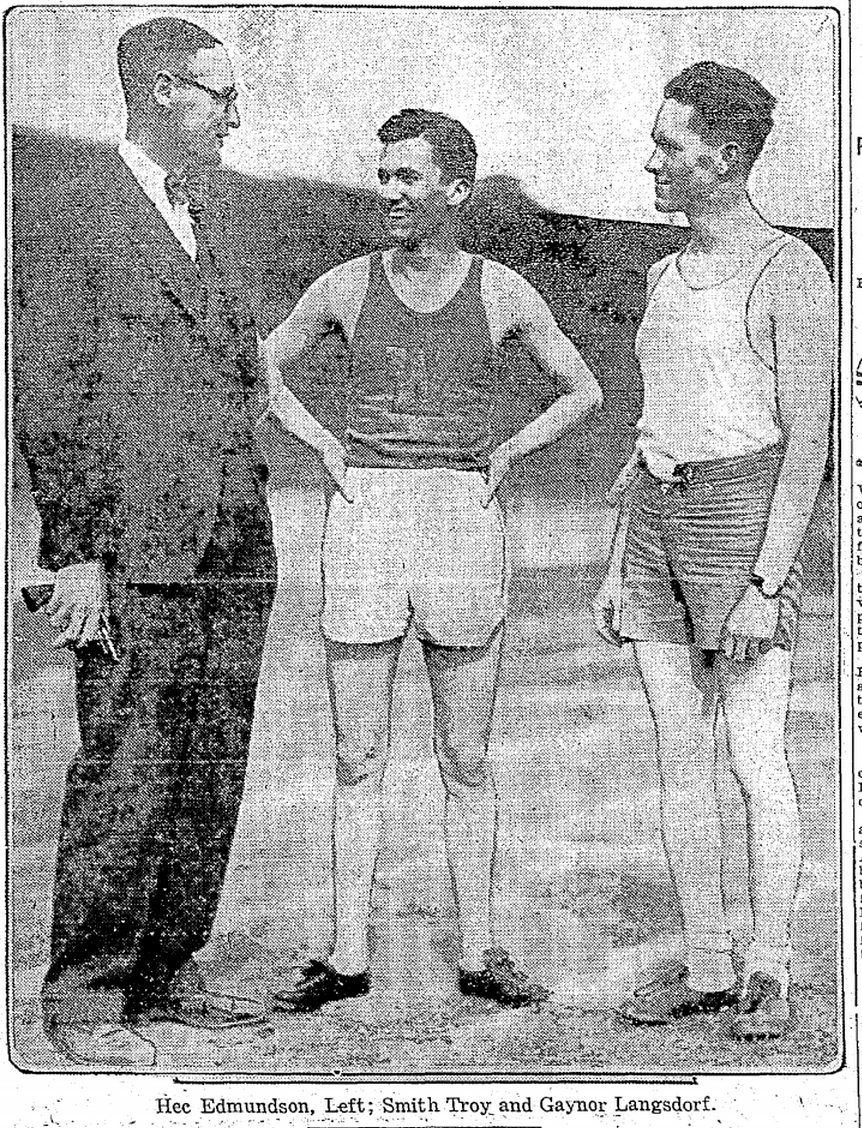
I’m mostly interested in this political flip because of my interest in Smith Troy. His political life began in the early 1930s. His brother’s election as Thurston County prosecutor began with this Democratic wave.

One of the things I’ve read about the difference between 1928 and 1932 was voter turnout. Prior to 1932, Washington (as the story goes) was a politically ambivalent state. Its long history as a territory when leaders were appointed, not elected, led to a political culture in which most people stayed home. Our live and let live attitude extended to politics.

But, apparently, that all changed in 1932. People who did not vote in 1928 stormed the polls in 1932  in reaction to Republicans not handling the dire economic times well (both back east and at the state capitol),.

But, I’m not so sure its that, or if the vast majority of voters actually changed their votes to Democratic.

I’m not able to find some actual voter turnout data between 1928 and 1932, but I was able to figure out a raw voters per thousand number. They were 32.29 percent in 1928 and 38.81 percent in 1932. So, a bump of roughly 6.5 percent. I’d assume most of those 100,000 plus new voters went Democratic.

But, there also seems to be an erosion of traditional Republican voters between those four years. Republican votes declined by over 100,000 between the two elections, despite a modest increase in the state’s population.

So, it was probably a combination of factors, including a wave a new voters. Anyway, just thinking out loud.

It isn’t about a primary vs. a caucus, it really just is about what’s best for the party

The proposal by Secretary of State Kim Wyman to hold a presidential nominating primary in Washington came with one interesting wrinkle. The partisan preferences of individual voters would become public. 

Now, I am leaning on my memory of previous caucus vs. primary fights, but this is the crux of the debate. Primaries are fine (according to the parties) but, they should serve the parties, not the voters. In this case, its a matter of making the primaries closed to only partisans. Or, at least partisans that will declare themselves publicly. 

In that case, the parties get nice updated lists of registered voters that will pick a side. And, those voters will get mailed to, hit up for donations and cajoled into supporting the parties and candidates.

And, unless those lists are strong (and with cross over voting allowed under the old system, they’re not) its not worth it for the parties to go along (at least in large part). And, this is how we get the caucuses.

Because, if the parties can’t get mailing lists, they should at least get volunteers.

This old presentation from the 2007/08 presidential season really spelled it out for me. While partisans will often talk about the grass-roots and participatory nature of the caucuses, what they’re really about is foot soldier recruitment. If you find someone who is excited to attend a caucus, a good number of those folks will be good for other work.

From the presentation: 

Every four years thousands of new Democrats attend the caucuses.

Hundreds of them work on that year’s campaign for President, Governor, Congress, Legislature, and down the ticket.

After the election dozens of these new recruits come around to our monthly meetings.

By February or March or April a handful of new recruits are active in their local Democratic party.

Don’t get me wrong. I’d rather have this political party than one that depends on mailings and over the air ads. It isn’t bad to get people involved in politics and recruit foot soldiers. Some of my happiest and fulfilling public moments were at Democratic party meetings. Its good stuff.

But, don’t also mistake that if the parties do commit to closed primaries here, that they’re going to replace the excitement of the caucuses with some other sort of grass-roots event. It will not happen. They delegates will be chosen by a state-funded primary, all the energy from the caucuses will be lost.

Halfway there to a soccer specific stadium down here, maybe a new one at Evergreen?

The soccer field next to the big big hill (Field 1) at the Regional Athletic Center in Lacey is about as close as we get to a soccer specific stadium in Thurston County. It has lights and seating for a large crowd (on a grassy hill). But, it lacks a locker room and any area for media coverage.

But, now in new drawings of what Evergreen’s CRC might look like after a major expansion of Evergreen State College’s recreational facilities, we have the makings of a proto soccer specific stadium.

The field would be synthetic, so we’d have a year round, all weather surface.

Like the RAC, this field would also have a berm, at least allowing for larger crowds. This certainly isn’t a typical stadium, which would include at least bleacher seating and possibly be covered. But, heck, it isn’t nothing.

Also, since the field is directly next door to the CRC proper, semi-pro and high level amateur teams would have access to locker rooms.

The only thing this field would lack that the RAC would have would be lights.

Also, I assume (and this is where I’m headed) if we wanted an EPLWA, PDL or NPSL team, that some sort of gate would be needed. Because, hard to run a team (even a high level amateur team) if you can’t charge admission, right? Am I wrong?

So, in the end, the drawings sure look nice. But, before we get anywhere, the funding of the CRC renovations (and there are a lot more in addition to the new field) have to be funded. The money will be coming from the students at Evergreen, so we’ll see if they end up voting in the changes.

So far a Vote No group has already formed. Voting goes through early March.

SPSCC all over the place and other port related links (Olyblogosphere for February 23, 2014)

1. Seems a bit early, you know? But, Washington Our Home declares snake season has begun.

2. Rebels by Bus has a nice class (and video) over at South Puget.

3. Speaking of South Puget, here’s Janine (from Little Hollywood) talking to SPSCC’s president.

4. Longshoremen load up a ship.

5. Ken has a pretty thoughtful post here. I knew he’d been the type to vote for her, but I didn’t realize she was ill. When should she resign, really?

If you want to win an election in Olympia, get either a Lacey city-councilmember or an out of towner to contribute to your campaign

So, if you took a list of contributors of the last two rounds of successful city council elections, what kind of list would you come up with?

Well, something like this. These are the 15 people (or unions) that contributed to more than half the successful council campaigns in the last two cycles:
Contributor


Cynthia Pratt
Campaigns contributed to
7
Christine Garst 7
Sandra Romero 6
Emily Ray 6
Joyce Kilmer 6
Kris Goddard 6
Mary Wilkinson 5
WA FED OF ST EMPLOYEES LOCAL 443 5
Karen Valenzuela 5
Sarah Segall 5
OLYMPIA FIREFIGHTERS IAFF LOCAL 468 5
Walt Jorgenson 5
Jewel Goddard 5
Mark Dahlen 5
Judy Bardin 5

Here is the entire list, plus a few other spreadsheets to show you how I got there.

And, while Chris Garst lives outside of Olympia, it is pretty just outside Olympia. And, Chris is really good people. So, don’t get me wrong with that headline. Chris Garst is good.

This isn’t a list of who contributed the most money, but rather a list of who contributed to the most successful campaigns for city councils. I didn’t take a close look at the contribution totals, so many on this top 15 list may have contributed little compared to someone who maxed out on one candidate.

But, by a certain measure, these people are more influential than a theoretical single candidate max contributor. In addition to their financial support, every single one of these folks or organizations gave their personal time and civic reputation to the candidate.

Some additional thoughts:

  • I’m surprised by the number of elected officials, public officials, former and current. This includes Pratt (Lacey city council), Romero, Valenzuela (Thurston County commission), Walt Jorgenson (former Tumwater city council) and Judy Bardin (Olympia planning commission). Joyce Kilmer, the wife of Olympia city council member (and mayor) Steve Buxbaum is in there too.
  • Only one of the locals that has contributed to the most campaigns is a union bargannign unit that deal directly with the city. While the IAFF Local 468 contributed to five campaigns,  the other seven are not on the list. The only other union in the top 15 is a state employee union.
  • Judy Bardin is on the list, and seems uniquely poised to make a run for council, which she recently announced.

Happy Presidents Day. By the way, Jospeph Lane did not go quietly into that good night

Joseph Lane is one of the most regrettable characters of Cascadian history. During the debates on how slavery should be treated in Oregon during that state’s founding days, Lane was on the hard pro-slavery side. There were a few hard anti-slavery sorts to balance him out. But, most of the state had a pox on both their houses sort of sentiment. They neither liked slaves nor the sort of economics that slavery represented.

But, there sat Lane, one of the state’s original U.S. Senators. During the presidential election leading up to the Civil War, Lane was the vice presidential candidate for the Democratic Party ticket that represented the South. His ticket of course lost, which according to a 30,000 foot reading of history, shot Lane quickly out of politics. 
Even if that didn’t, his debate with Andrew Johnson on the Senate floor in 1861 certainly should have.

Here:

On that day, Jo. Lane, made a traitorous speech in favor of secession, in which he was personally abusive of Senator Johnson of Tennessee. Mr. Johnson replied. The galleries were crowded to excess. Mr. Johnson opened up by a dissertation on personalities—withering and caustic to his assailant. Johnson turned and looking him in the eye, said, “no gentleman would insult me, and no other person can, and without making any boast of personal courage, I say here that this eye never looked upon the man that this heart feared.” The galleries burst into applause, which was promptly suppressed with an intimation from the Chairman, Mr. Polk, that a repetition would be followed by an order to clear the gentlemen’s gallery.

But, even if Lane did not join the rebel cause, didn’t migrate to the south, he kept the fight going on his return to Oregon.

He campaigned for Democratic candidates, he campaigned for his son who was running for Congress. Lane was criticized loudly by Republican newspapers, but he stood firm publicly to his convictions:

Once again in 1866 the aging politician campaigned for the Democratic ticket. Personal abuse from the press and threat of punishment had not dampened his adore for the southern cause, which he championed when he could. During the campaign he declared that if Jefferson Davis were elected to Congress by the people of Mississippi, that body would have no choice but to admit him. 

Being ignored and made fun of by the political establishment, carving out a hole for yourself as a loud political crank, is not the same as retiring quietly from public life.

At one point, he even talked about how Lincoln had offered him a generalship in the Union Army. And, that if he’d taken that position (instead of coming back to Oregon), he would have beaten General Grant to the top of Army of the Potomac, and then there would’ve been no President Grant.

I’m most intrigued by Lane’s run for State Senate in 1880. Only one year before his death, an apparently with the furor of secession finally dying down, Lane ran one last time for office. I found some old newspaper stories about his continued involvement in Democratic politics. How he was elected chair of the party convention that year. But, no story of a race or election involving him. I wonder if its really true, and if so, why he ran.

The other side of the Sound Transit to Olympia coin: Olympia is an Island, leave us alone

The brainstorming about getting passenger rail into Olympia is alive!

Olympia’s best blog took their crack earlier and the Seattle Transit blog did their’s yesterday.  All smart people all say, sure it could happen. But, there are obstacles. Sure, that makes sense. It hasn’t happened, so obviously there are reasons why it hasn’t.

I was going to reserve this post for a exploration into the past of the old Lacey to Olympia line that was ripped up and turned into a sidewalk. Alright, a glorified sidewalk.

But, after all this discussion, I think we need to bring up another topic. Should Olympia be connected by rail to Seattle?


You’re going to say: Of Course! State Capitol Right??

And, I’m going to respond with a selfish rejoinder. Well, its not like anyone is going to steal the state capitol from us anytime soon. So, why make it easier for people to get here?

Right now Olympia’s economy is supported by a steady flow of tax money into our community to support fairly well paying and stable state jobs. That’s not going anywhere. Jobs come and go, but overall, state work is pretty stable.

We’re also on the far southern edge of Pugetopolis. So, if overgrowth is going to happen, it’ll come from the north. But, in a way, we’re buffered from that because back 100 years ago Pierce County stole more than half of the Nisqually Reservation and gave it to the Army. Joint Base Lewis McCord sits out there like a massive empty breakwater against King/Pierce County growth.

Eventually Sparkland will reach around through Roy and Yelm and connect with Lacey. But, for the time being, we’re safe.

Connecting us to Seattle via convenient rail is just one more way to make Olympia a bedroom community living in the shadow of Seattle and King County.

And, in at least one part of my brain, more people living in Olympia and commuting up to Seattle for work is not a good thing.

Now, using that old Lacey to Olympia rail line that we turned into a glorified sidewalk for light-rail, a way to just get around town? Thats a great idea?

Maybe just using the old spur of that lost rail line as a Sound Transit alternative to Centennial Station. I don’t know, maybe? Better than downtown Olympia, I suppose.

One epic post on rail that beats me to the ground and four other random posts (Olyblogosphere for February 9, 2015)

1. Wow. The best blog in Olympia delivers again. This makes my post about Olympia and Sound Transit look like historic revisionism crap. Read this post (Link Fixed! Thanks TVDinner!) that dives really deep in to the policy of local rail.

2. Ecotone is an Olympia blog. Maybe not about Olympia, but blogged from Olympia. So, Maybe the 12th man should be for the greater good.

3. Gary also blogs from Olympia. He is NOT retired guys.

4. Why do they want to close the art gallery at Evergreen?

5. The future of the Co-op, being surveyed.

Why not punch a nice passenger line straight into downtown Olympia through Lacey?

Connect one of those green lines up with the light blue line: BANG. Passenger rail!

I swear I was going to write this piece way before the Olympian had a story yesterday. But, here it is: you know there used to be a rail line that passed through Lacey from a connection with a major line and into downtown Olympia?

Did you know that that rail line closed down in the 1990s and was eventually turned into a walking trail? And, did you know this sort of railbanking is sometimes reversed, trails back into rails-style?

Unfortunately, what was eventually turned into the Woodland Trail wasn’t railbanked at all, it was abandoned and taken over by the cities. Railbanking implies a continued ownership by a railroad company and a temporary use as a public trail.

From what I can tell, Burlington Northern totally walked away from the old line.

There is one section at the edge of the Lacey border that is still owned by Burlington Northern, but the rest of the old rail line is now owned by Lacey and Olympia.

And a discussion between local leaders about 10 years ago about local rail options didn’t cover reactivated this line much at all.

Here’s what I don’t get about what was going on in Olympia and Thurston County in the early 1990s. Why not use the old rail line as a passenger terminal, a way to bring Amtrack into Olympia proper? 

This is the is the same era that saw the old Amtrack shed at East Olympia replaced with a semi-useful station at Yelm Highway. The Centennial Station is still way out in the sticks though. So, instead of taking of half-step with Centennial, why grab the old Burlington line through Lacey and into Olympia and go whole hog and bring Amtrack Trains downtown?

I’m sure there would have been logistical challenges with turning a passenger train around Union Pacific line south of town, and possibly other logistical challenges I’m not getting. But, the history I’ve found no discussion at all about the idea. We seemed stuck on having passenger rail all the way out beyond Lacey and turning over an urban rail line to a trail.

Just seems weird to me.

This post is a day late, maybe pretty irrelevant right now: My love letter to sudden Seahawks fans

I’m typing this post out Saturday night before the Seahawks second Superbowl in two year. The third their entire history.

I meant to write this for last Thursday, but I got sidetracked by my sudden fascination with Olympia history. So, on the Monday after the Superbowl, this may seem like the most irrelevant post ever.

And, first, before I launch into my main point, just a memory. I don’t remember the year exactly, but I do remember the feeling. I was a transplanted Seattle everything sports fan in Delaware. My family had moved there at the beginning of middle school. It was likely the best way I could exercise my feelings that I never wanted to move away from Washington.

But, whenever there was a Seattle team on cable sports or any national broadcast, I’d sit down and watch. I spent a lot of time trying to decide whether it was the Detriot Lions or the Seahawks playing. Those that remember the gray Hawks helmets will get that one.

Anyway, this particular game was a Monday nighter in Seattle. The era of Cortez Kennedy. Boy, they sucked. The announcers were disgusted. The Seahawks were really really bad. I mean bad.

But, I wanted to watch and the announcers openly grumbled why such a bad team would be featured in the national spotlight. I really just wanted to see the Hawks and the interstitial shots of Seattle.

Anyway, there’s my best (aside from making a 1995 Seattle Mariners scrapbook, also in Delaware) Seattle sports bonafide.

And, here’s my thought about all the new people who did not notice when Russell Wilson was drafted, but seem to know a hell of a lot about him now. To all the new fans of the Seahawks who will likely not pay much attention when they’re losing again. To everyone who owns way more Hawks stuff than me (one t-shirt vs. like 20 Sounders items).

To all of you (I won’t say bandwagoners) enthusiastic folks: Welcome. You are my people. You weren’t with me on that sad Monday night in Delaware, but you’re here now. And, that’s all that matters to me.

I kind of wrote about my feelings on this topic here. But, this what I’m writing now is more personal.

I will share one anecdote of new found fandom and then I’ll stop. One of my coworkers about 15 months ago could not care less about the Hawks. Despite living in western Washington for years, I suppose sports just isn’t her thing.

But, she is a writer. She tells stories for a living, so after slowly creeping into following the Hawks a little last year, this year, she’s thrown herself into it with a sudden fervor of the converted. And, the way she explains it is that the Hawks are like a really good t.v. show.

The games have a plot, they have emotional peaks. There are also interesting characters on the team that shape how the game develops. Quiet destroyer Lynch. Honorable leader Wilson. Wild genius Sherman.

And, in the manner that sports is really just entertainment, her entry into the Hawks is an honest one.

You may still have not a deep understanding of Seahawk history. Dave Krieg small hand jokes are lost on you, sure. But, you’re here. And, you came here your own way. In an honest way. So, thanks. Hopefully you’re here for awhile.

« Older posts Newer posts »

© 2026 Olympia Time

Theme by Anders NorenUp ↑