History, politics, people of Oly WA

Author: Emmett O'Connell (Page 14 of 176)

How the history of our neighborhoods points to our Missing Middle past

At one time in Olympia, and most other cities, neighborhoods grew one house at a time and they grew with different needs in mind. Mixed-density housing was prevalent prior to World War II and was exactly the kind of development that originally encouraged walkable neighborhoods. 
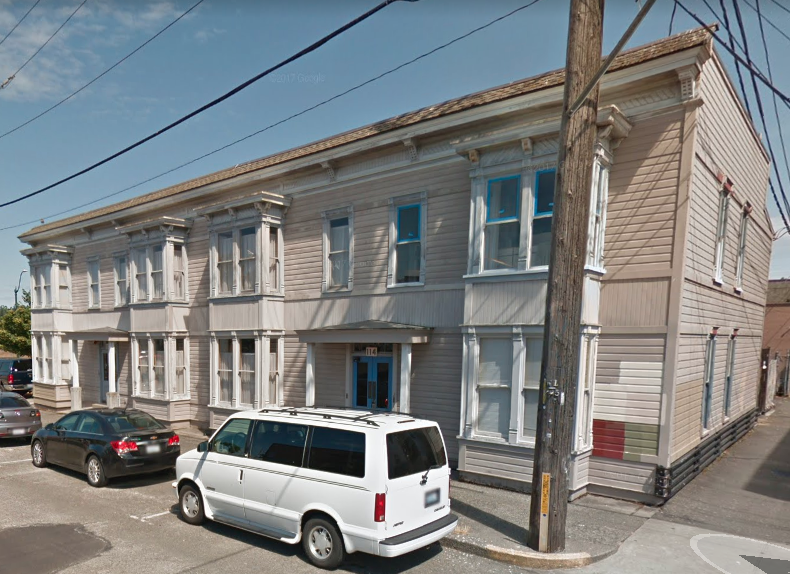
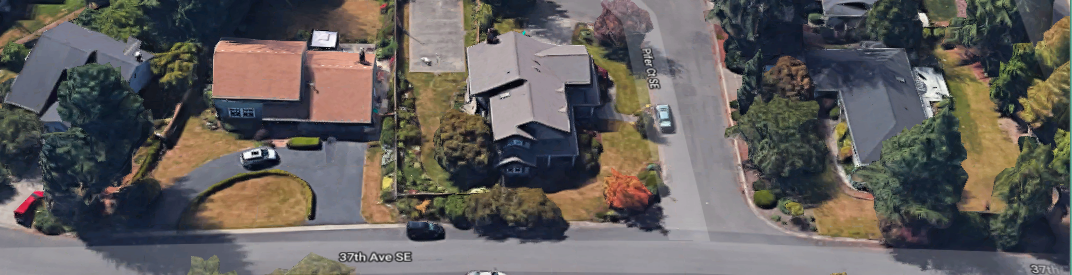
The Carylon neighborhood is a great example of this. A month ago I took a look at a duplex in Carlyon that I was interested in renting. It was a bit outside my price range at the time, and to be honest, I was surprised it was even available in that neighborhood.
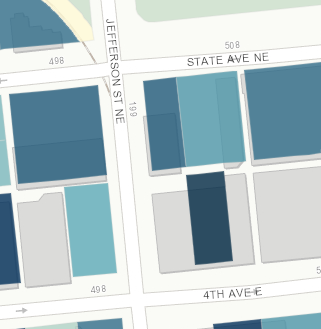
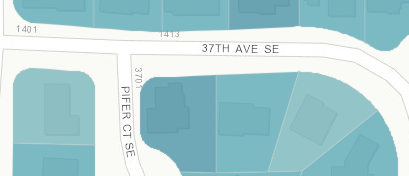
Because it shouldn’t have been allowed (yellow means no duplexes under current zoning):
Also interestingly, I thought that it was a single family house that had been split into a duplex, but I researched the history of the structure, and it had always been a duplex. 
And, it turns out, that one duplex was not as rare as I thought in Carlyon. The map below shows the different use codes for the buildings in the neighborhood. Red is single family homes, purple are duplexes and blue are apartments:
There are not only duplexes spread throughout the neighborhood, there are even a couple of small apartment buildings. This shows how Carlyon, before zoning in our neighborhoods became more restrictive, was able to provide housing for residents across the economic spectrum.
There is a section of the Bigelow Neighborhood that is also a good example of this:
While still mostly single family homes, these neighborhoods have a decent mix of middle-density housing options. And, a lot of it is illegal under current zoning. That if we tried to build a lot of the housing now available in these neighborhoods, it wouldn’t be allowed.
And, I don’t think anyone can say that these sections of Olympia are unlivable. All in all, they probably represent some of the most economically accessible, livable and walkable neighborhoods we have. And, this is no small part because of the diversity in housing options they offer.

And, they also represent a way of building homes in this city that we don’t have anymore because of the restrictive way our zoning works. The traditional manner of regulating neighborhoods was to allow for a diversity of housing types on a block. The way we do things now, with restrictive zones that allow for very few housing types in neighborhoods, is relatively new and experimental. It is also, in my opinion, largely unsuccessful. It has created neighborhoods that are economically stratified and car-dependent.
It wasn’t until after World War II that a single developer would take on building all the homes in a neighborhood, which cut down on the diversity of home types.

In this next map, you can really see how the houses were built in the Carlyon neighborhood over a long period of time. It took several decades for this neighborhood to transition from a former cattle ranch into a residential neighborhood. When it was making that transition, it was part of neither the city of Olympia or Tumwater. In fact, it was the uneven development of the neighborhood that gives it it’s most unique characteristic, the jumpy city border between Olympia and Tumwater. But that is more trivia than something underlying my bigger point.

While diversity is present in the neighborhood I live in, Briggs Village in Southeast Olympia, my neighborhood is the exception that proves the rule. Diversity isn’t usually a mark of planned development. The helter-skelter of the market historically has allowed builders to offer what was needed on a neighborhood scale when they were able to sell it. 
This incredible story at Sightline shows how single-family zoning became more prevalent over time in Seattle, that neighborhoods at one point had been able to be fitted with more than one sort of housing option. While the Missing Middle recommendations we’re considering in Olympia now are not an up-zone, the city of Seattle conciously downzoned most of the city in the 20th century, outlawing options like townhomes and neighborhood scale apartment buildings.

It’s time to acknowledge how messed up the Thurston Conservation District is and you should vote to change that

This is not the blog post you were looking for if you’re looking for the entire story behind what’s going on at the Thurston Conservation District.

I’ve been hearing about this on-going train wreck of a story through second-hand accounts and snippets I could find in the official record for months. And there is totally enough here for a real reporter to dig into. And I’ve been hoping for the adults in the room to take over.

But, in the last few weeks, the district dumped a bunch of draft meeting minutes onto their website, giving a more complete picture of the dysfunction over at the TCD. So, I’m going to take a shot at giving you a picture of what’s going on.

Also, Dani Madrone and I will interview Joel Hansen, an associate (non-voting) board member of TCD, on The Olympia Standard at the end of this week.

Lastly, while there is some diagonal overlap between my professional work and this topic, this blog post in no way represents the opinions of anyone I work for. It’s all me.

Here is the too long, didn’t read of the situation: somewhere in the last year, the board of the TCD decided they wanted to change how they funded most of the functions of the district. This is a complicated process in the best of times. But in the meantime, they decided to not re-up the method of funding they did not prefer (as assessment) while they prepared the new method (fees and charges system). Actually, the new system wouldn’t even be submitted to Thurston County until May of this year, at best. So, as of January 1, the district lost 40 percent of its funding. Additionally, the dysfunction on the board (which you can read about below) has further slowed the process. Because these obviously aren’t the best of times for TCD.

Some state-level organizations have taken notice of what is going on. The state Recreation and Conservation Office (which works with TCD on salmon recovery projects) shot off a letter basically telling TCD to stay in their lane.

The state Conservation Commission, which oversees all local conservation commissions, began threatening consequences in November if the dysfunction didn’t tamp down.

So, what dysfunction?

Here’s the bullet list put together by the state conservation commission in the letter linked to above:

The state Conservation Commission has the power to remove board members of local conservation districts and will at least start considering removing board members from TCD soon. The state commission recently gave their executive director the authority to “issue a notice of a hearing to each supervisor of the Thurston Conservation District regarding removal of supervisors under RCW 89.08.200.”

One example of board members behaving badly is described by  one of the staff members from the State Conservation Commission when he laid into the board during the November 21 meeting:

Another is a how the board has been limiting public comment, seemingly to people they like. 
During their December meeting, the board allowed one member of the public to take up all five minutes of public comment. That’s all they had allotted, five minutes. And, if one person took it all up, then everyone else would have to give it in writing. Now, it really is up to a board of a commission how they handle public comment. But there’s an issue of fairness here. If you only have five minutes, then why let one person take it all? And, if you’re going to let one person talk, then why not let other people get up and talk? Most local boards I’ve either served on or witnesses allow anyone to come and speak, but they’ve put a limit on the individual speakers’ time. Anyway, as you can see from below, this didn’t go over well.
From the December board meeting minutes:
In this particular meeting, the board ended up relenting, but it still looks pretty bad that people from the audience had to essentially shame them into letting everyone talk. It is worth pointing out that the one person they did allow to step up and speak (Joe Hanna) has had at different times interjected into board discussions during the meeting. Also in my experience, this isn’t a normal practice either.
Also, apparently, no one at the conservation district was signing checks so they weren’t even paying rent (again from the December meeting):

So what you can do right now to voice your desire for change at the conservation district is vote before March 3. The last day to request an absentee ballot is February 28.

There’s an open seat on the board which is being filled by probably the weirdest election you’ll ever vote in. There’s no mail-in ballot, you have to work directly with the conservation district to vote. It used to be that you had to go to the district office, but now you can go online and directly request an absentee ballot.

The League of Women Voters are also holding a forum tonight on Tuesday, February 13 for several of the candidates.

What would it mean for the nature of our city that the Missing Middle would have the biggest impact on Southeast Olympia?

Southeast Olympia is already wealthy and conservative. Would allowing more housing types down there change that?
The above map is a mashup of two different maps. 
The first is a parcel density map of where the Missing Middle recommendations would have the greatest impact. It shows where the buildable parcels left to be developed match up with the potential for Missing Middle housing. For those just showing up, Missing Middle is the variety of housing between an apartment and a single-family home, such as a townhouse, duplex or courtyard apartment.
The second map (which is displayed in white to red placemarks) is the election results from the Lisa Parshley vs. Allen Miller race last November. Miller districts (more conservative) are lighter, Parshley districts (more progressive) are darker.
Now, this isn’t an exact science but what this map tells me is that the neighborhoods with the greatest potential for growth from Missing Middle housing are far more conservative.
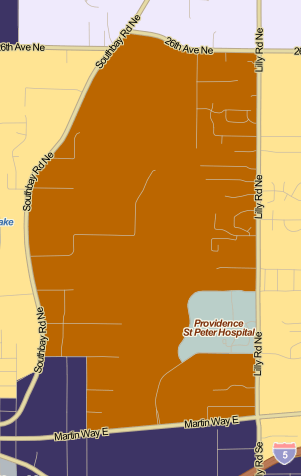
To me, it totally follows that neighborhoods that are less dense, with bigger yards and longer commutes, would be the more conservative. And, it turns out, much wealthier.
This next map is a selection of a map that shows how income really is distributed across the city. Some of the wealthiest parts (here in deep red) are in the same sections, down in the Southeast side of town where Missing Middle is hard to find, but the potential is the greatest.
So, imagine a scenario where Missing Middle housing becomes available across the broad swath of Southeast Olympia. What happens to the grassy, large single family home dominated section of Olympia? Does it become more progressive? Does it become more egalitarian? 

Renters are nice people and other thoughts on the demagoguery of the Missing Middle

Missing Middle from AIA Austin

Right now the Olympia planning commission is considering a list of recommendations about the so-called Missing Middle. These recommendations would hopefully increase density in Olympia’s least dense neighborhoods by allowing duplexes, townhomes, courtyard apartments and ADUs in the mostly the upper elevation swaths of single-family homes neighborhoods.

As you would expect, there are a bunch of people who are not fans of this idea. And as you might expect, they belong to existing neighborhood organizations in well established (but I would argue not traditional) residential neighborhoods. As Whitney Bowerman argued in this excellent email she sent to the planning commission, these organizations represent mostly older homeowners who want to preserve the low-density character of their neighborhoods.

This testimony to the planning commission I think almost perfectly encompasses this attitude.

First off, she makes a point that we shouldn’t follow the example of Seattle. Implying that by increasing density you don’t do much to decrease housing costs. The fact is that rents and housing costs have started to decline in Seattle, mostly because of all those cranes on the skyline are starting to make a dent in demand.


Renters are not bad, I’m a renter

About two minutes into her testimony, she starts to get into a caricature of homeownership. “For generations, working people have dreamed of owning a house,” she said. Specifically a house, and in her mind, a detached single family home. Which is also a specific type of home that hasn’t been historically accessible to many people or even now.

“It is not just a financial investment, it is an emotional investment and a social investment as well,” she said. Apparently, when you own a home, your emotions should matter more and your memories are deeper and richer.

“Outside those walls and over the fences, they (homeowners) create social networks,” she said. “Perhaps not in the days of old when someone was home and could build social capital in the neighborhood, but people do participate in Nextdoor, attend annual meetings… they are literally invested in their neighborhoods.”

This is all a slam on the nature of renting a home. Personally, I’ve done both. I’ve rented in almost every quadrant of Olympia and owned two homes in East Olympia. Currently, I rent an apartment in Southeast Olympia and hope one day to own again, but not a single family detached home. My goal is a townhouse with as little yard as possible.

But this belies the philosophy behind this anti-density testimony. The neighbor I had that called me a piece of shit while I was outside with my toddler owned his home. He still owned it when the police arrested him for waving a gun at his wife. I’m sure he had memories in my neighborhood, but they weren’t more meaningful because he paid a mortgage.

I’ve also had a series of neighbors that have quickly moved in from out of state, bought a home and relatively quickly moved out without making a dent in my community. They were not literally invested in anything and their presence, while pleasant, did not have a deeper impact on the neighborhood.


It isn’t about renters vs. homeowners, it’s about density and affordability

I agree the research indicates that homeownership by-in-large means better things for a community.

The testimony is also moving the ball from a debate on increasing density in Olympia’s low-density neighborhoods to a debate over the value of homeowners vs. renters. At least in the examples of townhomes and possibly courtyard apartments, the Missing Middle will be the only actual path to homeownership that some people can ever use. And, the option of duplexes and ADUs will possibly allow some folks, who would like to set down permanent roots in a neighborhood, stay in a neighborhood.

Imagine for a moment a single mother who got a late start on retirement. She has an addition in her small home that she can easily transition into an ADU if it was allowed by the city. That would keep her in her home past retirement.

Currently, a lot of neighborhoods in Olympia fail the test of liveability in two major ways. They are too low density to really be considered walkable. Even if a small neighborhood center like Wildwood did want to located inside some of these neighborhoods, it wouldn’t survive because single-family neighborhoods simply aren’t dense enough.

Also, we fail in terms of variety of housing types, especially in the car-dependent SE neighborhoods. A good neighborhood ensures that multiple generations of the same family can live in the area, that people from a variety of backgrounds can come together. Large swaths of single-family homes, while protecting the nature of a neighborhood, does not promote diversity.

If you work outside Thurston County, you’re more likely to not like downtown Olympia

The city of Olympia commissioned a public opinion poll in December. The poll mostly covered concrete things like how important various city services are and how well they’re being delivered.

But the survey also got into an interesting line of questioning about how residents perceive safety in Olympia. The pollsters asked whether we feel safe in our neighborhoods during the day and night, and more important, how we feel downtown during the day and at night.

Here are the totally unsurprising results:

Most people felt most safe in their own neighborhoods, and then less safe in Olympia in general and then even less safe downtown and especially at night. There were several groups that drove down the results for downtown. If you were from the Northwest neighborhood, if you thought the quality of life in Olympia was low, if you only had a high school education or if you worked outside of Thurston County, you feared downtown more.

The last one is the one that I’m most interested in exploring. If you commute outside of Olympia on a daily basis, I’m going to assume other things about you. You probably also shop in between home and work. Which likely means that at best you do most of your shopping on the Westside, but more than likely you shop in Lacey or in Tumwater. Your daily habits are tied to the freeways your commute doesn’t take you downtown.

Here’s an interesting tidbit, 17.2 percent of Olympians commute outside of the county for work, according to the American Community Survey. This is up from 16.9 percent in 2015, but the census bureau has only asked this question in the last two years. If you take commute times though, 22.8 percent of Olympians have a commute over 30 minutes. For most people, I’d assume this takes them out of the county, but at least well outside of Olympia so it might as well be out of the county. And, this number took a significant jump between 2011 and 2013 when it went from 18.8 percent to 22.8 percent (it’s remained steady since then).

This wrinkle with long-distance commuting and downtown combined with another result of the city survey makes me think that familiarity of Olympia is a leading indicator of how people perceive their own safety. Literally not one of the survey respondents said they feel very unsafe in their own neighborhoods during the day.

So, what does this mean for governing Olympia? A good majority of the complaints about downtown come from people who are obviously not familiar with downtown. They are fearful about downtown, but I doubt very much that they’re even downtown at night. Is it the responsibility of the city to govern in the direction of unfamiliarity with reality?

As neighborhoods go, downtown Olympia is pretty valuable

One of the most incredible things happened last week. The Thurston County GeoData Center released a huge swath of datasets that had previously been prohibitively expensive to access.
All the datasets are available to download, and if you have your own GIS application, you can play with them there. But with a few of the datasets, you can access and play with directly. One of them is this dataset in particular that puts together a lot of information about parcels in Thurston County. Including total acreage and the total value of the parcel.
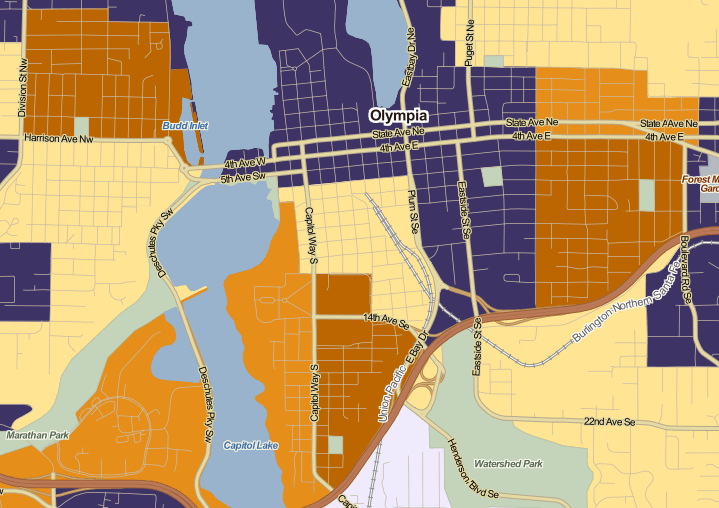
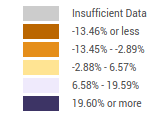
By comparing value and acreage, you can really see where the most value is in terms of Thurston County neighborhoods. Downtown Olympia, seen here in mostly deep blue, is generally pretty valuable to the county’s bottom line. These tightly developed blocks are fairly consistently assessed at a high value.
When you get out to the Capital Mall area, the colors become less pronounced. There are still a few deep blue parcels, but the mall itself is a lighter shade of blue and its surrounding commercial developments are getting yellow.

When you get out on Martin Way, really the only highly valued property is one brand new commercial building.

The same is in Southeast Olympia, where the highly valued properties are newer, nicer homes or actual newer “missing middle” townhomes.

You see the same pattern in interior Lacey, where parking lot developments like the South Sound Mall and Fred Meyer are less highly valued than smaller parcels in Lacey’s adjacent “downtown.”

I made a similar point earlier using anecdotal evidence comparing a downtown block with a similarly sized parcel on the Westside.  When you make the same analysis using businesses next door to each other (but only in Tacoma, not Olympia), the result is the same. 
Traditional development is more productive than development that prioritizes car infrastructure. 

When you compare traditional, non-car centric, blocks to parking lot dominant commercial development, the traditional blocks are always more valuable. They provide more to the community. The video below points out that the blocks in downtown Olympia are a lot like the blocks that we’ve built in cities for thousands of years. These are the dense, easily walkable blocks that have only become rare in communities that were built in the last 60 years. Only newer cities like Lacey lack them at all.

A map of Lacey that you can’t unsee

Take a close look at this map:

What do you see?
This map is from a page buried deep in the city of Lacey’s 2017 State of the Streets report. I took a look at the report originally because I was looking for data on pedestrian accidents. Which, by the way, are collected by the federal government, but are also very hard to work with.
Anyway, I found this map and had an immediate head-smack moment. What I saw totally blew me away.
Can you see it yet?
Now take a closer look:

I zoomed into the area around where Martin Way crosses underneath I-5 between College and Carpenter Roads. City-owned roads on this map are black (residential), green (arterial) or red (collector). The gray roads are not city-owned.
According to this map, Lacey is essentially two cities.  

In the Southwest corner of the map, you have the (mostly) original core of Lacey that existed near when the city became a city in the 1960s. This area is a collection of neighborhoods and commercial strips south of Interstate 5. This was essentially the bleeding edge of suburban development from Olympia that wanted to be on its own.
The Northeast Corner of the map is is everything that was annexed into the city beginning in 1985. This is generally what we call today Hawks Prairie. It was historically Hawks Prairie too, of course.
But, these two parts of Lacey are not connected by Lacey owned roads.  The two roads that would connect Lacey together, Carpenter or 15th Ave SE/Draham, are owned and maintained by the county.
This makes total sense to me now, because the entire “loop around the north to annex around the older Tanglewild neighborhood” always seemed so blatant. So it made sense that you could easily drive from one part of Lacey to the other without traveling on city roads.  Just go down Martin Way.
But, before I saw this map, there’s no way I thought you couldn’t, in fact, drive on city roads to get from one end to the other.

Lakewood was not built for walking

This town was not built for walking
It isn’t the trains that make pedestrians unsafe in Lakewood. Like a lot of cities that were built primarily in the era of car-centered infrastructure, Lakewood is not particularly walkable and a lot of people end up getting hurt and killed because of it.

Since the Amtrak derailment at Dupont a few weeks ago, a new focus has been put on the comments of the Lakewood mayor on how bad a new high-speed train route is to his city. His statement that someone is going to “get killed” was said without any sense of irony that five people already get killed walking around Lakewood each year.

Just pedestrian injuries (deaths notwithstanding) from cars have been steadily increasing in Lakewood for the past ten years.

Buried in Mayor Don Anderson’s column in the Tacoma News Tribune is the logic that kills so many people in Lakewood. He states bluntly that local rail was “made obsolete” by buses in the 1920s. In reality, it isn’t that small-scale or regional rail became obsolete, it is that investment and planning in low-density suburbs (like Lakewood) in the car era made local rail inefficient.

Even if you don’t believe that the car lobby bought out local rail lines to simply shut them down, there are broad historical trends that play havoc with Anderon’s obsoletion thesis. While suburbs began sprouting up in the early part of the 1900s, the spread of cars and federal transportation funding pointed towards cars led to the development of car-centric communities. Places to shop and work became displaced spatially from places to live and sleep. I don’t think there’s a serious person who can say that Lakewood isn’t an almost perfect example of this kind of suburb.

Trains are not obsolete, but they are ill-suited for suburban cities like Lakewood that were built around cars. But then again, so is walking.

Lakewood’s walkability rating is 39, which means that almost every trip you need to make from your home requires a car. Much of Lakewood, even the portions with sidewalks, is built for cars. Thin sidewalks with little or no division from long, straight roads the encourage traveling at a high speed. This is the kind of city design that leads to less walking and which also leads to pedestrian injury for those who have to walk.

From Next City:

Wide, straight lanes, for example, encourage people to drive faster, making neighborhood streets less safe for those walking. Cars are three times more likely to cause death when hitting pedestrians while traveling at 30 mph than at 20 mph. And when some of the population does not have access to transit or a car, making a street pedestrian-free isn’t a realistic option.

Lakewood at one point did have a local rail system connecting it to Tacoma. And you could argue that it was shortline rail companies like Pacific Traction that originally spawned suburban living in the Lakewood area. More well-off Pierce County residents could set up home around American Lake, and in an era without decent roads to Tacoma, they could still find a way to earn a living in the city.

But it was the glut of highway and road spending in the later decades that made that dream available to everyone and subsequently killed Lakewood’s streetcar company.

Pedestrians getting hurt and getting killed in Lakewood is fairly common. Pedestrian deaths aren’t newsworthy, mostly because they’re cooked into the city’s design. 

Regional rail transit is also hopefully going to continue to expand, despite the tragedy at Dupont. So, if Mayor Anderson wants to make pedestrians safer, he needs to look at the layout of his own town, examine why cars kill and hurt so many already and not blame the train.

Gigi McClure didn’t do well enough in Jeff Davis’ territory to win

Other than Renata Rollins winning a seat on the Olympia City Council, Gigi McClure doing so poorly is probably the most surprising result of the last election. Her military logistics background easily translated into an argument for an institutionalist kind of candidate that would bring peace to the port commission. From one angle she looked like a sort of proto Bill McGregor, whose decades in port operations across western Washington is the main element of his campaigns.

But, as McGregor seems to be squeezing out a close win in his race, McClure was beaten handily by incumbent E.J. Zita. While Zita herself had a close race against institutionalist Joe Downing Jerry Farmer (who is also this guy) two years ago, two years on the commission obviously gave her at least a small incumbents edge.

But, most interesting is the geography of where McClure essentially lost this race, where she did a poor job recreating McGregor’s map.

On this map, the darkest colors are where McClure did worse compared to McGregor. When you zoom in you see a lot of the same precincts that McClure did the poorest in compared to McGregor are the same ones that Jeff Davis won in against Sue Gunn four years ago. In the same way that McClure was the institutionalist against Zita, Davis was the institutionalist against Gunn in 2013.

Davis’ best precincts were in a band of suburban neighborhoods around the more dense areas in northern Thurston County, these are the areas around Yelm Highway and College that make a broad loop around the older parts of the county.

During the recent episode of The Olympia Standard, I made a quick assessment of why McClure didn’t match McGregor, but I’m not totally sure I was right. I said that her penchant to equate port protestors with terrorists probably didn’t play very well in the suburbs. I think this is still true and I’m also sure that Zita’s incumbency had some play in results too. But I’m expanding my thinking. I’ll let you know when I get back anything interesting.

2017 election lesson number 2: How the Oly Progressives boxed them in


This post will play off my last one where I talked about how the power elites (a term coined by Steve Salmi at Green Pages to describe non-progressive or transactional candidates) could not expand their geography after the August primary. What was the most important geography for the slate of progressive candidates in Olympia, especially compared to other recent progressive candidates?

Before I start (again), here is some deeper reading for you (again):


Here are all the spreadsheets and map I’ve been working from. The data is from only a day or two after the election, so as counts march on, things will change obviously. But in terms of making maps, I think these will more or less stand pat.


For further reference, Adam Peterson did some really great shapefile based maps that he posted to Thurston Progressives.

Marco Ross ran for mayor against Cheryl Selby in 2015. He is the most recent progressive candidate for city council and I’m using his results to compare to this year’s successful slate.

Literally, the answer to where they did better is: everywhere in Olympia. The smallest margin of difference between the average progressive percentage two years ago and this year was 14 percent. But even taking that into consideration, there is still a geographic story to tell.

So what I did with this map was isolate the top 14 of 57 precincts (in total) by how much better they did this year than two years ago:


What I see is a band of precincts above the SE Olympia core along the highway on the Eastside (extending to a couple on the westside. Then a series of precincts running up the spine of the upper Eastside and then a few out on the rim of the city.

Progressive candidates this year did do well everywhere, but where they did best was not in their core areas along the water or inside the SE Olympia bubble of their opponents. They carved out their greatest success between the two geographic powerbases along the interstate and then in far outside neighborhoods.

« Older posts Newer posts »

© 2026 Olympia Time

Theme by Anders NorenUp ↑