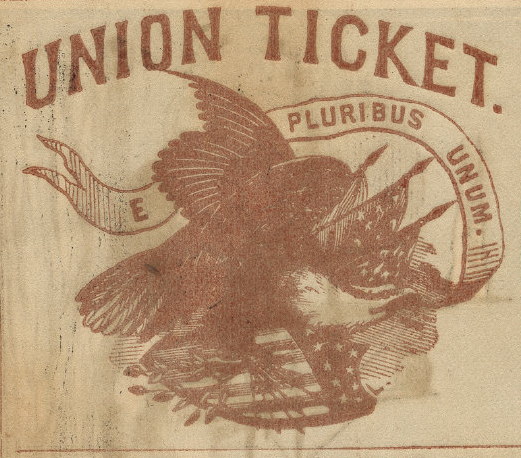
Thanksgiving became a national holiday in the worst stretch of the Civil War. Before the 1860s, days of thanksgiving were scattered New England customs, held whenever a governor picked a date, and some Southern politicians waved them off as Yankee meddling. In October 1863, a few months after Gettysburg and Vicksburg, Abraham Lincoln proclaimed an annual national Thanksgiving for the last Thursday of November.
Thanksgiving asks for something odd. It wants us to feel thankful at the exact table where we’re most likely to feel the opposite. Cascadia’’s path through the politics of the first national Thanksgiving shows us that putting aside division for community (even for something as base as political survival) can be a good. Zen and modern psychology have spent a long time on the problem of giving thanks, and what they say fits the holiday’s history better than the usual story does.
Lincoln wrote the war into his proclamation. He asked Americans to remember the widows, orphans, and mourners, and to pray for healing and a return to peace and union. Out here in our distant corner, we missed the bloodshed. The politics still found us.
In the late 1850s, Oregon and Washington Territory were run by a tight Democratic machine that paid its loyalists in government jobs. Oregon Senator Joseph Lane and Isaac Stevens, Washington’s first territorial governor, sat at the center of it. Many white settlers had come from border states and the lower Midwest. They opposed plantation slavery because they feared it would undercut free white labor, and they were fiercely anti-Black, writing exclusion laws and voting bans into territorial and state government. When the national Democratic Party split in 1860, Lane ran for vice president on the pro-slavery Southern ticket with John C. Breckinridge, and Stevens managed the campaign. Then Fort Sumter turned that alignment into a liability, and the jobs that had held the machine together passed to Lincoln’s appointees.
Northwest Democrats pivoted to survive. Stevens broke with his Southern allies, went east to command a Union regiment, and died leading a charge at Chantilly in Virginia. That gave Washington Democrats patriotic cover to stay loyal. Back in Olympia, with the federal jobs gone, territorial lawmakers held their majorities by steering around emancipation and sticking to roads and the 1863 carving off of Idaho Territory. They teamed up with Republicans in temporary coalitions like the Union Party and later the nonpartisan People’s Party, dropped the toxic national label, and kept local government out of the war tearing apart everything else. The Union Party was a deal between people who didn’t much like each other and needed each other anyway.
Nobody mistook it for a lovefest. Territorial newspapers in 1863 mocked Republicans for scrubbing off their party name like sailors abandoning a sinking ship, clutching at the “Union” label just to hang onto federal appointments. By the end of that year, insiders who had only just joined the coalition were already trying to purge longtime loyalists who refused to vote a straight ticket. It was cynical, transactional, and full of men who distrusted one another’s motives. Yet it held. Rather than tearing local governance apart over ideological purity, rival factions settled for a truce that kept roads built, territorial lines drawn, and basic order intact while the rest of the country bled.
A century and a half later, national politics still sets Washington’s balance, but the mechanics have flipped. In the 1860s, distance let politicians run from their national brand. Today, a down-ballot candidate has a hard time outrunning their party’s image. Urban, college-educated voters around Puget Sound have sorted heavily into the Democratic coalition while many rural eastern and coastal communities have hardened behind the Republicans. Moderate Washington Republicans, caught in those national headwinds, have helped hand Democrats historic legislative majorities.
The local friction moved inside the dominant party. The top-two primary sometimes sends two Democrats to the general election, which puts some of the sharpest fights between progressive challengers and centrist incumbents. Today’s Union Party never got a new name. It meets in one caucus, under one label, holding a majority neither side can afford to lose. In the 1860s, leaders hid the label to keep the peace. Now the label can’t be hidden, so the argument over what it means does the work the coalition used to.
A lot of us have a caucus like that on Thursday. It’s the relatives who vote differently, who think the other side is wrecking the country, and who are still passing the potatoes. In 1863, Lincoln asked for a day and for the act of giving thanks. Agreement wasn’t on the list.
It’s easy to imagine the holiday as the one thing we all agree on, a pause from the political and cultural fights. Thanksgiving never asked us to look past the division. The first national one was proclaimed in the middle of the biggest fight the country has ever had. Today’s version is a thin kind of togetherness, and it’s mostly what we’ve got.
The contemplative traditions have spent a lot longer than we have on how to practice it. Zen starts with interdependence. A bowl of rice or a cup of tea is sustained by rain, soil, labor, and a thousand conditions nobody sees. Nothing in that calls for a cheerful label on grief, fatigue, or a bad argument across the table. You’re asked to loosen the grip of the ego, which holds on to what it wants and pushes away what it fears, and to notice that even a hard moment rests on something. The disagreement stays. So does the ground under it.
Psychology gets to a similar place by another road. Human brains tend to lean toward threats, deficits, and unresolved conflict, and deliberate gratitude seems to interrupt that habit by giving attention something to hold besides rumination. Seeing yourself as part of a wider network of effort and care also pulls against the idea that you stand alone, and that can make resentment easier to put down. Zen differs from forced cheer by keeping impermanence and difficulty in view. You can say what’s broken and still notice what holds together. In a culture built to keep us comparing and wanting more, taking what’s in front of you as enough is a small, odd act.
The civic holiday Thanksgiving and the practice of giving thanks share some ground. Both center on food and the earth. Both make room for grief next to thanks, as Lincoln did, and both start from the fact that nobody gets by on willpower alone. They differ in where they look. American Thanksgiving has looked up to a Creator, or out to national unity and a full table. Zen is non-theistic and turns inward, toward noticing the gift without clinging to it, knowing everything passes.
The Union Party passed, the way most political arrangements eventually do. It was never pure, and neither are we. When we look inside ourselves at a crowded table or across it at the people we can’t quite reconcile with, we rarely find spotless gratitude or resolved differences. Usually we find something much closer to a working truce. Old grievances are held in check by the quiet recognition that we still depend on each other to get through the season. The battles we fight matter, and the friction is real. But the grace we bring to the table doesn’t have to be perfected to be useful. It just has to hold long enough for us to pass the bread.


Leave a Reply