Olympia Time

History, politics, people of Oly WA

Page 19 of 178

John Hutchings (yet everyone knows him as Hutch) preaches ignorantly about how Home Rule and county government works

During a recent debate with Jim Cooper, John Hutchings told a tale about why he isn’t necessarily in love with the idea of county government becoming more representative.

But, he get’s most of it really really wrong. A little disclosure, I am a member of Better Thurston, which advocates for Home Rule and a charter form of government. So is Jim Cooper.

1. Hutchings says we would need to amend the comprehensive plan if we decided to have home rule.

Just quickly, the comprehensive plan is a document required by the Growth Management Act, basically where certain buildings will be built and where people will eventually live.

A charter is how county government is organized.

They have nothing to do with each other.

2. He says we’d have an unelected super bureaucrat vetoing decisions by elected officials. Hutchings:

The charter would also have a component of an executive manager for the county. And no matter what the people want and what the commissioners vote on, the executive manager, who is not an elected position would have veto power. And, I don’t think I like that because that takes what the peoples’ wishes are away from the people. 

Oh man, where to start.

First, in the charter process it is up to an elected group (a disappearing committee) to write a county charter, essentially a county constitution of how political power is divided up through the county. How many seats on the county commissioner? Is the clerk elected? That kind of thing. So, that anything at all (like a veto wielding bureaucrat) would be required is false.

If you look at charter counties throughout Washington, you see a significant diversity of how they manage their own affairs. Whatcom has a non-partisan county commission with seven members and an elected executive. Both San Juan and Clallam stuck at three commissioners.  King County has a nine-member non-partisan council.

That said, Hutchings says that an executive manager could veto decisions by an elected body. So, more than a few of these charter counties did decided to go with a council or commission appointed administrator. This is, in fact, very similar to the forms of governments of Lacey, Tumwater and Olympia. The elected officials approve a budget and policy and the manager executes it.

While this gives the administrator day-to-day control of the county government, they can not veto a damn thing. In American government terms, a veto is literally turning back a decision by the elected board and saying “nope, we’re not going to do this.”

Veto power does not exist with any single unelected administrator with any local  anywhere in Washington State.  Seriously.

Also, while the Washington State constitution envisioned noncharter commissioners as a cross between executive and legislative actors, Thurston County has in fact had one of these unelected administrators for decades. So, if elected, Hutchings would step into a power structure very much like the one he fumbled through describing.

3. I understand that the county charter process is complicated. So it makes sense that people oftentimes don’t get the nuances. But, there’s a reason why it’s complicated. Its serious business changing our form of government.  And, people running for office should be serious enough to understand it.

This late in the game, you’d hope that a county commission candidate would have ironed out any confusion they had with the process.

But, you know. I don’t think Hutchings thinks he’s wrong. I think he’s pretty confident about his understanding of how the charter process would work.

Listen to the confident way he explains his understanding of the relationship between a county manager and elected officials. He’s trying to walk the listener through a complicated arrangement that he is just not getting himself. These aren’t shades of gray either here, or things that honest people can disagree about. This is literally a question of elements of government existing or not.

By this point in time, Hutchings or any candidate for county commission, should have their facts straight. Especially about such a hot topic (of which, there are many).

Gary Edwards literally does not believe in land use regulation

Here’s Gary Edwards, candidate for Thurston County Commission, talking about his vision for land use management:

I am certainly not in favor of taking through regulatory action. So, if we need to take, we need to compensate.

On the other hand:

You want to be able to do what you want with your land. But at the same time, landowners should not be able to destroy things for the people around them. It shouldn’t be a free ticket to do whatever you want.

The point of view that Edwards articulates here is an aggressive and far-right approach to land use management that would not only throw growth management into chaos, but was soundly rejected by Thurston County voters ten years ago.

What he’s talking about is called “regulatory takings,” which is a strictly legal term that has been hijacked by the right. They’ve started using the term to describe any sort of local land use rule that prevents a landowner from realizing an economic gain from their land.

County is stopping you from building 100 homes on your 10 acres? That’s a taking.

City stops you from opening a convenience store? That’s a taking.

Basically, and restriction that keeps the landowner from making any money from their property would be described as a taking.

You can see how cities and governments would just give up on trying to preserve natural resources and the livability of our communities than try to enforce now expensive rules against landowners.

Back in 2006 a coalition of right-leaning organizations came to Washington with Initiative 933. This initiative would have forced local governments to pay landowners anytime a local zoning or land use law conflicted with their interests. If the government couldn’t pay, the landowner was free to do what they wanted.

What happened that year was that  64 percent of Thurston County voters rejected the initiative that was based on Gary Edward’s bad idea of land use management. That was higher than the 58 percent who voted it down statewide.

Even in Oregon (where the idea to give developers a free ride started with a similar initiative a few years earlier) the idea was turned back in 2007. The people there saw how bad the idea really was, allowing development where it wasn’t appropriate and where the natural resources simply couldn’t support it.

So, what Edwards is describing is really an extreme, and already rejected, idea for how Thurston County should protect communities and natural resources. Giving landowners free reign by holding the county hostage anytime they disagree is a terrible idea.

It matters that Gary Edwards cost Thurston County $500,000 in lawsuits

After his last run for sheriff 14 years ago, Gary Edwards faced a couple of lawsuits from his former opponents. Both now former sheriff deputies, they claimed that Edwards used the power of his office to discredit them during the campaign.

Edwards ended up beating both of them, in the primary and then eventually in the general election. But one of those lawsuits was settled for half a million dollars, and in the other, a jury sided against Edwards.

The lawsuits include an assortment of allegations, including harassment and retaliation against Ed Thompson and Glen Quantz. In the case filed by Quantz (in which the jury decided against Edwards), the former deputy claimed that Edwards delayed an internal investigation to make sure it was still open until after the election. The internal investigation ended up clearing Quantz.

I pulled together most of the news coverage of Edwards’ time as sheriff in this file.

A judge eventually threw out the jury decision against Edwards in the Quantz case. He didn’t decide the allegations weren’t true, he only said that as a sheriff, Edwards had the “qualified immunity” to do as he wished.

These incidents and costly lawsuits are only the most interesting aspects of Edwards’ service as sheriff. Another is a episode where he joined a fast speed pursuit into Pierce County on Interstate 5. Without telling anyone else involved in the pursuit, Edwards performed a “rolling slow down” during which the suspect (who escaped) his his unmarked car.

What gives me the creeps is that the lawsuits, the questionable tactics, all happened relatively recently. Up until now, I don’t think anyone has brought up these issues.  Edwards has brought up issues of county commission actions that predate the current commission and obviously don’t involve his opponent or anyone else running for county commission. But, his time as sheriff shows at the very least a management style and decision making that everyone should be able to question.

If you’re a Republican in Thurston County, shouldn’t all these Independents bother you?

If things go a certain way, it is possible that come January Thurston County will have three commissioners that are not Democrats for the first time in my memory.

But, none of them would be Republicans either.

Admittedly Bud Blake (elected two years ago), Gary Edwards (who was a Republican in the past and might be elected this year) and John Hutchings (also might be elected this year) could easily be Republicans. But, this year they’re all Independents. And I don’t think I’ve heard a good explanation as to why.

As much as I’d like to ask Edwards why he ditched the Republican Party, I think I know the cynical answer. Blake showed that a conservative could be elected countywide if they ran without the Republican name.

But, mostly I want to hear from Republicans. And, I know how hard it will be for me in particular to get answers from Republicans given my point of view, but I’m honestly interested. I’ve spent the last few weeks poking around various online forums and communities for local Republicans and have come up short.

Shouldn’t conservative candidates run as Republicans? Even if they disagree with 20 percent of the Republican platform, there is enough “big tent” in the party to contain them right?

If you are a Republican, and feel so inclined, fill out this short survey (LINK).

Where does Bill Bryant’s 100,000 come from?

Not since 2004 when Dino Rossi got within a hair of non-incumbent Christine Gregoire has a Republican gotten close the governor’s mansion.

This year Bill Bryant is making his run and he’s staking his election on the turnout of 100,000 extra conservatives:

His path to victory, Bryant explained, hinges on turning out some 100,000 Washingtonians — mostly likely-Republicans or conservative-leaning independents — who failed to vote in the 2012 election but probably would have backed Rob McKenna, Washington’s last GOP candidate for governor.

This 100,000 is pretty core I suppose to Bryant’s math, because seems to talk about them a lot.

“Who do you think elected Jay Inslee?” Bryant asked volunteers at the Clark County Republican Party headquarters Sunday evening. It wasn’t just Democrats, he said.

 There were more than 100,000 voters in the 2012 election who would have picked Inslee’s Republican opponent Rob McKenna but who didn’t vote, Bryant said. McKenna lost to Inslee, a Democrat, by about 94,000 votes.

So, as I understand his argument, his goal is the turn up turnout among conservatives (who identify as Republicans or not) while hoping Democratic turnout stays flat.

I tried to simulate a couple of ways he could do that. Here is my math. Feel free to check my work, I’ve been wrong before. 

First, among the counties that fell below the average turnout in the gubernatorial election in 2012, I turned the turnout among Republican voters up to the average of all the counties. The above average counties I let stay the same.

This results in Bryant just barely losing to Inslee 1,506,000 votes to 1,582,000 votes.

Second, I took Republican turnout and pumped it up to the highest turnout of 87 percent in the gubernatorial election. This is incredibly pie in the sky since a lot of counties have turnout much lower than that. But, in this case, the Republican wins with 1,652,166 votes. Way more than enough.

The third one was trying to find the Goldylocks solution, how far you’d need to pump average voter turnout to just the right level to get Bryant over the finish line. This turns out to be 84 percent across the board, assuming Democratic turnout stays the same. This still sounds like a lot of turnout.

But, none of these are the reasons why I think the 100,000 voters are bunk.

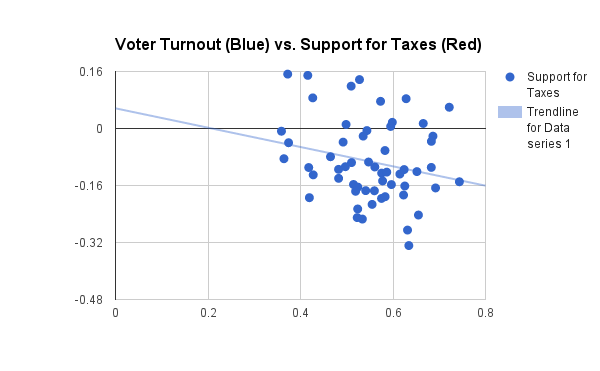
The chart below illustrates the second option, 87 percent turnout across the board. It shows you the actual votes (in blue) and the new votes (red).

King County is still very much king.

There are more new votes (via math) to be had in King County then there are in the most Republican of Republican counties. But, I don’t think these votes actually exist. Churning up new voters in King County (and other large Puget Sound counties) would only churn up new Democratic voters.

So, I’m not sure I think the 100,000 voters Bryant and the Republicans are looking for exist.

Lastly, I hope everyone appreciates the irony of Republicans talking about the benefits of higher voter turnout.

Lacey is less of a place than it would take to be useful to tourists

Lacey is taking a lot of umbridge with the position of some folks in Olympia that Lacey serves very little purpose to possible visitors (Ken Balsley):

The Olympia, Lacey, Tumwater Visitor and Convention Bureau (VCB) is about to embark on a major promotion campaign to promote Thurston County as a destination for visitors and tourists. It’s entitled “Experience Olympia.” 

A majority of the Lacey City Council – – as well as myself – – think this is the wrong way to promote the entire region, and that concentrating on “Olympia” demeans and denigrates the other two cities which kick in money for the VCB.

Just a quick note, please read to the bottom. This is not a Lacey sucks post.

Ken later makes a great point about the use of the Regional Athletic Center (funded by most of us, led by Lacey and located outside of Lacey), but I’ll take on his position more directly that Lacey is owed any respect as a “place” that people would visit.

For starters, consider this piece in Strong Towns about the irony of taking engagement photos in a suburban development. Which is most of what Lacey is really.

Engagement photos are either urban or rural. They are either a former factory or a leafy meadow, the brick wall of a forgotten factory or an empty beach. Never the subdivision. Never the cul-de-sac.  

… 

There is a reason no one takes engagement photos in the subdivision; they can be places not worth caring about. We wouldn’t have been criticized if it was.

And, just to apply this premise to here, this is a map of geotagged photos with the term “engagement” in our area.

Most of the photos are in the most placey place in all of Thurston County, downtown Olympia, the Capitol campus and Budd Inlet. Lacey does have churches, is has St. Martins and the Worthington Center, so I know people getting married in Lacey. But, when people are looking for a place to take photos in preparation for their wedding, they go to a place.

Similarly, when people travel, they also need a place to be. A series of only drivable neighborhoods connected by parking lots and big box stores similar to either the ones they came from or the ones in Lakewood 20 minute away is not place enough for tourists. The Regional Athletic Center, notwithstanding of course.

But, for Lacey, this isn’t some mistake of history. It didn’t come upon this state by accident. It has planned not to be a place.

These two maps in particular makes me think of Lacey less of a place and more of a convenient municipal organization.

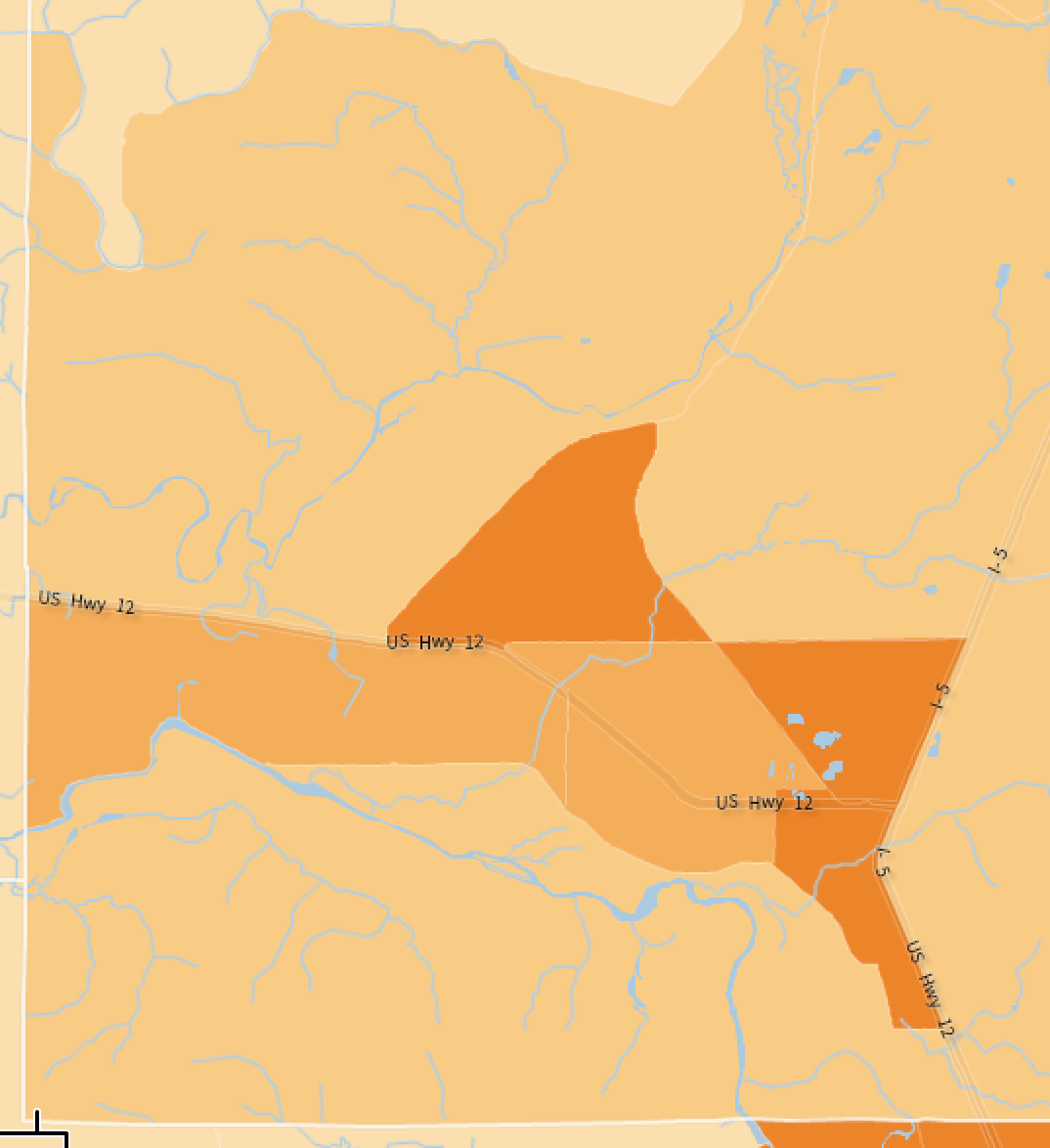
This is a map of where the people are east of Olympia:

And, this is a map of where Lacey is, almost straining to get out of the way of a lot of the people who live east of Olympia:

This is not a natural community or a natural border around a place. This is a city that bends itself to become successful, but not serve people.

I remember being in a forum for candidates for county sheriff and asking if it would be easier to be sheriff if Lacey annexed the urban neighborhoods like Tanglewild and the Meadows. I don’t remember the candidates taking the question very seriously, but most assumed Lacey would never annex those older, dense almost urban areas.

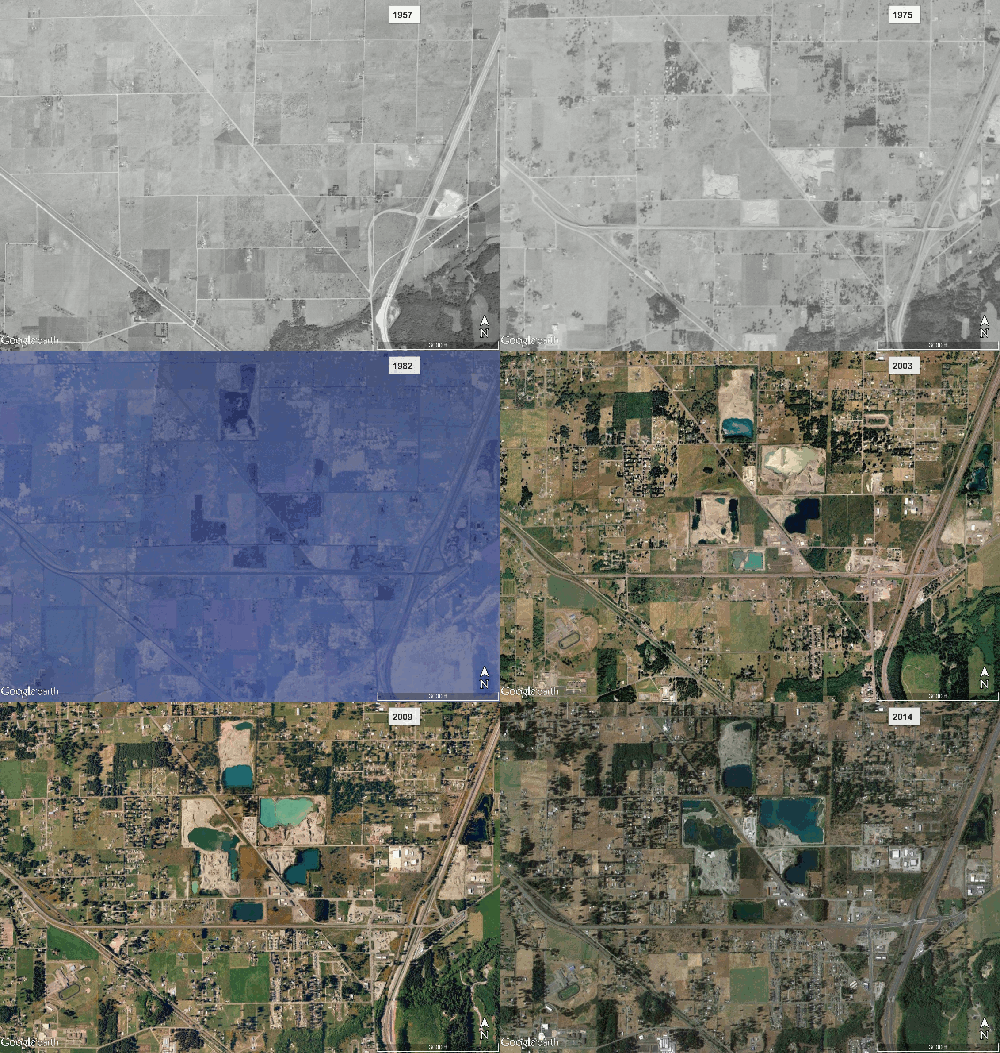
Here is a short visual history of how Lacey grew north of those neighborhoods since the 1980s. It was more convenient for Lacey to annex places that didn’t have people (at the time of annexation) and stretch itself around places where there were people.

And, I know full well why Lacey hop-skipped over these older, in decline neighborhoods along Martin Way. Back to the engagement photos post:

These places were not cherry-picked. They are everywhere. The drive-in snout house is more common than all the brownstones in America by a factor of 20. 

We know the story of these places. We know what is next: decline. And, to use a happy couple as the backdrop probably does feel like a slap in the face. While I never intended to make a moral statement (certainly not about individuals living here), the photos do make a judgement on our culture. We build places that cost us lots of money, don’t work very well, and people ignore them when they’re looking for nice place to take a photo.

By the 1980s and 90s, the older neighborhoods that didn’t become part of Lacey when it first came to being in the late 60s were too far gone, too below standards, too expensive to maintain for Lacey to want to bring them in. In the pessimist’s view, they were what the rest of Lacey was possibly going to become.

I’ll acknowledge one more point from the pro-Lacey name folks. There are a lot of hotels not in Olympia that carry most of the freight for the visitor and convention bureau that want to go Olympia only. It would make sense to acknowledge their places and their contributions because. at least the hotels outside Olympia use their own cities as label right?

Not really. It’s a mixed bag overall, but the Olympia name carries pretty far. In the Hawks Prairie section of Lacey:

This is a little bit misleading, some of these hotels are actually in Olympia, but the other ones in Lacey still use Olympia:

And, also the Tumwater hotels also use the Olympia name:

I hope everyone reading this gets down this far, because I’d like to say this as well: this is not a 1997-esque Lacey Sucks sort of post. Because I don’t think Lacey sucks. I’m not a huge fan of unwalkable, unbikeable, retail sales tax centered city development. But if I wanted to spill word tilting against that wildmill I’d be pretty unoriginal. To that end, I think Lacey has been doing some good work to correct the sins of the past.

And, since I’ve lived in the most Lacey-like part of Olympia (SE side) for the past 14 years, it would be supremely ironic for me to take too hard a swipe at Lacey.

So, let me sum up this way. I can see why people live in Lacey. Tens of thousands of people live there. Lovely neighborhoods, convenient to drive to the store. Drive anywhere really. Other than youth sports tournaments, I don’t see why anyone would visit there. I wouldn’t suggest anyone visit my neighborhood as a tourist either.

Crazy Idea: City of Thurston

One of the frequent criticisms of the Thurston County Commission is that usually the people who serve on commission come from where most people in the county live, one of the three major cities.

The criticism goes, being city residents, though, they aren’t necessarily impacted by the policy decisions they make for residents in unincorporated areas. We’ll just ignore the fact that unincorporated rural landowner and incorporated landowners pay the exact same rate to the county in taxes for the the rest of this post.

So, here’s a crazy idea: why doesn’t the entire unincorporated part of Thurston County become its own city? And, I’m not just talking about the parts of rural Thurston County that really should have their own local government (looking right at you Rochester and Grand Mound), but I mean the entire unincorporated swath of it.

That way, the rural Thurston City government would take over nearly every local government function like planning, policing, and garbage pickup.

Thurston County would still exist, but would be stripped down to the things that really only counties can provide, like courts, elections, that sort of thing.

Their is a history of large rural area of a county declaring themselves free from the tyranny of local county government by becoming a city. In 1990 Bainbridge Island became its own city when the pre-existing city of Winslow swallowed up the rest of the island.

The article I linked to shows some of the issues that the islanders had to face to with being their own bosses (increased population growth, growing pains of ramping up services and just paying for government), but it would be interesting to see rural residents stand on their own.

Because, as you might know, landowners in Olympia pay the same rate to the county as the ones living off Fir Tree Road.

Where Jim Cooper, Allen Miller and John Hutchings got their support

Glen wrote about how Allen Miller’s candidacy for county commissioner was some sort of shield against fellow non-partisan John Hutchings, benefiting Jim Cooper. His point was that Miller would take votes from Hutchings and possibly force a Cooper Miller run-off in November.

At least on the top line results, that is sort of what happened. Cooper took over 35 percent of the votes in the five way primary while Hutchings and Miller fought it out for second at just under 20 percent. After all the voters were counted, Hutchings survived Miller and came out on top.

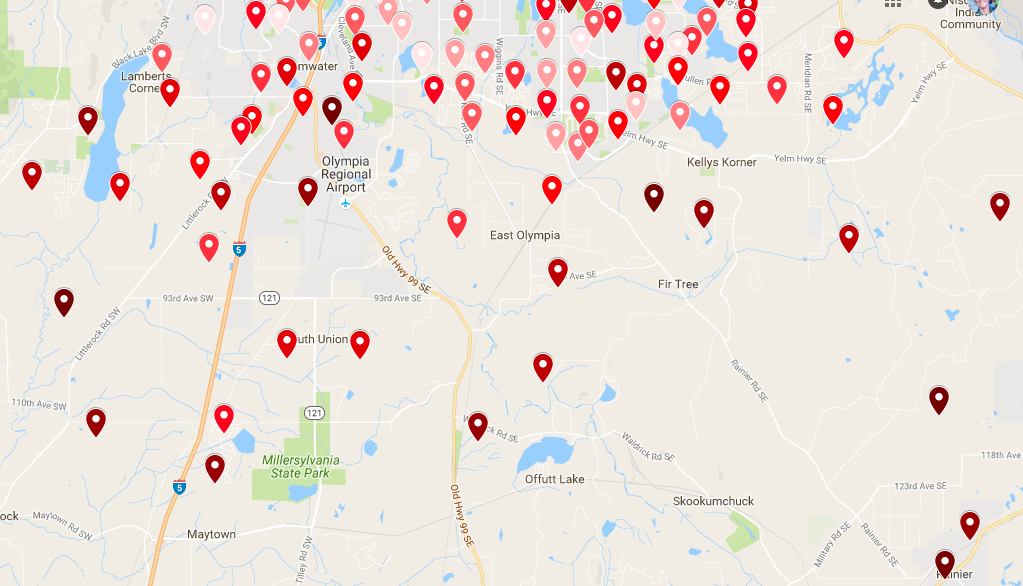
This map shows each candidate’s strongest dozen or so precincts, where I could assume each candidate had their strongest support.

On the surface, you see something really interesting, Cooper did well in the inner northern Thurston precincts, Miller did well further out in the less walkable neighborhoods while Hutchings had his strongest support either much further out or right up next to Miller.

This suburban band around the edge of the northern Thurston urban areas that Miller won is also lit up against Sue Gunn in her election.

And, I suppose whether you believe Miller was a Cooper patsy is whether you believe Miller had more of an impact on Hutchings or Cooper.

For me, election returns not-withstanding, I doubt Miller jumped into the race to support Cooper. Knowing Miller, his number one priority in public life is somehow preserving Capitol Lake. This isn’t a massive secret.

Cooper made a brave move recently on the city council to build in a position of pro-Deschutes estuary restoration on the city’s primary planning document. If Miller enter the arena as some sort of pro-Cooper tank, he would have ignored his primary civic goal.

Undervotes in 2014 didn’t cost Karen Valenzuela the race, but they would’ve made it super close

It turns out that people not making a choice made the 2014 county commission race less close than it really should have been. And, these voters, if they weigh in this year, could tilt the county commission altogether.

I learned something interesting when I started backtracking on my old post about how Bud Blake and how he won an county commission seat in 2012 as an independent. This was interesting to me because in any other year, I think, Blake would have run as a Republican. So how much did party labeling matter?

Did Democrats give themselves permission to vote for a conservative independent just because the label wasn’t Republican?

In my first run, it sure did look that way. I compared percentages of the returns of an aggregate 2012 Republican by precinct compared to Blake’s percentages. The chart that was produced showed a narrow band of what would’ve been Democratic voters in 2012 voting for an Independent (would’ve been Republican) in 2014.

But, that analysis ignored a few things:

1. Off year elections in Washington State are not presidential (or gubernatorial elections). There’s lower turnout since top of the ticket partisan elections aren’t there. In an email Matt Huot even pointed out that there was no federal Senate election in 2012, so the voter pool really had no top of the ticket partisan talisman.

 2. Therefore, voting percentages are not voting totals. It really matters how many actual voters fill in your bubble, so comparing a low turnout race to a high turnout race really wouldn’t work.

So, what I did was backtrack and compare Bud Blake’s election in 2012 with what I could put together as a partisan comparison, the combined WA 3 and WA 10 congressional races in Thurston County.

And, what I found was amazing.

Almost 6,000 voters that made a choice in their congressional election didn’t choose between Bud Blake or Karen Valenzuela in the county commission race. And, this is in a year that congressional Democrats dominated congressional Republican candidates in Thurston county, 48k to 33k.


The bad news for partisan Democrats is that even if you add all of those undervotes to Valenzuela’s totals, she still would have lost by a just over a thousand votes. But, you could imagine if a few things when differently, a thousand votes out of more than 80,000 cast is a distance that can be traveled.

So, this year when we’re likely seeing two Democrats in county-wide commission races against candidates who esque partisan labels, where would the undervote problem matter most?

Good news is that it matters in the precincts that already skew Democrat.

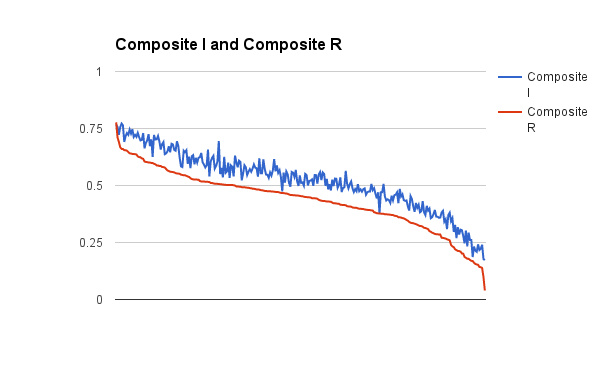
This chart ranks precincts by their partisan weight (most conservative to the left). The blue line is Bud Blake’s percentages across this spectrum. The red line is Karen Valenzuela’s plus undervotes. You can see the problem of undervotes becomes more pronounced in the more liberal precincts.

If this year’s crop of Democratic commission candidates can convince otherwise Democratic voters to come out, then the independent label problem becomes much smaller. And, in a presidential/gubernatorial/senate year, we can almost be assured that’s going to happen.

And, just to visualize it another way, you can see that these precincts also focus on Olympia. If these voters come out in the commissioner’s race, we’ll have a much different ball game than 2014.

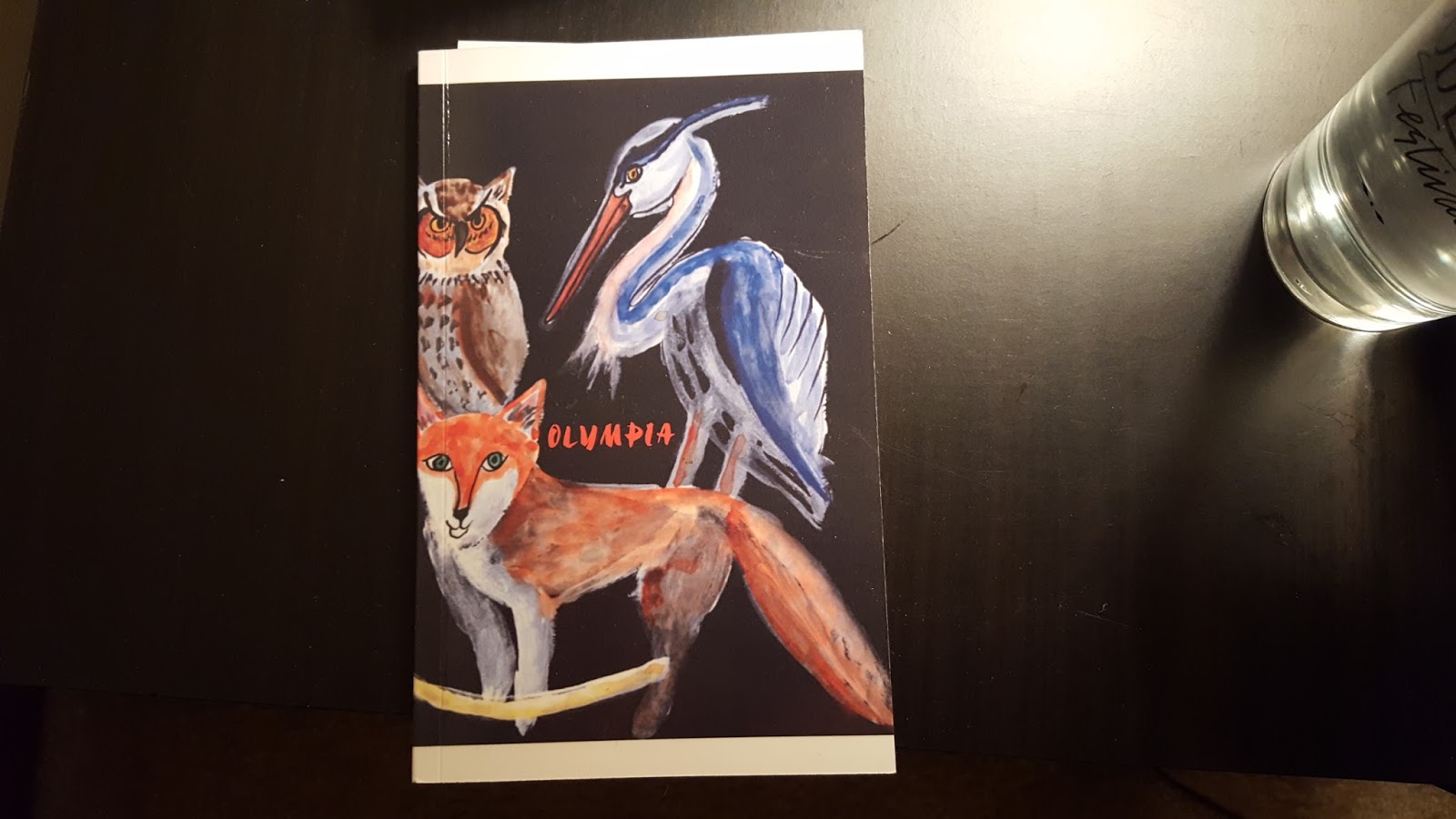
Towards Cascadia is not a particularly useful book about Cascadia

I had been incredibly interested in reading Ryan Moothart’s Towards Cascadia. The book had been advertized on one of my favorite soccer podcasts. And, being not eager to read the entire thing on my phone, I spend a little money on a cheap tablet that I could use as an ereader since the book at that point was only available in ebook form.

In the end though, Moothart does not impress.

Overall, he seems to skip over the part where any writer who takes on the topic of Cascadia should describe and backup what they actually mean about Cascadia. I’m familiar with the Cascadia that Moothart writes about, it is the one that comes almost directly from David McCloskey and r/Cascadia. While I’m not a particular fan of this version of Cascadia, I understand where it comes from. And, unfortunately, Moothart does a poor job presenting it.

For one, he seems to over-estimate the average citizen’s commitment to particular political ideals. Take for example this passage:

We do not have to choose between our local differences east and west of the Cascade Mountain Range in an attempt to gain a dominant influence throughout the entire region; we’re in this together as Cascadians, regardless of our differences, whatever they may be.

Here Moothart seems to gloss on what really are fundamental differences on politics and society between people from urban Seattle and rural Franklin County.

He also seems to misunderstand the nature of society here:


In Cascadia, our understanding of freedom and status quo extends to the environment that surrounds us. The living communities that exist in nature are part of us; we take into account their right to exist, free from overconsumption or exploitation.

What now? Really?

Even the most pollyannish assessment of how we are doing in terms of protecting the environment around here would state that most of us act like “nature is part of us.” This is simply not true. While commendable as a goal (I really do think we should act more like this), it isn’t the way things are. And, if this book is supposed to be a reflection of reality, it simply isn’t a good one.

The main jabs of the book are two longish and detailed detours into what I could only describe as political science descriptions of how Moothart sees the political nature of Cascadia. But, these detours lack specifics I’d find useful.

Where Moothart does a great job is describing how exactly a regional secession would work. This is a well detailed chapter and breaks down in both American and Canadian terms how the states and provinces that make up Cascadia (even on a sub-state level) would actually leave. Moothart does a great job of even showing how this process would be peaceful. I’ve often been curious about these processes if they existed, and he does an admirable job of walking the reader through them.

« Older posts Newer posts »

© 2026 Olympia Time

Theme by Anders NorenUp ↑