In the early 1960s and through the 1970s, most of Olympia’s residential neighborhoods allowed housing types that are now included in the city’s Missing Middle proposal. The most common of these zones was the RD (Duplex) zone that allowed for single-family homes and duplexes in the same neighborhood. In various generations of Olympia zoning codes, this later became known as R2 and then R 6-12 (meaning six to twelve dwellings per acre).
In an earlier post, I pointed out how Olympia (and Thurston County) saw its largest influx of new residents in the late-70s. Even the yearly migration of today does not match the spike in new residents between 1977 and 1979. Before and during the 1970s, the construction of 2-4 unit housing pretty much tracked with population growth in Olympia, but in the early 80s, they became unhinged.
This is because Olympia downzoned a series of once density friendly neighborhoods, pushing new growth into largely single-family home zoned neighborhoods on the fringe of the city.
Through the 80s and 90s and to today, the city decreased to the area duplex-friendly zoning covered. This led to examples of places where duplexes had been built, but they weren’t actually technically allowed by the zoning rules. In fact, because of persistent downzoning in recent decades, there are literally hundreds of examples of non-conforming missing middle housing throughout the city.
According to the city’s tally, there are over 200 non-conforming duplexes, 462 non-conforming tri/fourplex units, and 89 non-conforming 5-12 unit apartments. All of these were allowed under zoning rules when they were built, but the rules changed over time.
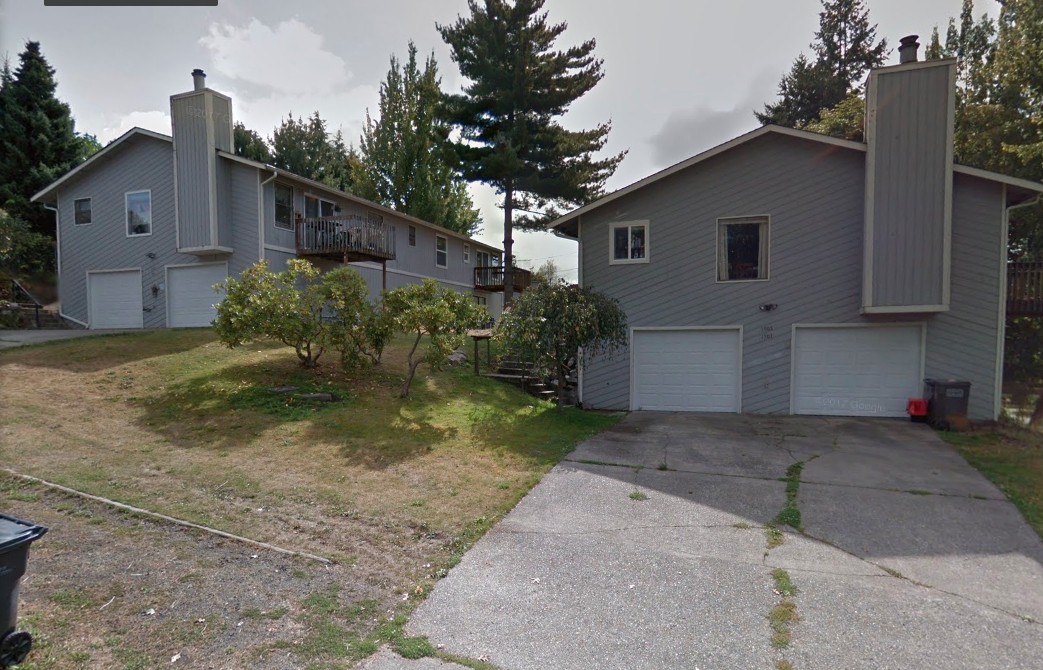
Here is a great example of two non-conforming duplexes at Legion that were allowed in 1978, but not a few years later:
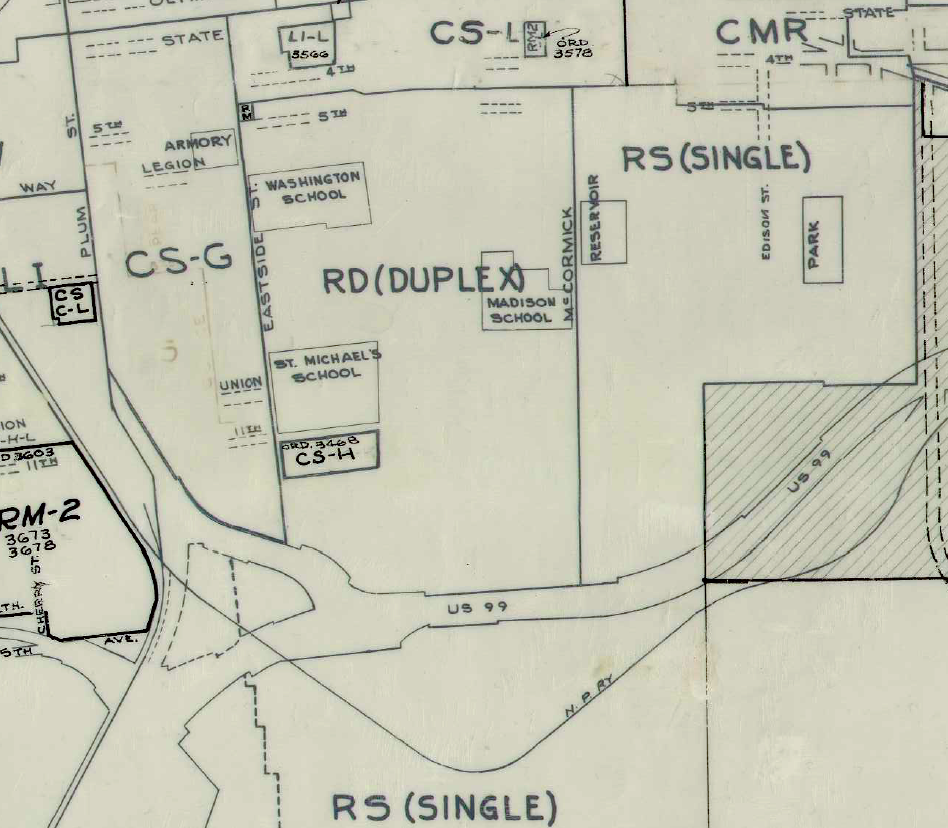
It’s worth your time to watch how the zoning maps changed over time. In 1962, the Eastside duplex zone stretched from Eastside up to McCormick.
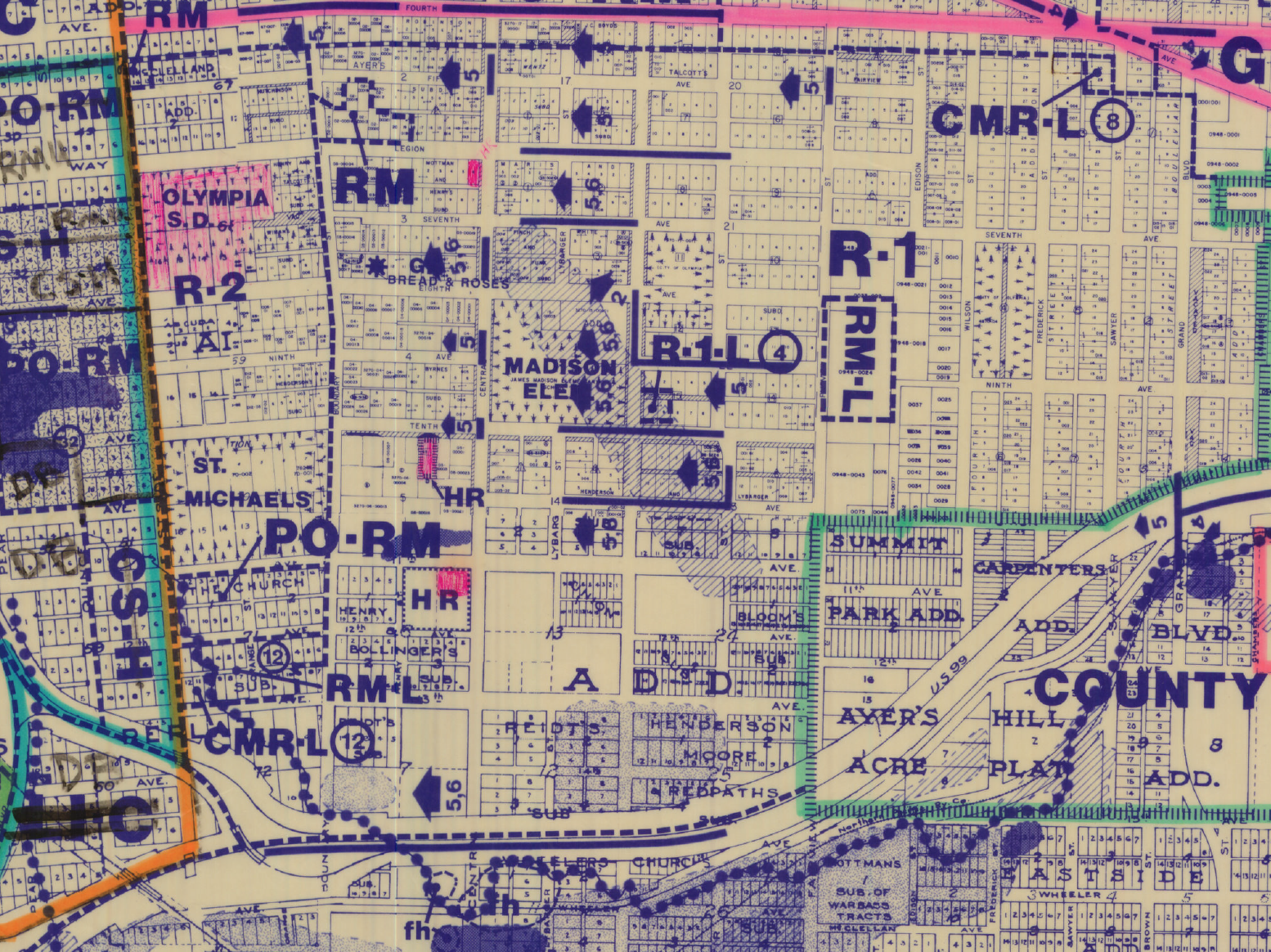
Then twenty years later (as R-2 zoning), it became much smaller, stretching only to Boundary.
In 1994 it expanded again, but..
It (this time as R 6-12) shrunk back down in 1995 through to today.
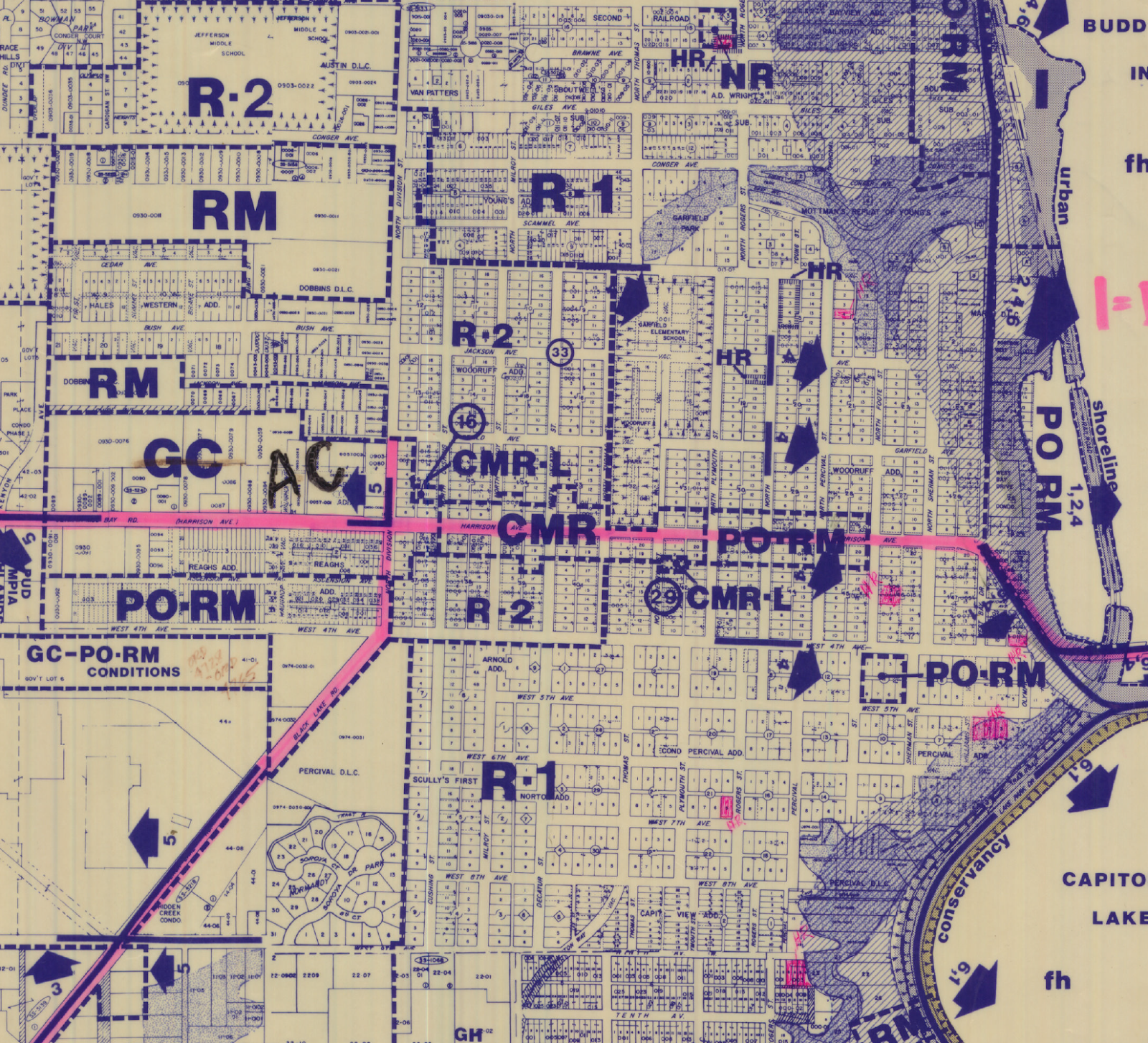
We can see the same thing on the Westside. The duplex zone dominated most of the hillside over there in the 1960s and 70s.
Then in the early 80s, the zone shrunk as most of the area downzoned.
And, again in 1994…
But in 1995, the area for duplexes expanded again, taking back a bit of what it used to be.
There is nearly zero coverage of the 1988 downzone, the only real reference I found to it was in the city minutes. It seems odd to me that of the 18 people that testified on the downzone, 13 were against it. Despite the opposition, the massive downzone went from the planning commision to approval by the city council in four short months.
Here is a map of the downzoned areas:
According to the ordinance, the reason for the downzone was to align the zoning in those neighborhoods with this policy in the then Comprehensive Plan: “Older neighborhoods which are predominantly single family should be zoned single family to encourage home ownership and rehabilitation.”
In terms of how people remember downzones of that era, this checks out. Here is Jim Keogh talking about the Eastside:
The neighborhood stabilized. It became nicer. It also (seemingly) became more expensive.
Taken from a different perspective, what happened to the Eastside is called gentrification.
Jim doesn’t really go into why this would happen, but it seems like once you stop allowing more residents to move into a neighborhood and make housing the more exclusive, the neighborhood becomes more gentile genteel.
The result of this sort of zoning experiment would be a mystery if we haven’t seen it play out on a grand scale across the country. For example, Los Angeles conducted this sort of downzoning writ-large over the same timescale as Olympia:
The city of Los Angeles has tested this theory by downzoning
the city to permit fewer dwellings. In 1960, the city was
zoned to support 10 million people. By contrast, today the
city is zoned to support only 4.3 million people — just slightly
more than its current population. So if excluding housing made housing cheaper, Los Angeles
land prices would have fallen, causing rents to fall. And
yet rents, adjusted for inflation, have risen by 55 percent,
while median renter income has grown by only 13 percent. Rather than declining, land prices quintupled, from just over
$86,229 per house in 1984 to $483,692 in 2014.
Less access to housing over a finite area leads to a higher cost to access that housing. Seems pretty simple. The purpose and the result of the downzoning in Olympia was the gentrification that we’ve seen over the last few decades. Rather than allowing the neighborhoods to absorb the growth that was coming, we allowed it to do something totally different.
At one time in Olympia, and most other cities, neighborhoods grew one house at a time and they grew with different needs in mind. Mixed-density housing was prevalent prior to World War II and was exactly the kind of development that originally encouraged walkable neighborhoods.
The Carylon neighborhood is a great example of this. A month ago I took a look at a duplex in Carlyon that I was interested in renting. It was a bit outside my price range at the time, and to be honest, I was surprised it was even available in that neighborhood.
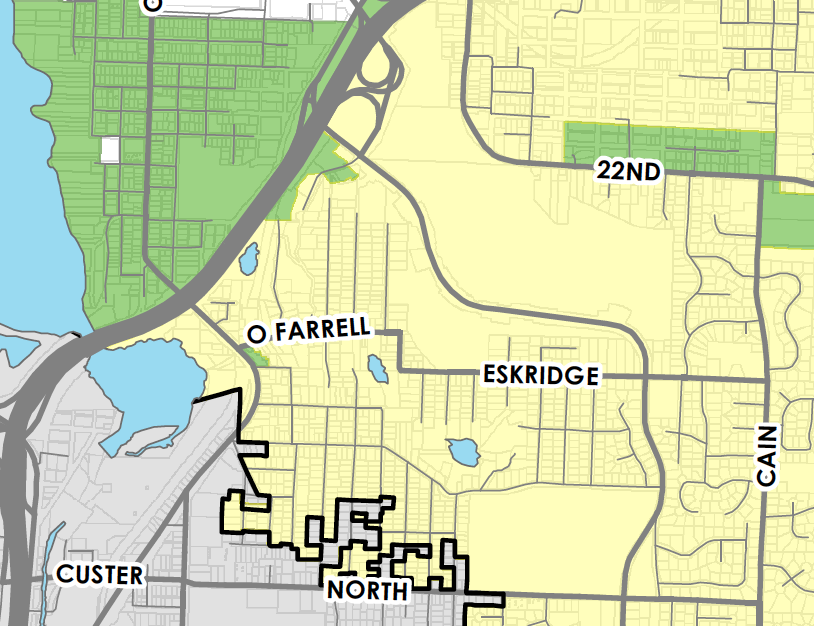
Because it shouldn’t have been allowed (yellow means no duplexes under current zoning):
Also interestingly, I thought that it was a single family house that had been split into a duplex, but I researched the history of the structure, and it had always been a duplex.
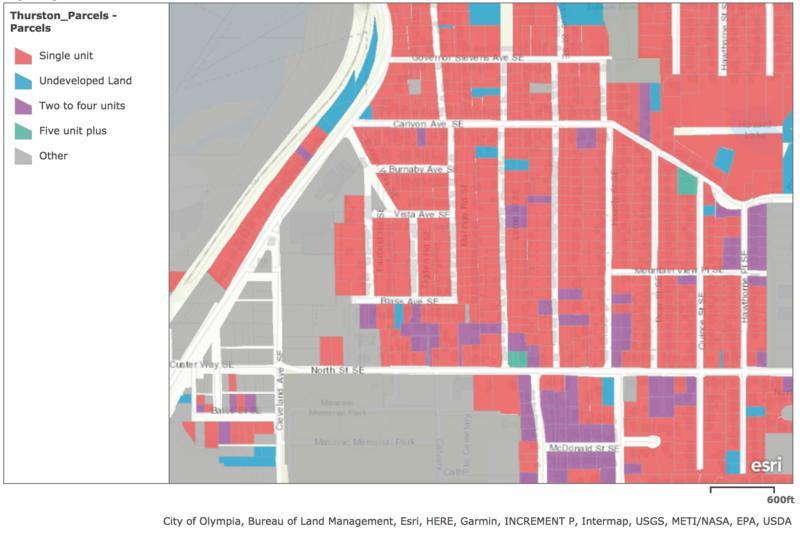
And, it turns out, that one duplex was not as rare as I thought in Carlyon. The map below shows the different use codes for the buildings in the neighborhood. Red is single family homes, purple are duplexes and blue are apartments:
There are not only duplexes spread throughout the neighborhood, there are even a couple of small apartment buildings. This shows how Carlyon, before zoning in our neighborhoods became more restrictive, was able to provide housing for residents across the economic spectrum.
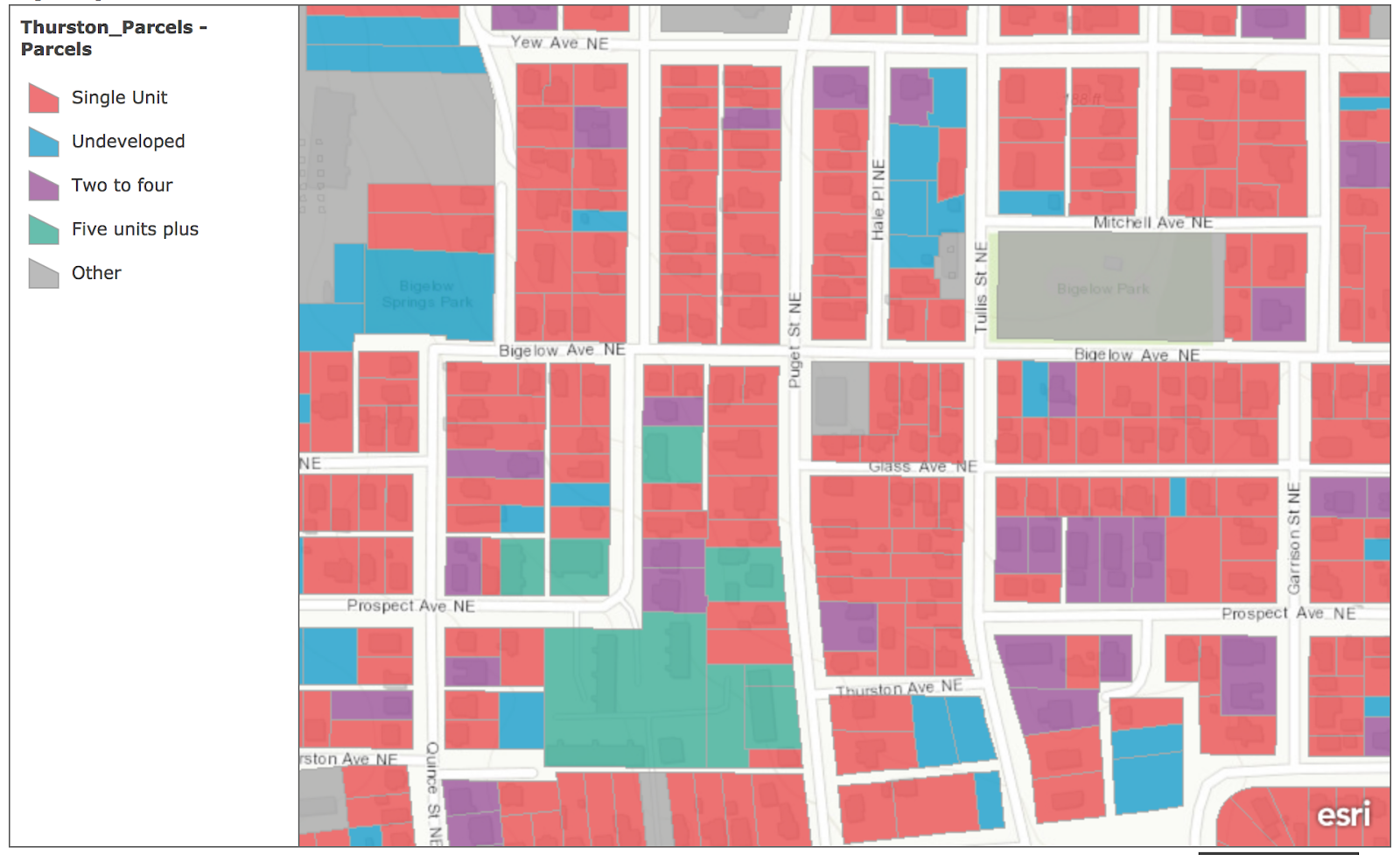
There is a section of the Bigelow Neighborhood that is also a good example of this:
While still mostly single family homes, these neighborhoods have a decent mix of middle-density housing options. And, a lot of it is illegal under current zoning.That if we tried to build a lot of the housing now available in these neighborhoods, it wouldn’t be allowed.
And, I don’t think anyone can say that these sections of Olympia are unlivable. All in all, they probably represent some of the most economically accessible, livable and walkable neighborhoods we have. And, this is no small part because of the diversity in housing options they offer.
And, they also represent a way of building homes in this city that we don’t have anymore because of the restrictive way our zoning works. The traditional manner of regulating neighborhoods was to allow for a diversity of housing types on a block. The way we do things now, with restrictive zones that allow for very few housing types in neighborhoods, is relatively new and experimental. It is also, in my opinion, largely unsuccessful. It has created neighborhoods that are economically stratified and car-dependent.
It wasn’t until after World War II that a single developer would take on building all the homes in a neighborhood, which cut down on the diversity of home types.
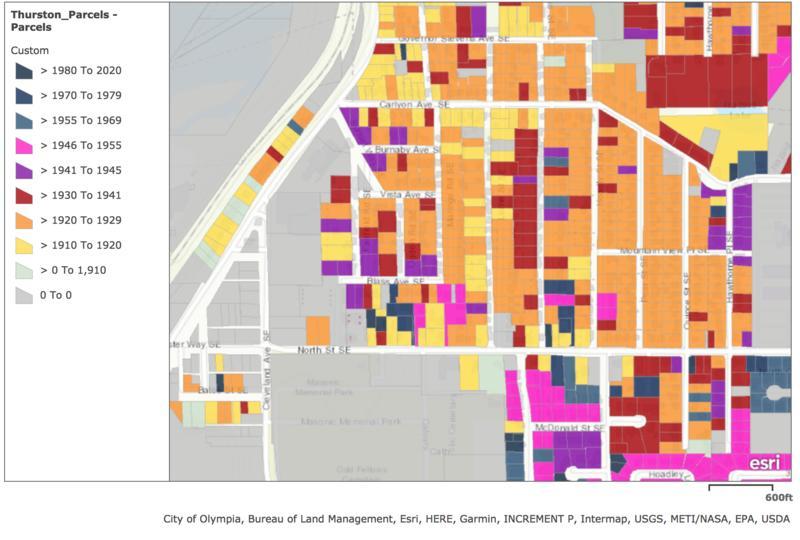
In this next map, you can really see how the houses were built in the Carlyon neighborhood over a long period of time. It took several decades for this neighborhood to transition from a former cattle ranch into a residential neighborhood. When it was making that transition, it was part of neither the city of Olympia or Tumwater. In fact, it was the uneven development of the neighborhood that gives it it’s most unique characteristic, the jumpy city border between Olympia and Tumwater. But that is more trivia than something underlying my bigger point.
While diversity is present in the neighborhood I live in, Briggs Village in Southeast Olympia, my neighborhood is the exception that proves the rule. Diversity isn’t usually a mark of planned development. The helter-skelter of the market historically has allowed builders to offer what was needed on a neighborhood scale when they were able to sell it.
This incredible story at Sightline shows how single-family zoning became more prevalent over time in Seattle, that neighborhoods at one point had been able to be fitted with more than one sort of housing option. While the Missing Middle recommendations we’re considering in Olympia now are not an up-zone, the city of Seattle conciously downzoned most of the city in the 20th century, outlawing options like townhomes and neighborhood scale apartment buildings.
Paste my profile into the search field of your favorite open social app or platform.
Your Profile
Or, if you know your own profile, we can start things that way! Why do I need to enter my profile?
This site is part of the ⁂ open social web, a network of interconnected social platforms (like Mastodon, Pixelfed, Friendica, and others). Unlike centralized social media, your account lives on a platform of your choice, and you can interact with people across different platforms.
By entering your profile, we can send you to your account where you can complete this action.