History, politics, people of Oly WA

Category: Cascadia exists (Page 1 of 5)

Unpacking the Cascadian Calm

Twelve years ago, I wrote a blog post attempting to provide a historical context for our regional personality. I wanted to push back against the “Seattle Freeze,” that ubiquitous, slightly whiny framing of Pacific Northwest social life and replace it with something more accurate: Cascadian Calm.

Recently, the “Freeze” discourse bubbled up again in the Stranger, this time through the lens of dog-walking etiquette. A writer recounted an encounter with a “Gen-X white lady” who, upon seeing another dog approaching, ducked into the street to avoid a greeting. The writer’s takeaway was a scorched-earth anonymous rant: “Are you too socially anxious and screen-addicted to acknowledge the existence of your neighbors?”

There is a lot to unpack there, but the most important thing is the perspective shift, which is not something I would have done 12 years ago. To the writer, the woman was antisocial. To the woman, she was likely practicing responsible dog ownership: proactively avoiding a potential conflict between two leashed animals. While the writer sounded angry, they were likely just lonely. But asking “What the fuck is wrong with you?” is rarely the key that unlocks a neighbor’s front door.

This interaction is the “Freeze” in a microcosm. It isn’t a social disease; it is a clash of metabolic rates.

The Myth of the Freeze

What we call the “Seattle Freeze” is actually a reaction inside the Cascadian Calm. It is a mechanism to avoid negative friction. In the Northwest, we practice “assent by silence” or the “dirty yes.” We remove ourselves from situations to prevent the temperature from rising.

The “Freeze” as a brand surfaced around 2005, a period of moderate population growth following the Dot-Com bust. But the grievance is much older.

Knute Berger points to post-World War I when civic promoters attempted to make the entire city friendly. I like to point to the post-World War II era. In my original post, I wrote about a July 1946 letter to the editor by a veteran named D.K. He described himself as a “strange outsider” unable to break into Seattle’s “charmed circle.” This is the Freeze.

Other residents wrote back (this is when letters to the editor were the comment thread), and D.K. eventually agreed that if he worked hard enough, he’d make friends. But, he pointed out, it still was different here.

But, here the context was important. Seattle in 1946 was going through jarring transition as a region. Seattle was pivoting from a resource-extraction outpost to a global tech hub. After the war, Boeing slashed its workforce from 50,000 to 9,000 almost overnight. Thousands of African Americans who arrived for defense jobs were finding their place in a shifting social hierarchy, while the Japanese American community returned from internment to find their neighborhood effectively erased. In this era of high turnover and economic “post-war blues,” the “Freeze” was the friction of a city trying to redefine its boundaries while new residents hammered on the glass.

The Science of the “Sane”

If we look at the academic data regarding regional personality, the Pacific Northwest is defined by High Openness and Low Neuroticism.

The academic study of “Regional Personality” is a relatively young but robust field, led by psychologists. Research suggests that personality traits aren’t just randomly distributed; they “cluster” geographically through a process called selective migration. People don’t just move for jobs; they move toward “psychological fit.”

The “Cascadian Calm” is placed squarely within the “Open and Creative” profile of regional personalities. Researchers found that the Northwest consistently ranks among the highest in the nation for Openness to Experience. This isn’t just about trying new foods; it’s a psychological marker for curiosity, non-traditional thinking, and a high tolerance for ambiguity. We are a region of people who are comfortable with “not knowing,” which allows for a certain social looseness that outsiders often mistake for a lack of structure or care.

Crucially, this high openness is paired with consistently low Extraversion. This is the scientific bedrock of the “Freeze.” The region skews heavily toward introversion, recharging through solitude, the “middle of nowhere,” or quiet intellectualism rather than social performance. While a transplant from a “Friendly and Conventional” region (like the Midwest) might view a quiet sidewalk as a social failure, the data suggests that for the Cascadian, that silence is a sign of high emotional stability. We aren’t panicking in the quiet.

This creates what academics call a Cognitive Resilience factor. Because we also score low on Neuroticism, we tend to be less rattled by emotional swings. This produces a “stable” atmosphere that can feel “robotic” to someone from a high-stress, high-energy urban center. You see a neighbor in distress and think, “I should respect their privacy so they can process this,” while the newcomer thinks, “Why isn’t anyone rushing over to help?”

Furthermore, the PNW is part of the “None Zone,” the most secular region in the country. In the South or the Midwest, the “charmed circle” D.K. wrote about in 1946 is often held together by the glue of the church or civic clubs. In the Northwest, those institutions are historically weak. Without these pre-packaged social on-ramps, our natural introversion becomes a walled garden. You aren’t being excluded because of a lack of manners; you’re being excluded because there is no formal onboarding process for the neighborhood. We are a society of high-trust individuals who simply lack the performative rituals to show it.

Think of the Pacific Northwest as a peaceful library. The environment values quiet, respects your personal space, and offers a sympathetic nod if you drop your books, but it won’t necessarily rush over to help you pick them up. This isn’t rudeness; it’s a “live and let live” philosophy that assumes you value your autonomy as much as we value ours.

DK and Kim’s Journey

The most fascinating part of this 12-year conversation has been the comment section of my original post. Specifically, the evolution of a commenter named Kim. There are specific echoes with Kim’s journey as there were with DK when he was integrating into Seattle in 1946.

In 2013, Kim arrived from Atlanta in a state of “culture shock.” Her early comments were vitriolic: “It’s called MANNERS. It should be taught during childhood.” She viewed the Cascadian Calm as a moral failing.

But by 2020, after moving to Southern California and San Francisco, Kim returned to Seattle by choice. Her perspective had undergone a radical shift. She realized that while other regions might offer more “performative” hospitality, they didn’t offer the “fit” she required. She stopped demanding the city change for her and started navigating it, joining meetups, volunteering, and “pushing through.” She moved from cultural combat to cultural integration. The “Freeze” didn’t melt; she just learned how to dress for the weather.

Looking back at D. K.’s 1946 grievance is to see the “Freeze” in its ancestral form: a raw, post-war loneliness that felt like a moral indictment of the city. D. K. was a man beating his fists against a “charmed circle,” interpreting Seattle’s lack of immediate, back-slapping hospitality as a sign that he was an “intruder” in his own country. His evolution, however, was stunted by the era; he viewed the responsibility of “community spirit” as a debt the city owed him, a service to be rendered to the returning veteran. While he eventually expressed gratitude for the few who reached out, his letters remained anchored in a sense of exclusion. Unlike the modern Kim, who eventually realized that the city is a landscape to be navigated rather than a wall to be climbed, D. K. represents the tragic first stage of the transplant’s journey: the belief that a quiet city is a dead city, and that a neighbor’s silence is a locked door rather than a boundary of respect.

The Social Capital Paradox

Critics call our behavior “passive-aggressive” or “cliquish.” They argue that the regional culture is a “monoculture” that forces extroverts to “tone down.”

However, there is a paradox at play. While regions like the South rank high in “social graces” (the “Southern Charm” model), they often rank lower in verifiable social capital, institutional trust, and actual community engagement. The Pacific Northwest ranks higher in these metrics. We may not say “hello” on the sidewalk, but we trust the library system, we show up for the public hearing, and we maintain the trail.

Our “Calm” may be the byproduct of a society that feels socially secure enough that it doesn’t require performative politeness to maintain order.

The New Friction

The complaints about the “Freeze” always peak during eras of high migration: the post-WWI era, the post-WWII era, the 90s tech boom, and the post-Great Recession surge.

The angry dog-walker from the Stranger was right about one thing: “Community takes a little effort.” But empathy is a two-way street. Assuming the worst intentions of your neighbor, assuming they are “screen-addicted” rather than simply “dog-cautious,” is the very energy that keeps the “Freeze” intact.

The regional personality isn’t going to change. The Cascadian Calm is a feature of the landscape. We aren’t unfriendly; we are just waiting for you to realize that in this library, silence is a sign of respect.

The “Cascadian Calm” is a sturdy psychological chassis, but even the most resilient systems have a breaking point. Since the “Seattle Freeze” moniker was minted in 2005, the region has been battered by the curse of living in interesting times. We have endured the Great Recession, the social fracture of the Trump eras, the global pandemic, and a housing crisis that finally saw the dam break on affordability. The civic trust that once allowed us to be “quiet but kind” is fraying. In Seattle itself, the political pendulum swings wildly from progressive experimentation to reactionary moderation, a symptom of a city that has lost its steady hand on the tiller.

When our larger systems (zoning, housing, and the mayor’s office) seem to fail us, our reliance on that old tradition of social capital is shaken. In this high-anxiety environment, the “Freeze” stops being a respectful boundary and starts looking like a defensive crouch. We are leaning into the withdrawal aspect of our personality because we are tired, but as our angry dog-walker from The Stranger proves, leaning into the Freeze doesn’t do us any favors. It only deepens the isolation.

We are, as a region and a people, imperfect. We cannot reach back into 1946 and fix D.K.’s loneliness, nor can we undo the administrative erasures of the last century. We can only do better today by refusing to let our “Calm” turn into coldness.

I will say that living in and writing from Olympia seems to be calmer water than I described above. We tend to vote towards the middle of our choices. Not necessarily progressive or moderate, but definitely not reactionary in either way. The recent election results since 2021 have solidified this belief for me. There is a bare minimum of progressive politics that any candidate needs to pass, but the other requirement is both engagement with the community and a seriousness in their approach that rejects reactionary politics. This reminds me that while Seattle may get all the attention and attempts to drag the region around, the rest of Cascadia still exists and may be a better example of what we strive for.

The work of community is surprisingly simple, though not easy: it requires us to do exactly what the anonymous ranter failed to do: assume the best of the person standing next to you. Whether they are ducking into the street to manage a nervous dog or simply keeping their head down in the rain, they aren’t your enemy. They are just another Cascadian, navigating the same landscape, waiting for someone to prove that the circle isn’t quite as “charmed” (or as closed) as it looks.

Cascadia would have qualified for the World Cup

People are dealing with the USMNT crashing out of World Cup qualification in different ways. This is just one way, but it is my way. So, if you came here to criticize my back-of-the-napkin pining then just keep that in mind. This isn’t really a serious analysis of economics or world soccer. This is just me doing what I can to process the loss.

One of the most interesting books I’ve read in the past 10 years has been Soccernomics, a sort of Moneyball-centered book on world soccer. The authors attempt to boil down the essence of national team success to a handful of factors: total population, per capita income and experience in international soccer. While this doesn’t really explain Brazil (poor and really good) or the United States (big, rich and bad) very well, it does explain the difference between Germany and England.
Before I go on, a few notes:

As you might tell, I’m not going to go through the practice of listing players born or somehow connected to Cascadia (Jordan Morris! Kelyn Rowe! DeAndre Yedlin!) and making the bold claim that they’d beat Trinidad and Tobago. We all know they would have. Also I’ve done that before and that’s boring.
The map of Cascadia I’m using is not the bioregional one, but more of the Chile shaped one that Colin Woodard used in American Nations to described the Left Coast. I’m happier with this one, it seems more like a “nation.” And if you came here to tell me that I’m wrong, well, this is all made up anyway and this is my blog. I’ve done this before also.
So, back to soccer and bad math.

So, would a totally fantasy Cascadian Republic have qualified for the World Cup? Short answer: yes. Hurray! I hate you Bruce Arena!
Long answer: absolutely. But we would have had a hard time beating the rest of the United States and Mexico. 
So, first things first, I only took the countries that were in this year’s final qualifying round for North America (sorry Canada, punch your weight already) and added in Cascadia. For Cascadia I took all the counties on the west side of the Cascades in Oregon and Washington and added a bunch in California down to include most of the Bay Area (my map, my rules). I also didn’t include the Cascadian parts of Canada because even though they’d be part of my Republic, I thought why make the napkin more complicated?
So, population and per capita income were pretty easy to figure out once I decided on geography. 
In terms of soccer experience I decided on World Cup games played since it was the first metric I could find. For Cascadia I decided it would be easier to just average the number of games played of every other team. That seemed fair.  Also, in this fantasy world, Cascadia has had decades of independence and developed a strong league system with well-rooted club teams in nearly all their communities. And promotion/relegation Also, don’t tell me how this decades old history would have made my populations and per capita income figures meaningless. 
Then I just ranked the teams by each factor and averaged the rank. Total back of the napkin. And while the United States finished first in this ranking (grumblegrumblegrumble), Cascadia finished near the top, tied with Mexico. 

–>

Average Rank Population Per capita income Experience as WC matches played
United States (-Cascadia) 1 308,660,798 58,030 33
Mexico 3 124,574,795 17,740 53
Cascadia 3 16,452,729 34,751 18
Costa Rica 5 4,919,202 15,750 15
Honduras 5 9,308,042 4,410 9
Trinidad and Tobago 5 1,370,111 30,810 3
Panama 6 4,116,683 20,990 0
This Cascadian Republic is bigger than any of the Central or Caribbean countries and also richer per capita than anyone except the United States. It really did surprise me how much poorer per head Cascadians would be than USers. But our mediocre size and better than average wealth and average experience put us right up there with Mexico.
Mexico, who actually finished at the top of the qualifying group this year. But I’m sure Cascadia would have given them a run for their money.

The commuter version of the Cascadian Calm

I see you, Virginia.

We’re just too nice out here. We won’t ask you to coffee, we’ll be nice to your face, but we won’t invite you to the barbeque.

And, we are too nice when we’re driving. *Too* nice. And, this means we’re unsafe, ironically.

But that isn’t actually true. We are actually safe drivers around here. Way safer than Virginians at least.


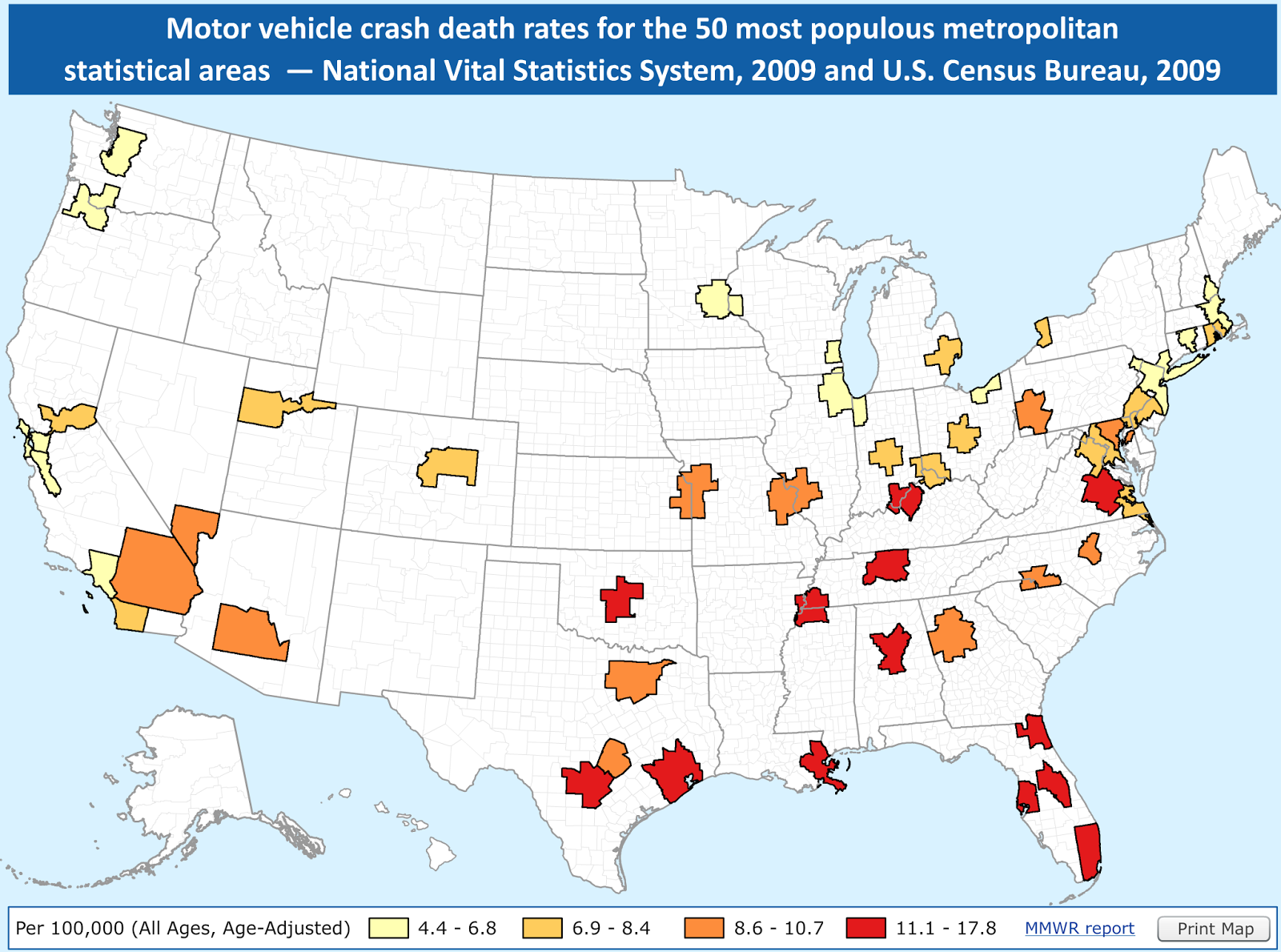
If you look beyond the data provided by All State Insurance in the linked article above, it’s hard to find anything that points to Washington or specifically Seattle area drivers being unsafe. In fact, we consistently rank as one of the most safe.

CDC stats are here for the metros (and I ranked them here) and an interesting study by the University of Michigan are here on statewide stats.

So, this Washingtonians-as-nice-but-jerk-drivers things strikes me as a bit of anecdote becoming truth sort of thing. And, it’s interesting that this and a lot of other similar stories are framed from the point of view from someone who came here from somewhere else.

It seems to be a different angle on the Seattle Freeze vs. Cascadian Calm story.

Again, from the linked story:

“I grew up on the East Coast,” Tim Godfrey of North Beach said. “The driving there was significantly more aggressive than here, and in particular, if you were going slow or even the speed limit in the left lane, people were on your bumper, flashing lights, honking if you still didn’t move.”

This is just about the nut of it. This story (and most stories about how we are as a regional personality) are told from the frame from people who are just arriving here. This is the same thing I noted when I wrote about the Cascadia Calm, which is in fact our regional personality.

Something I noted back then was that searches and mentions of “the Seattle Freeze” correlates when there is a large influx of new residents to Washington. We don’t talk about the way we are here when new people aren’t coming to town. It only happens when new residents notice that people here have a different way of being.

So, if you ask me, we’re fine out here. We’re not like other regions and we don’t have to be. I’m not an aggressive driver and I don’t have to be. I leave in plenty of time to get where I need to be.

Towards Cascadia is not a particularly useful book about Cascadia

I had been incredibly interested in reading Ryan Moothart’s Towards Cascadia. The book had been advertized on one of my favorite soccer podcasts. And, being not eager to read the entire thing on my phone, I spend a little money on a cheap tablet that I could use as an ereader since the book at that point was only available in ebook form.

In the end though, Moothart does not impress.

Overall, he seems to skip over the part where any writer who takes on the topic of Cascadia should describe and backup what they actually mean about Cascadia. I’m familiar with the Cascadia that Moothart writes about, it is the one that comes almost directly from David McCloskey and r/Cascadia. While I’m not a particular fan of this version of Cascadia, I understand where it comes from. And, unfortunately, Moothart does a poor job presenting it.

For one, he seems to over-estimate the average citizen’s commitment to particular political ideals. Take for example this passage:

We do not have to choose between our local differences east and west of the Cascade Mountain Range in an attempt to gain a dominant influence throughout the entire region; we’re in this together as Cascadians, regardless of our differences, whatever they may be.

Here Moothart seems to gloss on what really are fundamental differences on politics and society between people from urban Seattle and rural Franklin County.

He also seems to misunderstand the nature of society here:


In Cascadia, our understanding of freedom and status quo extends to the environment that surrounds us. The living communities that exist in nature are part of us; we take into account their right to exist, free from overconsumption or exploitation.

What now? Really?

Even the most pollyannish assessment of how we are doing in terms of protecting the environment around here would state that most of us act like “nature is part of us.” This is simply not true. While commendable as a goal (I really do think we should act more like this), it isn’t the way things are. And, if this book is supposed to be a reflection of reality, it simply isn’t a good one.

The main jabs of the book are two longish and detailed detours into what I could only describe as political science descriptions of how Moothart sees the political nature of Cascadia. But, these detours lack specifics I’d find useful.

Where Moothart does a great job is describing how exactly a regional secession would work. This is a well detailed chapter and breaks down in both American and Canadian terms how the states and provinces that make up Cascadia (even on a sub-state level) would actually leave. Moothart does a great job of even showing how this process would be peaceful. I’ve often been curious about these processes if they existed, and he does an admirable job of walking the reader through them.

Did E.J. Zita repeat Sue Gunn? No, she did not

Go right to the map.

A couple of years ago, I drew a map showing how former port commissioner Sue Gunn did an amazing job connecting anti-establishment voters in the rural and urban neighborhoods.


She had the ability to run as a non-partisan, showing then how you could connect the bottom ends of the so-called (by me) Cascadian Political Spectrum. Typically, partisan elections in Thurston County roll out with the more liberal (Democratic) candidate winning the north county, with the more conservative candidate (typically Republican) winning in the south.
The likely victor is decided by how many voters in the connecting suburban districts turn their heads toward them.
Sue Gunn flipped this equation by winning both the urban area and the rural south, with the connecting suburbs going to her opponent, Jeff Davis.
Unfortunately, Sue had to retire because of health concerns. She’ll likely be replaced by E.J. Zita, an Evergreen State College professor and south county resident. At least on the surface, it seemed likely that Zita might be able to repeat Sue’s run.
But, when you look at the map of the (very very close) results, Zita will have won by the more traditional liberal’s route in Olympia, through urban Thurston County.
Zita did win a handful of precincts in the south county, and Jerry Farmer (her opponent) seemingly owned the suburban neighborhoods. But, Zita’s high margins in Olympia seemingly put her over the top.
It is worth noting that liberals (Democrats) usually win in Thurston County, so it isn’t that exciting to note that the liberal won again. The notable thing in 2013 was that Gunn (a former Democratic Progressive Independent candidate for congress) beat a fellow Democrat (Davis) by being more liberal. Or, she was at least more anti-establishment.

Quick survey of a possible book: Cascadia Rising, how the far corner of the United States is actually taking over America (in response to Dixie Rising)

I should probably buckle down and read Dixie Rising, which seems to be a pretty interesting book. If only because it struck me as a political artifact of the pre-9/11 political writing in America. That stuff that wanted to drag the new Republicanism against the New Leftism, Clinton vs. Gingrich, that kind of stuff that crescendoed with Bush v. Gore, but seems so out of place today.

Anyway, the book (from what I can tell from skimming it a half dozen times) picks apart Southernism and looks at how it was infecting the U.S. back in the mid-90s. To get what I’m getting at, this survey of the book seems like a decent enough look.

Of course, in Dixie Rising, the author uses locations to illustrate his larger regional and national points, so I’ll try to do the same thing here.

1. South Lake Union and the Big Sort

This is the cutting edge of the technological wave that has crested and crashed along the west coast for years. New cancer research, new tech centers deep in urban Seattle bring yet again another wave of tech immigrants to Cascadia. This isn’t just a new decade, new well-educated immigrant rush to our region, this is the next wave of the Big Sort. The Big Sort has been the defining political and demographic trend in the last 50 years and its razors edge right now is South Lake Union in Seattle.

2. Crescent City and the Nones

Crescent City isn’t the least religious community in the United States. That award goes to Seneca Falls, NY (According to the 2010 US Religion Census. But, this small city on the far southern edge of Cascadia, isolated against the Pacific is the least religious community in the least religious part of the country. The Cascadians have never had much need for religion, and this trend is starting to creep across America.

3. Grants Pass and Scientific Denialism


Ugh. This is literally a dumb trend that I wish would go away. But, anti-vaccination activists are at a high tide in Grants Pass. But, it is more than anti-vaccine. It is an anti-science thing, anti-authority is more like it. From this one place, we can look at how science, government and authority is challenged in Cascadia.

4. Portland and the Sport of the Internet

As a passionate Sounders fan, I hate to highlight the Portscum Timbers in any way. But, for this narrative, I’ll have you know I am nothing but fair. But, the Sport of the Internet must be highlighted. From what is literally the third level of hell, we can see how American soccer fans found each other before old style media even took the sport seriously. That nowadays it isn’t about the media letting you know something is good, its about you knowing something is good and finding other people who think the same way.

5. Olympia and the DIY Platinum Record

DIY culture is a massive part of what makes Olympia itself to most people who don’t live here. Ben Haggerty is from Seattle, but he went to school at Evergreen. Likewise, for Kurt Cobain, I’d argue Olympia was much more important than Seattle. So, much like soccer making itself big and religion making itself small. Culture in Olympia and Cascadia finds itself, and sometimes doesn’t do shit. Other times it spawns The Heist.

When Cascadia lost to Washington in a poll in the Post-Intelligencer. And, are we named after Martha Washington?

As the long history of the Washington Territory was being rolled up, and statehood was on the horizon, a few people wondered whether it was a good time to change the name of the political organization. As long as we’re changing the nature of the organization itself, right?

So in May 1888, the Seattle Post-Intelligencer ran a poll, asking readers to suggest a new name. We’ve already read about how a few years earlier, our territorial representative suggested the name Cascadia for the possible new state.

From the PI:

The main cause of the desire for a change seems to arise from the fact that giving of the name Washington to the new state would lead to confusion, and that endless trouble and annoyance would arise from the confounding of the national capital and the political division on the northwest Pacific coast.

Washington not only won, but dominated:

Out to of 695 replies, 564 were in favor or Washington and these were scattered evenly over all parts of the territory. 

Interesting fact:

Another fact worthy of note is that there was an entire absence of any local prejudice. Yakima was favored by more non-residents of the valley of that name. Tacoma was the choice of more people in King county than the people in Pierce county, while nearly all of the expressions favorable of Rainier  were outside of Seattle.

Columbia finished second with 21, Tacoma 19 and Olympia 14. Cascadia was seventh overall, beating out variations of Washington and Idaho.
Towards the end of the story, the names relating to the Grays expedition was cited as a reason that Washington is so important and vital to our region. Just weeks after the constitutional convention was wrapped up in Philadelphia, Robert Gray left for the Northwest with his ships the Columbia and Washington.
Of course, now we have Grays Harbor, the Columbia River and obviously Washington State. Except the ship Washington’s full name was Lady Washington. Martha Washington.

Our man Joey DiJulio of Burien, the bachelor party and wedding in Philadelphia and the Cascadian Calm (among other regional personalities)

If you were paying attention last week, you saw this story:

For weeks, the man from the Seattle suburbs found himself getting emails from people he didn’t know about a bachelor party and a groom he’s never met. 

He saw names of Philadelphia landmarks like Reading Terminal Market thrown around in the emails but couldn’t put his finger on where they were located until he searched the names online.

“I had no idea what any of these places are,” said DiJulio, 31, who’s never been to the Northeast. 

“After Googling them, everything was pointing to Philadelphia.”

It turns out DiJulio, an information technology worker and a married father of one in Burien, Washington, had been mistaken for a friend of the groom with a similar last name. He sat as a “fly on the wall” for much of the email chain until Monday, when he broke the news after the groom’s brother wanted a headcount of people attending the party.

But it didn’t end there. Groom Jeff Minetti, 34, figured: Why not still invite him?

Well, why not indeed?

To me, the reason why not is obvious. You don’t know this person. He could ruin your entire wedding. He’s a stranger and you don’t invite strangers to your wedding.

But, that’s the Cascadian talking, and we’re not talking about a Cascadian who invited DiJulio to the wedding. In fact, the Cascadian DiJulio was the one who quietly watched as strangers talked around him. He didn’t chime in, he just waited.

This is the Cascadian Calm, the laid back, open and quiet regional personality that often gets described as the Seattle Freeze.

And, this is almost the polar opposite of the regional personality that DiJulio was dropped right in the middle of. In fact, Philadelphia is dead center inside a regional personality that has been described as “temperamental and uninhibited.”

Here’s another version of the same map, which shows the entire country in the same context.

Uninhibited makes sense here. It made total sense to the groom to invite the interloping and eavesdropping stranger.

Temperamental makes sense too. We usually think as temperamental as moody. As in “bad mood.” But, in this case, it means almost unreasonably good mood. “Hey, you’re a stranger that’s just been listening in?? Yeah! You’re invited too!”

But, it also means for that DiJulio, in contrast to the Cascadian Calm (which is very not temperamental), that there’s another side of the coin. People get angry man. Just saying.

Portland and Seattle, Uber, and the history of ambition in Cascadia

For two cities basically in the same spot on earth, Portland and Seattle do have significantly different civic personalities.

Think of Seattle’s Demons of Ambition. Or, in this case, Portland’s Demons of Provincialism.

The differences are real.

Take how the two cities dealt with Uber (and other ride sharing companies).

Seattle took a long road to compromise. They never cracked down, they accepted the newcomers and then crafted a legislative package to create space for innovation:

“I believe Seattle once again will lead the nation in showing how what appears to be conflicting interests can actually come together,” Murray said after announcing the agreement. “We have deregulated a highly regulated monopoly, allowing taxis and for-hires to become far more competitive than they are in the current situation. We are recognizing that a technology exists that is rapidly changing the marketplace.”

Portland cracked the whip:

“Our main concern is public health and safety, because the state invested in the cities the responsibility to do that,” Portland’s mayor Charlie Hales said in a statement. “Beyond that, though, is the issue of fairness. Taxi cab companies follow rules on public health and safety. So do hotels and restaurants and construction companies and scores of other service providers. Because everyone agrees: good regulations make for a safer community. Uber disagrees, so we’re seeking a court injunction.”

Seattle as a center of innovation, accepting newcomers with new ideas. Portland, keeping a clean house, a wary at the horizon. I tell ya, it might as well be 1893.

From (the great) historian Robert Ficken: 

(In its ability to access money from outside the region) Washington possessed important advantages of its “web-footed” friends south of the Columbia, advantages credited by any analysts to the new state’s 1890 census lead. Oregonians themselves admitted that “mossbackism,” defined as a tendency of long entrenched Portland interests to impede new-coming rivals, diverted outside money to more energetic points. “The laws of Washington,” the bi-monthly West Shore magazine noted in reference to a more substantive difference, “favor investment of capital, while the laws of Oregon practically forbid it.”

At this point, Oregon had been a state for decades, its cultural, economic and political institutions had already laid track, while Washington was just getting underway. In fact, Washington was not even made whole until just before statehood. Because of the way railroads were laid across Cascadia back then, eastern Washington Territory was an economic outpost of Portland, while Seattle and Puget Sound were in the orbit of San Francisco.
Not until railroads crossed the Cascades did Washington become something other than a name of a map.
It was a this point in time, united as a state in 1889 with railroads, Washington and Puget Sound (led by Seattle) threw open the gates to growth. This culture of open economics still shows through today.
While Washington rushed ahead, Oregon stayed behind. This mossback Oregon wasn’t new, wasn’t born out of decades of stability. But, rather, is the founding attitude of the Willamette Valley.
From David Johnson’s “Founding of the Far West,” we see how little the California Gold Rush (despite massive possible economic benefits) went to the head of Willamette farmers:

(Willamette farmers’) response to the California (gold rush) market — their enterprise — was motivated by as much by a modest desire to improve their landholdings, assure their households’ self-sufficiency, and enhance their families’ material comfort as by a drive to command greater market share or increase production as an end in itself.

Given the chance to bulldoze their way to greatness, Oregonians on their founding moment decided on a “cautious and conservative” and “cash on delivery” way of doing business.
The large Willamette farms ignoring greater gains in California led to a conservative business culture in Oregon in general. Seattle was given the chance to leap ahead fifty years later, and they took it. 
Today, Uber tries to create a new way of doing business and finds a friend in Seattle and a legal challenge in Portland.

John Rambo, John Tornow and Appalachians in Cascadia

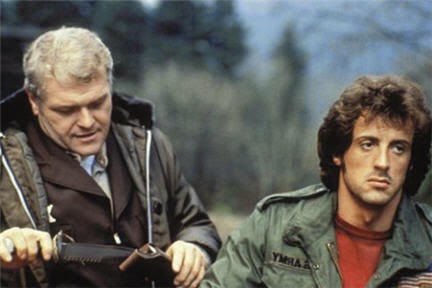
The very first Rambo movie (First Blood) is set in Washington State, in a fake town called Hope. Filmed in the actual Hope, British Columbia, the setting is descended from a fictional town in Kentucky in the original First Blood book, which in turn is based on a Pennsylvania town.

Both the fictional Kentucky town and actual Pennsylvania town are deep in Appalachia. Which, given the deep Appalachian roots in rural western Washington, Hope fits.

It also fits in the parallel I draw between the Rambo character and John Tornow. There is so much written about Tornow (some very recently), I’ve always wondered what the fascination was. Tornow, at least on the surface, doesn’t reveal any greater truth. Unbalanced man either murders or is accused of murder. People chase him down, a few deaths later, he gets killed.

But, if you look at Tornow through the lens of Rambo, you see something deeper. It lets you look back on the society that is turning its violence onto these men. For Rambo, he’s a recently returned Vietnam veteran targeted as a vagrant by an evil small town cop.

I’ve heard enough from small town cops to know that giving a vagrant a ride to the county line or a bus ticket out of town is at least within the realm of reality. And, Tornow shows us that a massive manhunt against Rambo was also in the realm of reality.

For the Appalachians in Grays Harbor in the early 1900s, for the Appalachians at every step in First Blood, the wild men are too far gone from society to live. They murdered, they are outside the bounds of even the libertarian Appalachian societal rules. Every man has liberty, but there is only so much liberty.

Both Tornow and Rambo are also both experts. Rambo is a highly trained commando, the cops that come after him are hopeless against his killing skills. He seeks to come back into society, but he falls back onto his training and the war.

Tornow was an actual outdoorsman, more at home (according to biographers) than in a town or among society. He was able to live off the land while being hunted for over a year and a half, feeding himself with what he had around him in the deep woods.

And, that is what I think is the larger truth about Tornow. If the Scots-Irish, the genetic base of the Appalachian DNA had finally run out of new territory to conquer in Cascadia (also explored in Sometimes a Great Notion), then they were almost ready to run down the last Wilderness. Tornow was a representative of that wilderness.

Sure, Appalachians are much more libertarian, every-man-for-himself than other sorts of North American society. Rules don’t necessarily work for them, but they are also the shock troops of a larger society against the wilderness, or agains the native inhabitants.

So, in dramatic stories about Appalachian outcasts, John Tornow and John Rambo must be hunted down.

« Older posts

© 2025 Olympia Time

Theme by Anders NorenUp ↑