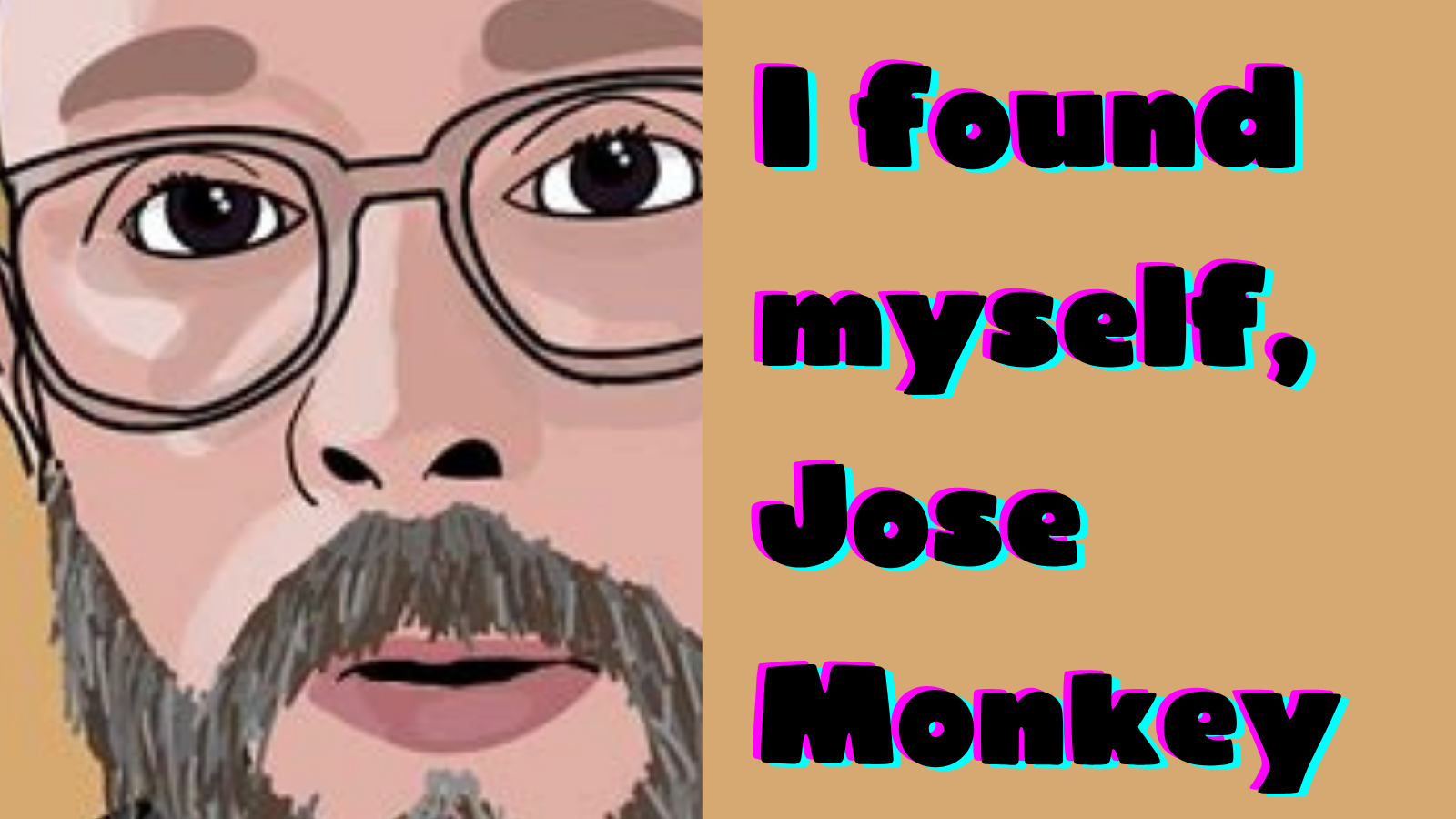
This week, I didn’t write an essay. I dipped into satirical fiction. And just to be clear, the person I’m satirizing is myself. So, maybe this won’t land. The inspiration of the satire is a 1999 short story by Todd Pruzan called “Jedediah in Love,” which is based on Jedidiah Purdy and his (somewhat heavy-handed) book on irony, “For Common Things.” I still love that book, so I suppose that is important context. The tool I’m using for the satire is Jose Monkey, who does amazing geolocation videos. So, again, satirizing myself and my own exploration of place and history in the suburban space, not Jose Monkey.
I didn’t want to go all the way out of the Walmart. But I’m not really in the store. The man checking receipts is behind me, the doors to the front of me are a comfortable distance away in the direction I was going. No one is going to have to grunt as they maneuver around me.
I think about the last day, a fog that can come when I travel and don’t have much time to prepare or time to think about where I am going and why. Also, traveling in early fall, when the lack of light is still a sudden thing, throws me off. Driving myself to SeaTac, clambering on board the broken-down van that picked me up from the gravel lot. I siphon my way through security, and the last place I felt like I knew where I was was in Terminal N, the newly remade SeaTac terminal that looks a lot like how people who advertise the Pacific Northwest want people who travel to think about the Pacific Northwest. Bright wood and good things to buy.
The airplane, an old 737 in a regional airline fleet. The airport I landed at in this collection of people (not really a city in the way people think about cities), the drive to the house, the neighborhood that seems like an in-between, standing inside the natural history of a place and where it will actually end up. And the drive to Walmart. Everything is in-between here.
And now I’m standing here staring at groceries, the most real thing I’ve seen since I took off hours ago. I’m waiting for him so he can help me find my way back to the SUV. A humble task for the internet’s most famous geolocator. I can’t even remember his actual name, so in my head I can only call him Jose Monkey. I’m not going to call him that. I feel bad for not listening very well when we were introduced. He was putting on his coat, knowing the two of us were going to be sent with a list for last-minute provisions and supplies.
I hear him come behind me as I start moving toward the door.
“Find everything you need?” Mr. Monkey says as the doors part, and we bounce out the door.
The air hits with that suburban chill that smells faintly of cooling asphalt and unburnt hydrocarbons. I clutch a few plastic bags containing four pounds of butter, a tub of sour cream, and everything else on the list. A completed task wrapped in low-density plastic that they still sell in this state.
“Got the dairy,” I say, regripping the bag so I don’t disrupt the delicate center of gravity required to navigate an unlit pedestrian thoroughfare.
I shoot my shot. “Though I couldn’t tell you if we’re north of the interstate or south of it. I could be in suburban Denver, or outside Salt Lake, or trapped in a simulation of 1999.”
“We’re three miles south of the bypass,” he says cheerfully, adjusting a plastic sack of microfiber dishcloths. He doesn’t slow his stride. “There is a McDonald’s 50 yards to the north and a Verizon store on the other side of that. There are three Walmarts in the state with that configuration, but only one this close to an interstate.”
I pause, wondering if I should notice his behavior back to him. Wanting to and not being tired enough not to, I speak up.
“You’re doing it,” I say, using the remote key fob to unlock our two-ton rental box of stamped sheet metal, an apparatus designed explicitly to insulate a single human being from the social and ecological consequences of his own land-use decisions.
“Doing what?” He knows I know.
“Fixing us in space,” I say, depositing the butter on the rear upholstery. “You look at thirty square acres of continuous, asphalt-paved erasure. A place where a hundred years ago an orchardist likely knew the micro-climate of every row, before a county planning commission agreed that cars needed three hundred square feet of stamped concrete just so a person could buy a loaf of bread. And you see a fingerprint.”
He slides into the passenger seat, oblivious to the existential weight of the floor mats. “It is a fingerprint. People think these lots are generic because they’re built out of standardized parts. But standard parts are installed at particular distances under regional building codes, forcing the buildings into a unique arrangement. You show me four seconds of a rusted dumpster and the angle of a high-voltage tower over a flat roof, and I can tell you what street corner you’re standing on.”
I back out of the stall, the tires rubbing against bare concrete. I turn the vehicle down the main feeder lane toward the arterial, passing endless rows of parked crossovers.
“Sure,” I say, holding the borrowed leather-wrapped steering wheel like a lodestone. “You can map us on an x-axis. You can tell me the exact horizontal coordinate of this specific grid square. But knowing where you are on a coordinate plane isn’t the same as knowing where you are. Wendell Berry wrote that if you don’t know where you are, you don’t know who you are. He was talking about rural memory, knowing what the soil gave before we capped it. When we turn a landscape into an interchange of non-places, we aren’t just building parking lots. We’re cutting out pieces of our own memory.”
Jose doesn’t engage with Berry. He isn’t even looking at me. He’s intently studying his receipt, smoothing out a crumple near the subtotal.
“Hey, nice,” he says softly to himself. “The microfiber towels were on clearance for three bucks.”
We stop at a red light under the neon glare of a chain pharmacy. The sky above us is a deep, lightless purple. I stare into the rearview mirror, held by the conviction that we are drifting toward a profound, spatial amnesia.
He sighs as if he’s dealt with existential fanboys before. “What does memory matter? Isn’t memory just something you hung up on the wall from the past? Memory doesn’t exist right now, it is just something that you decided mattered,” he says as if it is practiced shop talk he saves for people who make him talk shop during a family trip. “What can you see here, now? What can you experience here, now?”
“That’s where you and I diverge,” I say, my voice tightening as I try to steady my thoughts against the ready practitioner. “You’re an expert on the static snapshot. You freeze the frame and answer the question: Where are we standing right now? But a snapshot doesn’t have a vector. It doesn’t have velocity, and it doesn’t have a moral direction. If we want a moral answer, if we want to know where we are going, whether we’re building places worth living in or just paving over the continent until there’s nothing left but frontage roads, your map can’t help us. Geolocation can tell us we’re idling at the corner of 104th and Meadowbrook, but it can’t tell us if making 104th Street eight lanes wide was a tragic mistake.”
He turns and looks at me. I can’t tell what he’s wondering, but then he answers it for me. “Do you really know where you’re going? Can you ever know where you are going?” He laughs and then asks the more direct question: “Do you know where you are going… or should I turn on the GPS?”
I pull up to a red light and pause. “Yes, I think. For one, I remember, it’s not very far, it was only a five-minute drive. And I think the Circle K up here is the landmark I’m looking for. For the rest, yes, I think it is possible to look behind you and then look at today and make a pretty good guess at where we are going.”
Jose looks at me and sighs. Or maybe he half laughs. He sets the receipt on the dashboard, looks out the passenger window, and hums a quiet, unbothered two-note tune.
“Signal’s green, Emmett,” he says gently and pointing out that he remembered my actual name.
I step on the accelerator. We turn off the arterial into the subdivision at the Circle K, the six-lane road shrinking to a four-lane collector, then to a quiet two-lane residential street winding through identical split-level houses built during the Bush administration. Either Bush administration.
I am shocked back to the parking lot we just left with the realization the drive would be over soon. “That parking lot, did you recognize that place or did you figure that out on the fly,” trying to steer the conversation back to parking lots. These places, or ultimate not places, are a fascination of mine.
“Could you imagine? That would be crazy. No, I looked up where we were going before we booked the tickets and just logged the places around here just in case I could swing by and look. And bingo, here we were. I was thinking about recording a video, but the lighting was really bad.”
I steady by ship and drive forward. “Not a place, though. The only thing that is there is a place for people to store cars so they can get into a Walmart. To say that is a place is like saying…” My brain lets me down, I can’t think of the metaphor I’m looking for. “Well, it isn’t a place that anyone would remember.”
He looks at me and then gestures. “Like I said, memory is funny, and really you don’t know that. Big empty lot like that, someone could have lost their virginity there. Someone could have got hit by a car and died, or maybe had to pull over and give birth. Just because you don’t find it particularly notable, doesn’t mean good people didn’t use it for things that were important to them. It doesn’t even have to be sex, death, and new life. It can just be someone crying after work or falling in love over text. Your impressions of other people’s lives don’t make those lives meaningful or not.”
Shit.
“You find people who ask to be found,” I say.
“Yes, I do.”
“What you’re saying is that they want you to find them, but they already found themselves.”
“What I’m saying is it is insulting to assume they haven’t just because they’re in a massively overbuilt parking lot.”
I ease the SUV up the concrete driveway of the house we’re staying in. I put the transmission in park, and kill the ignition. The engine dies with a faint, metallic sigh.
Jose immediately unlatches his belt, grabs his bag of dishcloths, and pops his door open. Cold air rushes into the cabin, instantly dispelling the warm, heavy air of my monologue.
“I don’t get to talk about split-levels from the late nineties enough. But this roof pitch is a dead giveaway for the 2002 regional building code revision. They mandated extra truss bracing after the winter storms that year.” That Bush administration.
He steps clear of the frame, reaches for the door handle, and looks back inside.
“You find people who ask to be found,” I say again, keeping my eyes fixed on the steering wheel.
“And?” he prompts, leaning slightly against the doorframe.
“And everyone else is just accidentally being found by the infrastructure,” I say. “We wander around these generic spaces not even realizing we’re lost.”
Jose tilts his head, the porch light catching the edge of his jacket. “People aren’t lost just because you wouldn’t want to live there, Emmett. There’s a big difference between being somewhere ordinary and actually being lost.”
He pauses for a beat, letting the cold air settle between us, before his expression softens into a grin.
“Thanks for driving, man,” he says, entirely cheerful and wholly unaffected by the spiritual vacuum of the built environment. “I’m gonna go microwave some of that leftover chili before it gets late. I can do an extra bowl up for you if you’re hungry.”
He shuts the door with a firm, modern thud.
Through the glass, I watch him trot up the porch steps, perfectly oriented in space, utterly unburdened by the collapse of Western civic community form. I sit alone in the driver’s seat in the dark, trapped in the unanswerable gravity of my own mind.

