You can look at our place and see a finished product. We look at the Tacoma waterfront, the glass of Climate Pledge Arena in Seattle, and the landscape of a state that is established and permanent.
But if you scratch the surface of our legal code, specifically the patchwork of our 1889 Constitution, you see the scars of a street fight.
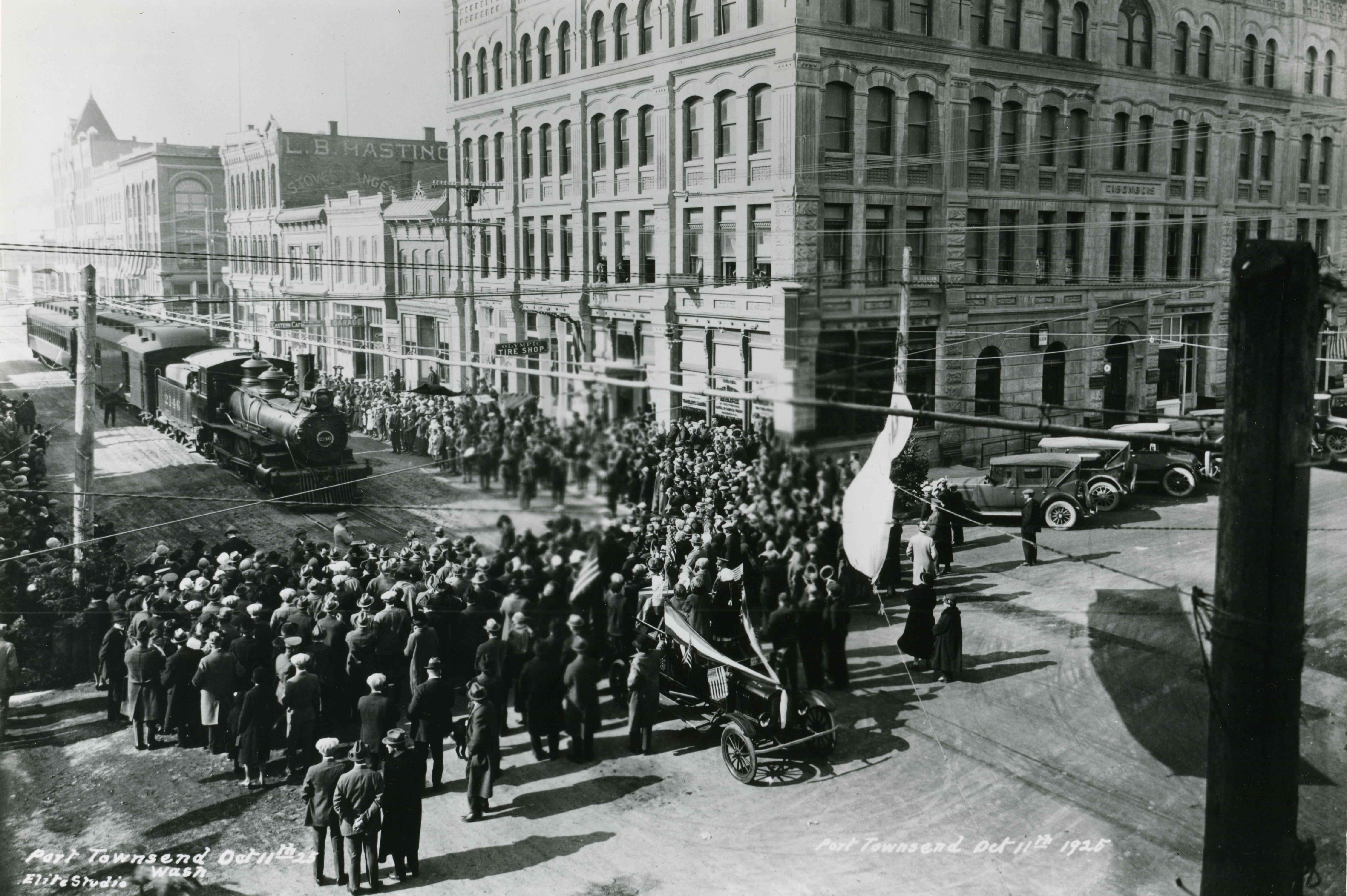
Washington State was not born from a polite agreement of settlers. It was wrestled into existence through a decades-long struggle against the iron hegemony of the railroads. Everything we have is a result of a battle. Our early history is born of wars with the railroads.
This history isn’t just a footnote, it is the fundamental DNA of our political identity. It’s why we were the rare state to let an NBA team walk rather than pay a ransom. It’s why, in 2026, as the NBA finally prepares to return to Seattle, they are doing so on our terms.
The Grange and the Commission
In the late 19th century, railroads were using discriminatory rates to crush small farmers while favoring industrial giants. They peddled influence by handing out free rail passes to judges and legislators. It was the 1890s version of a luxury suite.
Led by the Grange movement, Washingtonians spent twenty years agitating for oversight. The railroads argued that a regulatory commission would drive capital from the state. That threat has remained remarkably unchanged for 130 years. In 1905, the people finally won and established the first Railroad Commission.
Capital did not, in the end, flee the state.
This wasn’t just about freight rates. It was a shift in the social contract. It established that a corporation operating in Washington has a legal obligation to serve the public interest. That commission evolved into today’s Utilities and Transportation Commission. It’s a persistent reminder that in this state, we look at the books of the powerful before we give them our blessing.
The 2008 Divorce: Strategic Non-Cooperation
Fast forward a century, and the role of the iron masters had been replaced by the Oklahoma City barons. In 2008, when Howard Schultz and later Clay Bennett demanded a public ransom to bring KeyArena up to NBA standards, they expected Washington to follow a specific model of governance. They thought we would subsidize a billionaire or let them steal our civic identity.
But Seattle applied what social theorist Gene Sharp calls nonviolent resistance. Sharp points out that power isn’t monolithic. It relies on “pillars of support.” By refusing to provide the financial pillar of a public subsidy, the city and the state withdrew their cooperation. We decided that the big league brand wasn’t worth the public debt.
We watched the Sonics leave for Oklahoma City. That city continues to fund its status through massive public sales taxes for arenas that will never make the public treasury whole. Seattle, meanwhile, waited. We practiced strategic patience. We waited for a private investor who saw the inherent value of our market.
The 2026 Return: Value over Ransom
This week, the NBA’s Board of Governors finally voted to explore expansion back to Seattle. The projected winners aren’t a group of out-of-state threat-makers. It’s Samantha Holloway and the Kraken ownership group. Crucially, they aren’t asking for a handout. They’ve already spent the private capital to build Climate Pledge Arena. This proves that when you have a community worth being in, the private sector will eventually adapt to your terms.
This reality makes the current debate over Washington’s 9.9% tax on millionaires feel like a repeat of the 1905 Railroad Commission fight. Republican legislators spent a record number of hours during the legislative session claiming that this millionaire tax would ensure the NBA would never return. They argued billionaires would never subject their millionaire players to a 9.9% hit on income over $1 million. They warned of a millionaire exodus.
Ironically, Howard Schultz was the first to flee, but he will likely be the rare one. As Professor Cristobal Young’s research shows, millionaires are the least mobile income group. They stay for the social and professional networks and the value of the community. Notably, Schultz is mostly retired. His wealth is in the bag. He actually has no reason to maintain ties here because he’s already taken what he needs.
The NBA is yawning past our tax because they care about money. They’re moving forward because Washington is a premier global market. Our community matters more than their tax preference.
The Joy of Sport vs. The Luxury Box
While we celebrate the return of the Sonics, we have to look at the disparity in our own backyard. We do not build billion-dollar arenas for the elite with public funds. But in cities like Olympia, we struggle to find the space or funding to build a single new soccer field for a local rec league.
In 2022, the state pointed out that only 24% of Washington youth met physical activity guidelines. Adult physical fitness tracks similarly, with women reporting lower numbers than men. Our travel ball culture has turned youth sports into a commercial product. It prioritizes elite sorting over universal access. For adults, field access is worse than for kids since most of our access is limited to schools. We are relegated to expensive corporate gyms.
The Senate passed SR 8664 to address the pent-up demand for recreation, but the funding remains a shadow of what we once considered giving to billionaires.
We should look to the Norwegian model, where the “joy of sport” is a fundamental right. In Norway, profits from the national gambling monopoly are funneled directly into local clubs and fields. They ban national championships and scorekeeping for children under 13 to keep the focus on social development rather than professional scouting. It is a system built for the 100%, not the 1%.
The Rich Can Take Care of Themselves, We Need to Take Care of Each Other
The history of Washington is a history of learning the same lesson the hard way. The rich can and do take care of themselves. We gave tax breaks to Boeing for decades, and they took the jobs to Chicago and South Carolina the moment it suited their bottom line.
Our governance should be for the people who stay. It should be for the runner on the local trail, the parent looking for a soccer field, and the citizen who believes our waterfronts and our infrastructure belong to the public.
In 1889, we fought the railroads and won. In 2008, we fought the NBA and didn’t blink. As we welcome the Sonics back, we do so with the confidence of a state that knows its own worth. We don’t need to subsidize the powerful to be Big League. We already are.


Leave a Reply